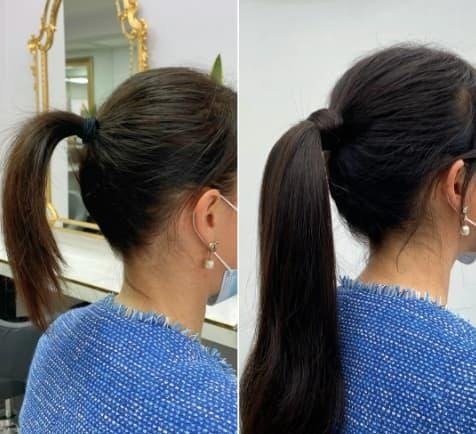
Braids should feel secure. Whether worn for a wedding, an event, or daily life, they are meant to hold their shape. Yet many women find that hair extensions & braids loosen within hours. Strands slide out. The structure softens. The braid that looked polished at first begins to sag.
This is rarely about poor styling alone. In most cases, slipping comes down to anchor placement, weight balance, and tension control.
Understanding these technical details can completely change the result.
Incorrect Anchor Placement
Every braid needs a stable base. When hair extensions & braids are created, the extension hair must attach to a strong foundation within the natural hair.
A common mistake is placing extensions too close to the surface. When clips, bands, or wefts sit in fine outer layers, they lack support. As the braid forms, gravity pulls the extension downward, causing it to shift.
Proper anchor placement sits slightly deeper within the hair. Not visible, not near the hairline, but within a layer that can carry weight.
Stylists often create a discreet internal structure first. This may involve small hidden sections that grip securely. Once that base is stable, the braid is built around it.
Without this internal anchor, even well-made hair extensions & braids can loosen quickly.
Why Lightweight Hair Works Better for Braids
Heavier hair is not always stronger in a braid. In fact, dense extension hair can cause more slipping.
When too much weight is introduced, the natural hair struggles to hold tension. The result is downward drag. The braid may appear full at first, but it gradually pulls away from the scalp.
Lightweight extension hair distributes more evenly through the plait. It blends more smoothly and moves with the natural strands.
In practice, this means selecting extension hair with moderate density. For hair extensions & braids, balance matters more than bulk.
If the braid feels heavy before you leave the chair, it is likely too dense for long wear.
The Role of Tension Distribution
Tension is the quiet detail that determines whether a braid lasts.
Too loose, and the braid will unravel. Too tight, and it can cause discomfort or strain at the roots.
When constructing hair extensions & braids, tension should be consistent from start to finish. Uneven pulling creates weak spots. These weak areas are where slipping begins.
A useful technique involves adjusting grip gradually rather than pulling firmly from the start. The braid should feel secure but not rigid.
It is also important to balance tension across both natural and extension hair. If the extension strands are tighter than the natural ones, they can slide out. If the natural hair is tighter, the braid may distort.
This balance is subtle. It comes with practice and awareness rather than force.
Bridal vs Everyday Braid Structure
Not all hair extensions & braids are designed for the same purpose.
Bridal braids often aim for softness and romance. They may be gently teased for volume and shaped for photography. These braids prioritise appearance over long-term durability.
Everyday braids, by contrast, require stronger structure. They must hold through movement, wind, and daily activity.
For bridal styles, stylists may create hidden support inside the braid using discreet pins. For everyday wear, firmer anchoring and tighter internal plaiting may be used.
Understanding the intention of the style matters. A braid designed for a few hours of elegance may not behave the same way during a full working day.
Clear communication between stylist and client helps determine the right structure for the occasion.
How Placement Affects Comfort
Poor placement does not only cause slipping. It can also create discomfort.
When extension anchors sit too high on the head, they can pull at the hairline once braided. When placed too low, they may sag under the braid’s weight.
Well-constructed hair extensions & braids feel balanced across the scalp. There should be no sharp pulling sensation in one area.
Even distribution reduces strain. This is particularly important for women with fine or delicate hair.
A braid that feels secure but comfortable is usually built on correct placement.
The Importance of Hair Preparation
Preparation plays a quiet but vital role in successful hair extensions & braids.
Hair that is too silky may struggle to grip. In these cases, light texturising through gentle backcombing at the root can provide hold. This is not about creating knots, but about building subtle support.
Clean hair is important, yet freshly conditioned strands can be slippery. A balanced finish works best.
Texture alignment also matters. Straight extension hair woven into loosely waved natural hair may separate. Matching texture improves cohesion.
These small details often determine whether the braid holds its shape.
Learning from Skilled Craft
Technical braid work is less about trends and more about craft. Skilled stylists understand weight, anchor depth, and tension control.
Some London-based hair ateliers, including Tatiana Karelina, are known for taking a structured approach to braid construction rather than relying on decorative styling alone.
This level of care is not about appearance alone. It supports longevity and comfort.
When placement, weight, and tension are in harmony, hair extensions & braids can remain secure for hours without slipping or strain.
Final Thoughts
When braids with extensions slip, the issue is rarely random. It usually stems from shallow anchor placement, excess weight, or uneven tension.
Lightweight hair, stable internal structure, and thoughtful preparation create balance. Whether for a wedding or daily wear, well-constructed hair extensions & braids should feel secure, comfortable, and natural.
Understanding the mechanics behind the style transforms the outcome. Good placement truly changes everything.