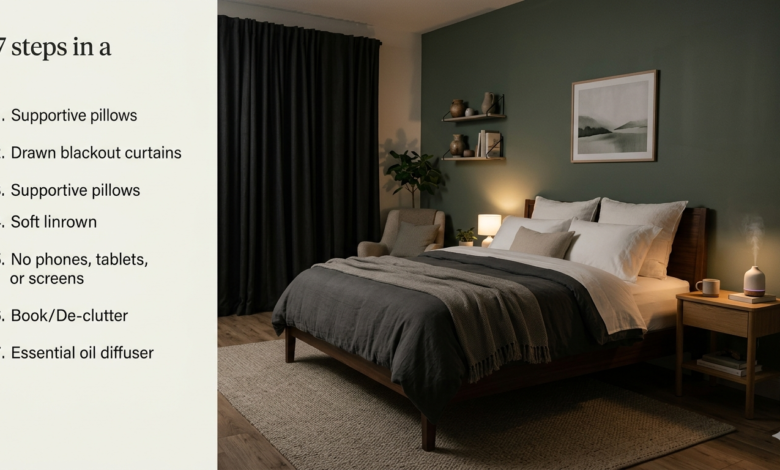
The environment where you end your day has a profound impact on how you begin the next. Many people struggle with restlessness or low energy levels without realizing that their bedroom environment is actively working against their biology. Creating a sleep sanctuary is not just about luxury. It is about aligning your physical surroundings with your body’s natural circadian rhythms to ensure deep, restorative rest.
The Foundation of a Restful Environment
To achieve high-quality sleep, you must consider how every sense is engaged within your room. From the temperature of the air to the textures of your bedding, every detail contributes to a cohesive atmosphere of calm. By following a structured approach to bedroom design, you can eliminate common sleep disruptors and turn your room into a dedicated space for recovery.
1. Adopt a Calming Color Palette
The colors on your walls and in your decor influence your psychological state before you even close your eyes. Vibrant, high-energy colors like bright red or orange can increase your heart rate and keep your mind active. Instead, opt for muted, cool tones. Soft blues, sage greens, and neutral greys are known to promote relaxation. These shades mimic the natural world and help lower blood pressure, signaling to your brain that it is time to wind down.
2. Master the Art of Light Control
Light is the most significant external factor affecting sleep. Exposure to light inhibits the production of melatonin, the hormone responsible for sleep. To optimize your room, use blackout curtains to block out streetlights and early morning sun. Inside the room, replace cool-toned, blue-light-emitting bulbs with warm, amber-toned lighting. Use dimmable lamps in the evening to prepare your eyes for total darkness.
3. Optimize Temperature Regulation
Most sleep experts agree that a cool room is essential for deep rest. As you prepare for sleep, your core body temperature naturally drops. A room that is too warm can interfere with this process, leading to frequent waking. Aim for a temperature between 60 and 67 degrees Fahrenheit. Complement this setting with breathable fabrics for your sheets and blankets, such as cotton or linen, which allow for better airflow throughout the night.
4. Invest in Physical Support
The central feature of any bedroom is the bed itself. If you wake up with aches or stiffness, your sleeping surface is likely the culprit. Proper spinal alignment is crucial for preventing long-term physical discomfort. When selecting a mattress in Utah or any other region with varying seasonal climates, look for materials that offer both support and temperature neutrality. A surface that is too soft may cause the spine to curve, while one that is too firm can create painful pressure points.
5. Remove Visual Clutter and Distractions
A cluttered room often leads to a cluttered mind. Piles of laundry, stacks of paperwork, or unorganized surfaces can create subconscious stress, making it difficult to relax. Keep your bedroom as minimalist as possible. Use closed storage solutions to hide daily items from view. By keeping the visual field clear, you reduce the number of things your brain has to process as you try to fall asleep.
6. Introduce Gentle Sensory Details
While the focus is often on what to remove, adding specific sensory elements can enhance relaxation. Subtle scents like lavender, sandalwood, or cedarwood can be introduced through diffusers or linen sprays to create a calming association with sleep. Additionally, consider the auditory environment. If you live in a noisy area, a white noise machine or a high-quality fan can provide a consistent soundscape that masks disruptive external noises.
7. Establish Strict Technology Boundaries
The bedroom should be a zone free from digital interference. Smartphones, tablets, and televisions emit blue light that tricks the brain into thinking it is daytime. Furthermore, the content on these devices often triggers emotional or cognitive engagement that prevents the mind from settling. Make it a rule to leave devices in another room or keep them turned off at least an hour before bed. This boundary ensures that your sanctuary remains a place for rest rather than work or entertainment.
Creating Lasting Change
Designing a sleep sanctuary is a continuous process of refinement. Start with the most impactful changes, such as light control and temperature, and then move toward fine-tuning the aesthetic details. When your environment is intentionally crafted for rest, you will likely find that falling asleep becomes easier and the quality of your waking life improves significantly.