Due Diligence Oil and Gas: A Complete Guide for Investors, Operators, and Energy Professionals

Introduction
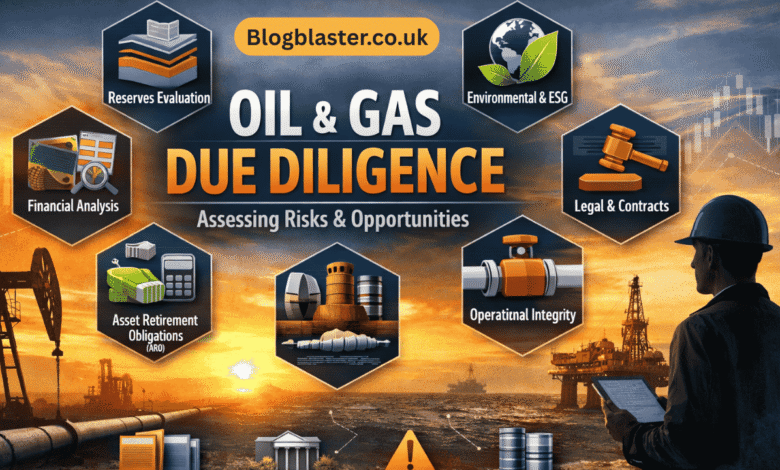
Due diligence in oil and gas is a critical process that determines whether an energy transaction is financially viable, technically sound, legally secure, and environmentally responsible. Whether you are acquiring upstream reserves, investing in midstream infrastructure, or merging energy companies, a structured due diligence oil and gas strategy can protect your investment and uncover hidden risks. The oil and gas industry is capital-intensive, highly regulated, and exposed to commodity price volatility. As a result, due diligence is far more complex than in many other sectors. Investors and operators must analyze subsurface data, production forecasts, asset integrity, environmental liabilities, contractual obligations, and increasingly, ESG risks. This comprehensive guide explains what due diligence oil and gas involves, key areas to review, common risks, and best practices to ensure a successful transaction.
What Is Due Diligence in Oil and Gas?
Due diligence oil and gas refers to the systematic investigation and evaluation of an energy asset, company, or project before completing a transaction. It is conducted during mergers and acquisitions (M&A), asset purchases, joint ventures, farm-ins, and financing deals.
The purpose of oil and gas due diligence is to:
- Validate reserves and production forecasts
- Assess operational performance
- Identify environmental and regulatory liabilities
- Review legal ownership and contractual obligations
- Evaluate financial strength and cash flow sustainability
- Quantify asset retirement obligations (ARO)
- Identify ESG and reputational risks
In short, due diligence ensures that buyers understand exactly what they are purchasing — including both value and risk.
Why Due Diligence Is Critical in the Oil and Gas Industry
Oil and gas assets can appear highly valuable on paper, but underlying issues may significantly impact profitability. For example:
- Overestimated reserves can inflate valuation
- Aging infrastructure may require costly repairs
- Environmental liabilities can create unexpected financial burdens
- Poorly structured contracts may reduce cash flow
Given the long life cycle of oil and gas projects, even small errors in assessment can lead to millions in losses.
Thorough due diligence oil and gas reviews help investors:
- Avoid overpaying for assets
- Negotiate better purchase terms
- Structure indemnities and warranties properly
- Identify post-acquisition optimization opportunities
Key Components of Due Diligence Oil and Gas
Due diligence in the oil and gas sector typically includes multiple workstreams. Each serves a vital role in determining the transaction’s overall risk profile.
Technical Due Diligence (Subsurface & Reserves)
Technical due diligence is the foundation of any upstream oil and gas transaction.
Reserve Evaluation
Buyers must verify:
- Proven (PDP), proved developed non-producing (PDNP), and proved undeveloped (PUD) reserves
- Reserve classification standards (SEC or PRMS)
- Third-party reserve engineering reports
- Pricing assumptions used in reserve calculations
Reserve estimates directly influence valuation. Overly optimistic decline curves or unrealistic development timelines can materially misstate asset value.
Production Analysis
Key data to review:
- Historical production data (oil, gas, water)
- Decline curve analysis
- Well performance versus type curves
- Downtime and operational interruptions
Buyers must confirm that production forecasts are technically achievable and economically sustainable.
Operational Due Diligence
Operational performance impacts both cash flow and long-term reliability.
Asset Integrity
- Maintenance records
- Inspection history
- Corrosion monitoring programs
- Pipeline integrity management
Deferred maintenance can create safety hazards and expensive remediation costs.
Infrastructure Assessment
- Surface facilities condition
- Compression and processing capacity
- Water handling and disposal systems
- Artificial lift systems
Operational inefficiencies may reduce margins or require immediate capital investment after acquisition.
Financial Due Diligence
Financial analysis determines whether projected returns justify the purchase price.
Revenue Review
- Realized commodity prices
- Transportation and processing deductions
- Hedging contracts
- Marketing agreements
Cost Analysis
- Lease operating expenses (LOE)
- General and administrative (G&A) costs
- Historical capital expenditures
- Future development capex
Buyers should stress-test projections under different oil and gas price scenarios to assess downside risk.
Legal Due Diligence
Legal risks can significantly impact ownership rights and future profitability.
Title Verification
- Mineral rights ownership
- Working interests and royalty burdens
- Joint operating agreements (JOAs)
- Lease expiration dates
Title defects can delay development or reduce revenue entitlement.
Contractual Review
- Transportation agreements
- Processing contracts
- Drilling contracts
- Service agreements
Contract terms may include minimum volume commitments (MVCs), take-or-pay obligations, or restrictive clauses.
Litigation and Compliance
- Pending lawsuits
- Regulatory violations
- Permit status
- Insurance coverage
Failure to identify legal exposure may result in costly post-closing disputes.
Environmental Due Diligence
Environmental risk is one of the most sensitive areas in oil and gas due diligence.
Environmental Site Assessments
- Phase I and Phase II assessments
- Spill history
- Contaminated soil or groundwater
- Remediation status
Regulatory Compliance
- Air emissions permits
- Water discharge permits
- Waste disposal practices
- Flaring compliance
Non-compliance can result in fines, operational shutdowns, or reputational damage.
Asset Retirement Obligations (ARO) and Decommissioning
One of the most financially significant aspects of due diligence oil and gas is evaluating asset retirement obligations.
Operators are legally required to:
- Plug and abandon wells
- Remove offshore platforms
- Decommission pipelines
- Restore land to regulatory standards
Buyers must:
- Assess the number of wells requiring abandonment
- Review estimated decommissioning costs
- Evaluate bonding and financial assurance requirements
- Identify overdue or unfunded liabilities
Underestimating ARO can dramatically impact valuation and long-term profitability.
Midstream Due Diligence Considerations
For pipeline, gathering, and processing assets, due diligence oil and gas focuses heavily on contracts and integrity.
Throughput and Revenue Stability
- Minimum volume commitments (MVCs)
- Ship-or-pay contracts
- Counterparty credit risk
- Tariff structures
Regulatory Oversight
- Federal Energy Regulatory Commission (FERC) tariffs (U.S.)
- State-level regulation
- Environmental approvals
Integrity and Safety
- Leak history
- In-line inspection (ILI) reports
- Hydrotest records
- Incident investigations
Pipeline failures can create enormous environmental and financial exposure.
ESG and Climate Risk in Oil and Gas Due Diligence
Environmental, Social, and Governance (ESG) factors are increasingly central to due diligence oil and gas transactions.
Key ESG Areas
- Methane emissions intensity
- Flaring practices
- Carbon footprint
- Community relations
- Safety performance
Investors are now factoring ESG performance into valuation, financing terms, and acquisition decisions.
Poor ESG metrics can:
- Limit access to capital
- Increase insurance premiums
- Reduce asset attractiveness
- Create reputational damage
Common Risks Identified During Oil and Gas Due Diligence
- Overstated reserves
- Hidden environmental liabilities
- Inaccurate cost forecasts
- Aging infrastructure requiring immediate capital
- Regulatory non-compliance
- Counterparty credit weakness
- Unfunded decommissioning obligations
Identifying these risks early allows buyers to renegotiate the price or walk away from unfavorable deals.
Best Practices for Effective Due Diligence Oil and Gas
- Use multidisciplinary teams – Engineers, geologists, lawyers, accountants, and environmental specialists should collaborate.
- Engage third-party experts – Independent reserve auditors and environmental consultants- to add credibility.
- Stress-test assumptions – Run downside price scenarios.
- Review data quality – Ensure production and financial data are accurate and complete.
- Structure protective agreements – Use indemnities, escrow accounts, and warranties.
- Prioritize high-risk areas – Focus on ARO, environmental exposure, and contractual obligations.
Oil and Gas Due Diligence Checklist (Quick Overview)
- Reserve reports and production data
- Financial statements and capex forecasts
- Lease and title documents
- Environmental site assessments
- Asset retirement obligation schedules
- Operational maintenance records
- Key commercial contracts
- Regulatory compliance documentation
- ESG performance metrics
Conclusion
Due diligence oil and gas is a complex but essential process that protects investors, operators, and financial institutions from costly surprises. Given the industry’s technical complexity, regulatory exposure, and long-term liabilities, a comprehensive evaluation must include technical, financial, legal, environmental, operational, and ESG considerations.
A successful oil and gas transaction is not based solely on production numbers or reserve estimates. It requires a thorough understanding of asset condition, regulatory compliance, decommissioning obligations, and long-term sustainability.
As energy markets evolve and environmental scrutiny increases, due diligence oil and gas processes must also adapt. Companies that conduct rigorous, data-driven evaluations will be better positioned to manage risk, negotiate effectively, and maximize value.
Frequently Asked Questions (FAQs)
What is due diligence in oil and gas?
Due diligence in oil and gas is the investigation and evaluation of energy assets or companies before completing a transaction to assess risks, value, and compliance.
Why is ARO important in oil and gas due diligence?
Asset Retirement Obligations represent future decommissioning costs. Underestimating ARO can significantly reduce asset value.
How long does oil and gas due diligence take?
It typically ranges from 30 to 120 days, depending on asset complexity and transaction size.
Who conducts oil and gas due diligence?
Multidisciplinary teams including engineers, geologists, accountants, environmental consultants, and legal advisors.