Understanding different sticker types prevents costly mistakes and ensures your stickers perform as intended. This guide covers comprehensive sticker options and selection guidance for any project.
Stickers seem simple—just adhesive designs on backing—until you need to make actual purchasing decisions. Then the variety becomes overwhelming. Paper or vinyl? Die-cut or kiss-cut? Permanent or removable? Each choice affects final results.
This comprehensive guide breaks down sticker categories systematically. Whether labeling products, decorating personal items, planning marketing campaigns, or pursuing creative projects, understanding your options ensures satisfying results.
Material Fundamentals
Image: Etsy
Material choice fundamentally determines sticker performance. Understanding material characteristics helps match sticker type to specific needs.
Paper Stickers
Paper stickers work beautifully for indoor applications where moisture and handling won’t be concerns. Invitations, envelope seals, gift toppers, and children’s crafts all suit paper perfectly.
The affordability makes paper practical for bulk projects. Wedding invitations, party favors, and event decorations often use paper stickers to keep costs manageable while adding visual appeal. Quality paper stickers feature smooth, evenly coated surfaces that display colors beautifully.
However, paper lacks durability. Moisture causes paper to soften and tear. Humidity makes edges curl. Direct sunlight fades colors quickly. These limitations confine paper stickers to protected, short-term applications.
Paper weight matters for appearance and durability. Heavier weights feel more substantial and resist damage better than lightweight papers. However, heavier papers may not work in all cutting systems.
Coating options affect final appearance. Matte finishes provide classic look; glossy finishes add shine and some moisture resistance. UV coating extends outdoor lifespan significantly.
Vinyl Stickers
Vinyl has become the standard for stickers requiring durability. This synthetic material resists water, UV exposure, and physical handling that would destroy paper alternatives. Vinyl stickers survive on laptops, water bottles, cars, and outdoor equipment for years without significant degradation.
Premium vinyl options offer remarkable longevity. High-quality vinyl resists yellowing, maintains color vibrancy, and adheres firmly through temperature extremes. The material’s flexibility allows application to curved surfaces that rigid materials cannot accommodate.
White vinyl provides opaque backgrounds making colors pop. Clear vinyl offers transparency for applications where you want the underlying surface to show through. Each serves valuable purposes depending on project requirements.
Calendered vinyl works well for flat surfaces and offers economical performance. Cast vinyl provides superior conformability for curved applications and extended outdoor durability. Each has appropriate uses—choosing wrong specification wastes money or underperforms.
Specialized Materials
Beyond basic options, specialized materials serve unique purposes. These might be exactly right for specific applications—or completely wrong for others.
Clear and Transparent Options
Clear stickers offer unique advantages where seamless appearance matters. Without white borders, these stickers integrate beautifully onto glass, mirrors, and transparent containers. Product packaging, window decorations, and any application requiring subtle appearance benefit from clear options.
The transparent appearance creates more professional look than white-bordered alternatives. Clear stickers work especially well on glass surfaces where the background adds to rather than interrupting the design.
Application surface preparation matters significantly with clear stickers. Dust, fingerprints, or debris beneath the sticker become visible, potentially detracting from appearance significantly. Clean, smooth surfaces yield best results.
Some clear stickers use permanent adhesive; others offer removable options. Match adhesive type to application requirements.
Reflective and Metallic Finishes
Reflective stickers create attention through light-returning properties. These stickers capture attention for promotional products, safety applications, and anything needing visibility. The reflective effect works particularly well in low-light conditions.
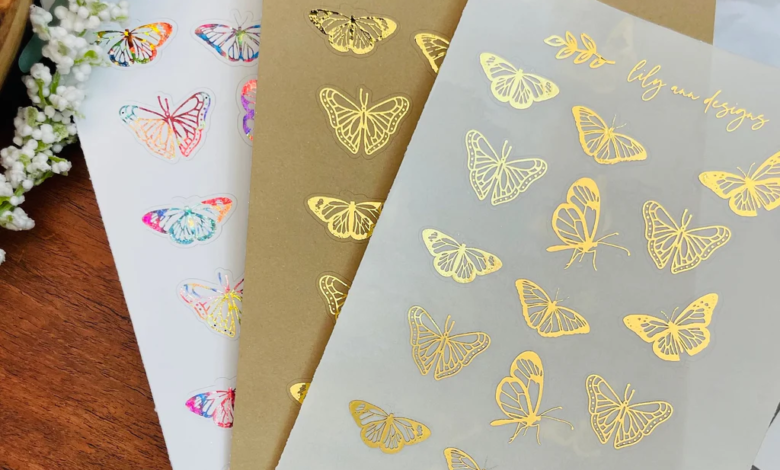
Metallic (foil) stickers provide gold, silver, rose gold, and other metallic finishes. These premium appearances create luxury perceptions perfect for upscale product labels, wedding materials, and special event applications.
Both reflective and metallic options typically feature vinyl backings, inheriting that material’s durability while adding distinctive visual impact.
The process matters—true foil uses heat and pressure to bond metallic foil, creating genuine reflective surfaces. Printed metallic effects look flatter and less impressive in person.

Adhesive Considerations
Adhesive type determines how stickers perform in specific applications. Different formulations serve different purposes.
Permanent vs. Removable
Permanent adhesive creates strong bonds intended to last. Removal typically damages either the sticker or the surface. This characteristic suits product labels, asset identification, and any application where stickers should remain indefinitely.
Consider surface compatibility when selecting permanent adhesives. Some surfaces react poorly with certain adhesive formulations. Testing prevents costly mistakes on large orders.
Removable adhesives allow clean removal after extended use. They suit seasonal decorations, children’s products, wall decals, and applications where eventual removal matters.
Not all removable adhesives perform identically. Some leave residue; others clean up completely. Testing on specific surfaces prevents unwanted surprises.
Specialty Adhesives
Specialty adhesives serve specific needs. High-tack adhesives bond to rough surfaces where standard adhesives fail. Low-tack adhesives allow repositioning during application.
Cold-temperature adhesives maintain effectiveness in refrigeration where standard adhesives lose adhesion. Heat-activated adhesives require application with heat tools for permanent bonding.
Cutting Styles
How stickers are cut affects both appearance and functionality. Understanding cutting styles helps choose appropriate formats.
Die-Cut Precision
Die-cut stickers are cut precisely to design shapes, leaving no surrounding material. This clean appearance suits professional applications where polished presentation matters. Logos, illustrations, and intricate designs benefit from die-cut precision.
The die-cut process requires custom tooling for each design, adding setup costs for small quantities. However, per-unit costs decrease significantly at larger quantities, making die-cutting economical for bigger orders.
Complex shapes that would be impossible with other cutting methods work beautifully with die-cutting. This makes die-cutting the choice for unique brand identities and detailed artwork.
Kiss-Cut Practicality
Kiss-cut stickers cut through sticker material while keeping backing intact. This creates individual stickers on sheets—perfect for sticker packs, promotional giveaways, and products distributed in sets. The intact backing keeps multiple stickers organized.
Kiss-cut options typically cost less than die-cut for equivalent quantities, making them attractive for larger orders or budget-conscious projects. They’re practical when users will take multiple stickers from a single sheet.
This format works particularly well for business card-sized stickers, product labels, and promotional materials where unit cost matters.
Application-Specific Guidance
Matching sticker type to application ensures satisfaction. Here’s guidance for common scenarios.
Product Label Selection
Product labels require durability matching product lifecycle. Food labels need moisture resistance. Cosmetic labels must survive bathroom humidity. Outdoor products need weatherproofing.
Consider product type: bath products require different label materials than pantry items. Cosmetics need special adhesives resisting oil and water exposure.
Regulatory requirements affect label materials for food, cosmetics, and other products. Check requirements before selecting materials.
Promotional and Marketing Use
Event giveaways, promotional products, and marketing materials benefit from visual impact. Die-cut vinyl with vibrant printing creates professional appearance reflecting positively on your brand.
Consider distribution context. Will stickers be handed out individually? Applied to products mailed to customers? Used at events? Distribution method influences optimal format.
Location matters—outdoor events need weather resistance; indoor events can use less durable options.
Personal and Craft Applications
Paper stickers dominate craft projects thanks to their affordability and variety. They work well for scrapbooking, card making, children’s crafts, gift decorations, and even easy cup design, where stickers personalize mugs or cups.
When choosing stickers, consider the users: children’s projects need non-toxic materials, while gifts might require a more polished appearance. For personal projects with limited quantities, paper offers an economical and versatile option.
Quality Indicators
Not all stickers are created equal, even within the same category. Knowing what to look for helps identify good value.
Print Quality Factors
Well-made stickers feature consistent material thickness, vibrant printing, and clean cutting. Edges should be smooth without roughness or debris. Adhesive should be evenly distributed without bubbles or thin spots.
Print resolution affects detail clarity and color vibrancy. Professional printing uses high DPI for smooth gradients and sharp text. Fading indicates inferior inks or improper storage.
Request samples before large orders. Quality claims mean little without verification. Professional suppliers readily provide samples.
Material Quality
Quality materials feel substantial without being unnecessarily heavy. Thin, flimsy materials often indicate budget construction. Smooth, even surfaces and consistent coloring reflect quality manufacturing.
Check adhesive quality by testing small quantities. Poor adhesion leads to premature failure; excessive adhesion creates removal problems.
Conclusion
Understanding sticker types enables informed selection matching specific application requirements. Consider durability needs, environmental exposure, surface characteristics, and budget constraints when choosing.
The right sticker transforms ordinary projects into something special. Take time to match type to application, and your stickers will perform beautifully.