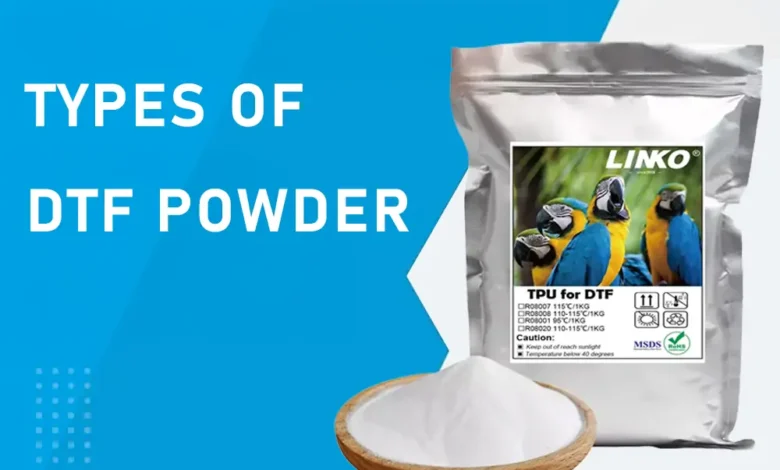
The process of Direct-to-Film (DTF) printing has gained significant importance in the garment decoration industry. DTF printing provides businesses with new possibilities that require a reliable and flexible print method. DTF powder is a key component of this technology to maintain the design on the fabric for a long duration.
DTF powder is necessary to create a bonding layer that is applied between the printed ink and the textile surface. On heating, the powder fuses and forms a high adhesion. DTF powder transfers the film onto fabric and ensures the design lasts long-lasting even after being washed several times.
The knowledge discussed below is about the various types of DTF powder. This will assist the printing companies in selecting the best type of powder for their production.
Understanding of DTF Powder?
DTF powder (a thermoplastic adhesive) is employed in the printing of DTF. The powder is deposited on the wet ink after printing a design on the PET film. After that, the powder adheres to the printed areas. The powder is then cured by heat and then transferred onto fabric.
Selecting the right powder, print durability, and fabric compatibility are the main concerns. The nature and quality of the powder also affect the flexibility of the design. Washing resistance is another factor influenced by the quality of powder.
Before scaling production, many beginners continue to learn more about adhesive powders, curing methods, and fabric compatibility. To improve print quality and durability, they often explore different materials and printing techniques.
Main Types of DTF Powder
The classification of DTF powders depends on the intended use and production needs of printing companies.
The first type is Fine DTF Powder.
· Minute particles contained in this powder enable it to be applied in elaborate and complex designs.
· One of the main key features of this powder is its smooth texture on fabric.
· Fine DTF powder gives more complete coverage of small design areas.
· It enables high-detail reproduction.
· The most common use of fine powder is in printing logos, fine lines or intricate graphics. Despite its merits, it still needs to be applied with caution. So that excessive powder is not accumulated.
Soft DTF Powder
· Soft DTF powder is more comfortable on garments. To produce a smooth, flexible finish, soft DTF powder is ideal.
· Soft powder is a good choice for printing comfortable fabrics. Also, fabrics include fashion, sportswear, and casual wear.
Medium DTF Powder
· It is another type widely used in the DTF printing process. It provides a layer that balances adhesion strength and flexibility.
· Its advantages include good wash durability and consistent bonding with the majority of fabrics.
· Medium DTF powder is appropriate for standard production processes.
· Most printing companies prefer medium DTF powder. Because it is good with cotton, polyester, and fabric blends.
Coarse DTF Powder
· Coarse DTF powder is appropriate for bulky fabrics.
· This type of powder has bigger particles compared to others. It is a strongly adhesive powder.
· Its common features involve strong bonding strength. Also, it increases resistance to peeling.
· Coarse DTF powder is ideal for printing on heavy clothes. Clothes, including hoodies, denim, or canvas fabrics.
Rough Texture Powder
· There are powders that are formulated to give a textured appearance. In spite of its limited use, it has some special effects.
· The characteristics of Rough Texture Powder include enhanced durability and excellent bonding with high-density products.
· Its wide use in decorative garment designs makes it significant for printing professionals.
Considerations to make when selecting DTF Powder.
The selection of the appropriate DTF powder is based on a number of production factors.
· Production speed
· Wash durability
· Fabric type
· Print design
Common Applications of DTF Powder
· DFT Power has many applications in the garment decoration industry.
· One of the main applications of DTF powder is custom apparel printing.
· For team uniforms and sportswear, make this powder a popular choice in the printing process.
· Manufacturing of fashion clothes and promotional merchandise is also an application of DTF powder.
DF powder is flexible enough to be used in small-scale production batches as well as in large-scale printing processes. Printing professionals often visit dtflinko.com to explore more about the printing materials and technology trends. Their manufacturers offer technical insights into various printing solutions and materials.
Conclusion
DTF printing is able to provide durable and high-quality prints. But the right materials and proper workflow are necessary within an extensive line of textile products. DTF powder plays an essential role in the DTF printing process. Different types of DTF powder are available in the market. Its usage depends on different fabrics with various designs and production needs.
Fine powder is used to give finer graphics. Medium powder gives balanced graphics. Heavy materials with strong adhesion are provided with coarse powder. Soft powders improve the comfort of garments. Whereas textured powders produce special appearance effects.
The knowledge of the above-discussed types of DTF powder will enable the printing professionals to choose the most appropriate powder to use in their applications.