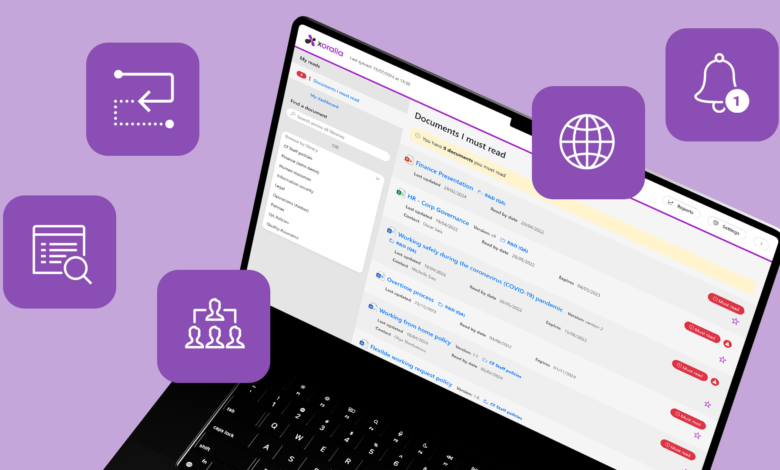
Policy management software exists to support organizations as they grow and take on more responsibility. As teams expand, policies move beyond reference documents and become tools for accountability, evidence, and consistent enforcement. It is common for ownership to blur or for multiple versions to circulate. At times, teams pause to confirm which policy was active when a decision was made.
Regulatory expectations are shaped by clearly defined frameworks such as the NIST Cybersecurity Framework (CSF) and the ISO/IEC 27001 information security management standard, both of which require documented, current, and enforceable policies. With distributed teams and shared responsibility, maintaining this clarity becomes harder without structure. In this blog, we explain where policy management breaks down and how software helps teams maintain confidence, alignment, and control.
Why Policy Management Becomes More Difficult as Organizations Scale in 2026
As organizations grow, policy management becomes harder to coordinate. This is usually a result of added scope and shared responsibility, not lack of effort. Policies begin to rely on one another across teams and regions.
Several structural factors contribute to this shift:
- Policies no longer stand alone and often reference other policies, procedures, or controls.
- Regulatory updates arrive more frequently and affect multiple documents at once.
- Hybrid and distributed work increases access points and raises the importance of version clarity.
- Spreadsheets, email, and shared drives store content but do not show approval status, ownership, or applicability.
- Teams pause to confirm whether a policy is current before acting, which slows execution.
This complexity is common and becomes manageable when structure grows alongside scale.
Challenge 1: Difficulty Locating the Correct Policy Across Multiple Systems and Teams
When policies are stored in many places, access becomes uncertain. You may know guidance exists, yet still spend time confirming whether it is the right version. This creates delays before action begins.
As organizations grow, policies commonly spread across:
- Shared drives organized by department or project, often without consistent naming.
- Intranet pages updated at different times by different teams.
- Learning platforms that retain older attachments after updates.
- Email threads used to distribute changes or clarify expectations.
Each location solves a short-term need. Together, they reduce clarity.
The practical impact of scattered policies includes:
- Extra time spent searching before decisions can be made.
- Increased reliance on personal copies rather than approved versions.
- Uncertainty during audits or reviews when proof is needed quickly.
- Hesitation among employees who want to follow guidance correctly.
How Policy Management Software Brings Policies Into One Clear Structure
Centralization supports confidence by making policies easy to find and trust.
A centralized structure typically provides:
- One trusted location for approved policies with clear access rules.
- Standard templates that show ownership, scope, and applicability.
- Metadata that explains department, regulation, and review status.
- Search and filters that surface relevant policies by role or lifecycle stage.
This helps you act with clarity instead of verification.
Challenge 2: Confusion Around Policy Versions and Approval Responsibility Over Time
Version confusion often builds slowly. Updates are made, feedback is shared, and approvals happen in different ways. Over time, certainty fades.
This confusion often appears when:
- Multiple people edit the same policy without a defined sequence.
- Approval responsibility is assumed rather than documented.
- Older versions remain accessible alongside newer ones.
- Policy history lives in email or comments instead of the document.
These situations are common in growing teams and point to missing lifecycle structure.
The resulting challenges include:
- Hesitation to update policies due to unclear approval paths.
- Difficulty confirming which version applied during a specific period.
- Extra effort during audits to reconstruct timelines manually.
How Policy Management Software Maintains Clear Versions and Ownership
Clear lifecycle structure removes uncertainty from updates.
Lifecycle management typically includes:
- Automatic version history with timestamps and editor details.
- Defined stages such as draft, review, approved, and retired.
- Records that show which version was active at a given time.
This clarity supports steady updates and confident responses.
Challenge 3: Keeping Policies Aligned With Regulatory Changes Across Regions
Regulatory requirements change often and at different times across regions. Tracking these updates manually requires coordination and attention.
Alignment becomes harder when:
- Regulatory updates are monitored outside the policy system.
- Policy owners are unsure which documents are affected.
- Changes in one region create conflicts in another.
- Dependencies between policies are not visible.
Outdated guidance can persist even when intent is aligned.
Operational impact includes:
- Mixed signals reaching different teams.
- Increased review effort during audits.
- Delays in applying updated guidance.
How Policy Management Software Supports Structured Regulatory Impact Review
A structured review process focuses on clarity and sequence.
Regulatory impact review is supported through:
- Clear links between regulations, policies, and accountable owners.
- Alerts when linked requirements change.
- Side-by-side views that make updates easier to confirm.
This keeps guidance aligned without restarting the entire policy set.
Challenge 4: Making Policies Easier for Employees to Understand and Use
When policies are hard to apply, adoption slows naturally. Employees often want to follow guidance correctly but struggle to see relevance.
Common barriers include:
- Long documents that require time employees do not have.
- Language that does not reflect daily responsibilities.
- Policies delivered outside the tools employees use.
These barriers signal a need for better alignment, not stricter enforcement.
The result is often:
- Policies acknowledged but not fully understood.
- Frontline teams relying on informal guidance.
- Increased questions during reviews or incidents.
How Policy Management Software Helps Policies Fit Daily Work
Policies are easier to use when they appear in context.
Supportive delivery methods often include:
- Role-based views that surface only relevant policies.
- Short summaries aligned to specific responsibilities.
- Access through systems employees already work in.
This approach helps policies function as practical guidance rather than reference material.
Challenge 5: Policy Reviews and Approvals Slow Down Due to Email-Based Processes
Delays in policy reviews usually come from limited visibility, not lack of cooperation. When approval steps are informal, it becomes hard to see progress or identify blockers. You may wait longer simply because the process itself is unclear.
Email-heavy review cycles introduce friction in several ways:
- Long email threads mix feedback, approvals, and attachments without a clear sequence.
- Comments arrive out of order, making it hard to apply changes consistently.
- Attachments circulate with minor edits, creating parallel versions.
- Approvers are unsure whether they are reviewing the latest document.
Approval bottlenecks often appear when:
- One reviewer is unavailable and no alternate path exists.
- Deadlines are implied rather than defined.
- Ownership of the next step is unclear.
These situations increase review time even when everyone is responsive.
How Workflow Engines Bring Clarity to Policy Reviews and Approvals
Workflows help you see progress clearly rather than chasing updates. Each step is visible and assigned.
Structured review workflows typically provide:
- Defined approval paths with named owners and due dates.
- Automated reminders that reduce follow-up effort.
- Escalation rules when deadlines pass.
- Metrics that show cycle time, stalled steps, and recurring delays.
This structure helps reviews move forward steadily without relying on inbox follow-ups.
Challenge 6: Limited Visibility Into Policy Compliance Status and Risk Exposure
When visibility is limited, responses take longer and uncertainty increases. You may know a policy exists but lack clarity on whether it has been read, acknowledged, or followed. This gap often surfaces during audits or incidents.
Visibility challenges commonly include:
- No clear record of who has acknowledged a policy.
- Limited insight into comprehension or understanding.
- Exceptions handled informally without documentation.
- Compliance signals scattered across systems.
Without a central view, oversight becomes reactive. You respond after an issue appears instead of seeing early signals.
This affects daily operations by:
- Increasing time spent gathering evidence during reviews.
- Making it harder to spot recurring issues.
- Reducing confidence when reporting compliance status.
How Policy Management Software Connects Policies to Evidence
Evidence continuity helps you move from assumption to confirmation. Each policy action is recorded and traceable.
Policy-to-evidence connections often include:
- Attestations and acknowledgments linked directly to policies.
- Dashboards that show policy status alongside incidents and audits.
- Exception workflows that capture approvals, timing, and rationale.
This structure supports steady oversight without manual reconstruction.
Challenge 7: Policies Drift Away From Risk and Control Structures Over Time
Governance weakens when policies lose alignment with risks and controls. You may have strong policy language, yet operational practices shift gradually. Over time, intent and execution separate.
Drift often occurs when:
- Policies are updated without reviewing related risks.
- Controls change due to process updates or system changes.
- Different teams manage policies, risks, and audits in separate tools.
This fragmentation makes it harder to assess impact when something changes.
The practical impact includes:
- Controls that no longer fully support policy intent.
- Risk registers that do not reflect current guidance.
- Extra coordination during audits to explain alignment.
How Integrated Platforms Keep Policies Aligned With Risk and Controls
Shared structure improves consistency without forcing consolidation. Related elements remain connected.
Integrated alignment typically includes:
- Direct links between policies, risks, and controls.
- A shared data model used by compliance, risk, and audit teams.
- Impact views that show which controls and processes are affected by a policy change.
This helps you maintain alignment as operations adjust.
Challenge 8: Managing Policies Consistently Across Regions and Business Units
Scaling policy management requires coordination rather than repetition. As regions grow, local needs emerge while global standards remain important. Balancing both takes structure.
Common scaling challenges include:
- Local adaptations made without central visibility.
- Different interpretations of the same policy.
- Difficulty confirming regional compliance status.
- Delays in rolling up information for leadership.
Without coordination, policy sprawl increases even when intent is aligned.
This often leads to:
- Inconsistent application of standards.
- Extra review effort during audits.
- Reduced confidence in global reporting.
How Policy Management Software Supports Coordinated Regional Governance
Controlled flexibility allows local relevance within a clear framework.
Federated governance structures often provide:
- Master policies with approved local variants.
- Configurable governance models such as centralized, federated, or hybrid.
- Reporting that rolls local compliance data into a global view.
This approach supports scale while preserving oversight.
Conclusion
Policy challenges usually arise from fragmentation and limited visibility, not from missing rules. As organizations grow, structure becomes essential to keep guidance clear and reliable.
Policy management software supports consistency by connecting policies to ownership, workflows, and evidence. This structure helps you respond with confidence, maintain accountability, and keep oversight steady as complexity increases.