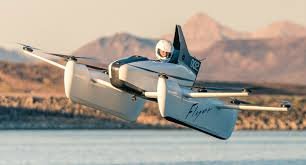
On the morning of 17 December 1903, Orville Wright lay prone on the lower wing of a biplane on a windswept beach in North Carolina and flew for twelve seconds. The aircraft covered 120 feet. A single long stride would cover more ground. Less than fifty years later, Chuck Yeager broke the sound barrier in the Bell X-1 at 45,000 feet, and commercial passengers were crossing the Atlantic in pressurised airliners above the weather. No other field of human endeavour has compressed so much technological progress into so short a span. The half-century between Kitty Hawk and the jet age is not merely the history of aviation — it is one of the most extraordinary periods of technological acceleration in recorded history.
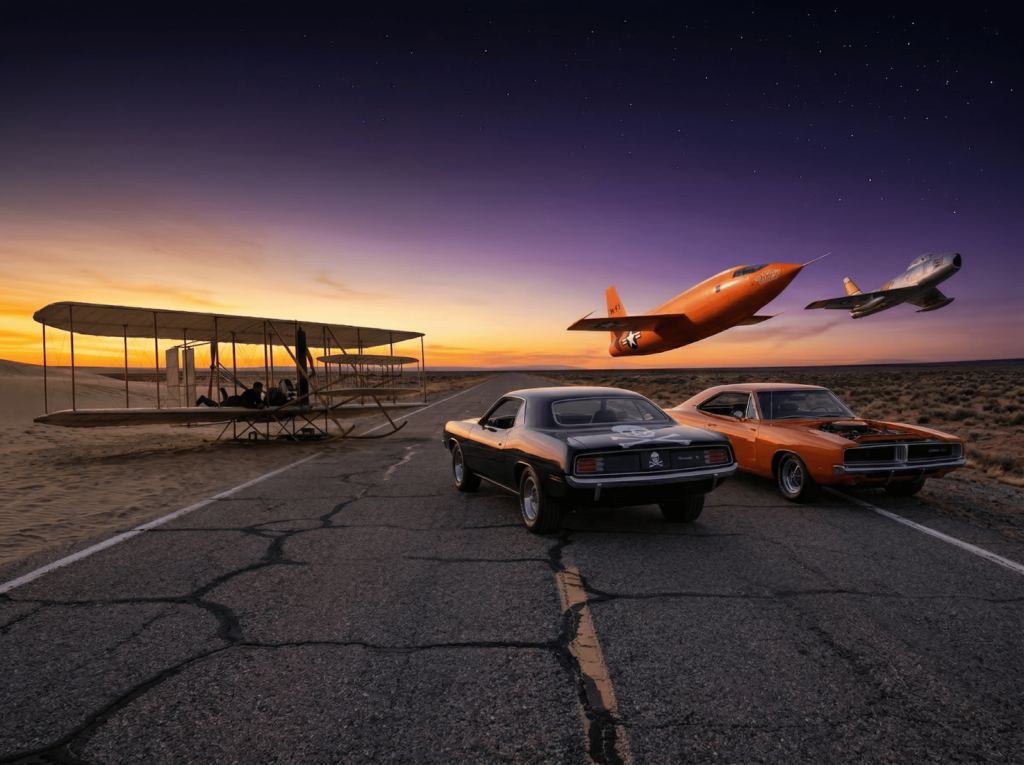
1903–1914: The Pioneer Era and the Race to Control the Air
The Wright Brothers’ achievement at Kitty Hawk was not universally appreciated immediately. The US Army showed no interest in their patent for three years. The European press largely dismissed early reports as exaggeration. It was not until Wilbur Wright’s demonstration flights at Le Mans in 1908 — where he flew circles around everything European aviation had produced, before crowds of thousands — that the world understood what had actually happened in North Carolina.
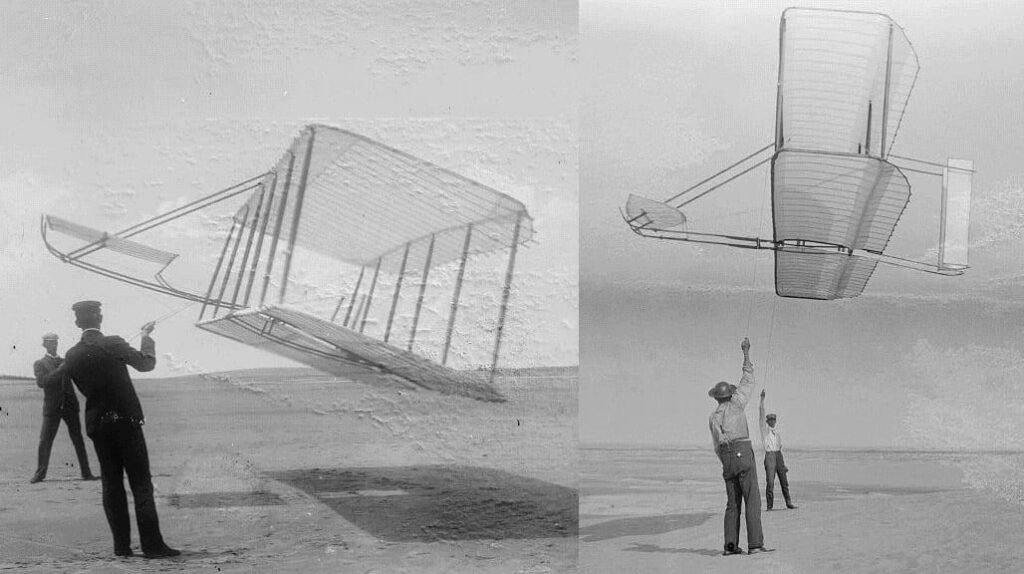
The decade that followed was defined by competitive improvisation. Bleriot crossed the English Channel in 1909, winning a £1,000 Daily Mail prize and demonstrating that geographic barriers that had defined military strategy for centuries were now meaningless. The first airmail routes, the first passenger flights, the first aerial photography — all compressed into a period of roughly ten years when aviation went from a Wright Brothers patent to a recognised military arm in every major European power. By August 1914, the aeroplane was a weapon. Nobody had quite planned for that.
1914–1918: How War Built the Aircraft Industry in Four Years
The First World War did for aviation what no peacetime investment programme could have achieved: it funded four years of continuous, urgent technological development with no budget constraint and no tolerance for failure. Aircraft that entered the war as canvas-covered reconnaissance platforms emerged from it as purpose-built fighters and bombers with interrupter gear, oxygen systems, and structural sophistication that 1914’s engineers had not imagined. The Fokker Eindecker, the Sopwith Camel, the SPAD XIII — each represented a generation of development compressed into months rather than years.
The war also created the infrastructure that commercial aviation would inherit: trained pilots in their hundreds of thousands, manufacturing facilities capable of producing aircraft at industrial scale, and a public that had spent four years reading about aerial combat and had formed a clear mental image of what an aircraft looked like and what it could do. The model planes that reproduce WWI subjects — the Fokker Dr.I triplane, the Sopwith Camel, the SE.5a — carry the weight of that compressed development in their form. Each represents not just a specific aircraft but a specific moment in the race between offensive and defensive aviation technology that defined the Western Front.
1919–1939: The Golden Age and the Race Across Oceans
The interwar years produced aviation’s most romantic chapter. Alcock and Brown crossed the Atlantic non-stop in 1919. Lindbergh flew solo from New York to Paris in 1927, landing to a crowd of 100,000 at Le Bourget and triggering a global aviation mania that drove investment, infrastructure, and public enthusiasm to levels that had never existed before. Imperial Airways, Pan American, Lufthansa, and Air France began building the route networks that would become the skeleton of modern commercial aviation.
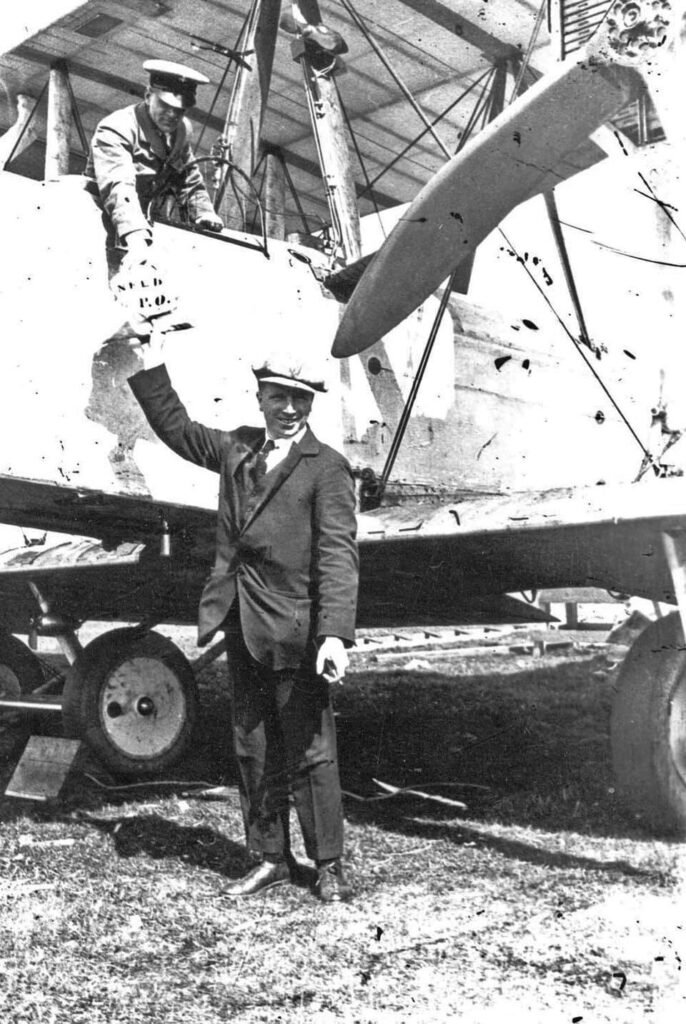
The aircraft of the golden age reflected the era’s ambitions. The Dornier Do X flying boat, the Sikorsky S-42, the Douglas DC-3 — each represented the contemporary answer to the question of how far and how fast and how comfortably human beings could move through the air. The Douglas DC-3, which entered service in 1936, was the first airliner that could generate a profit on passenger revenue alone — a commercial breakthrough that the entire industry had been working toward for a decade. As a airplane model subject, the DC-3 represents the moment commercial aviation became a viable industry rather than a subsidised experiment. That transition — from ambition to economics — is visible in the aircraft’s form: practical, proportioned, and built around the requirements of paying passengers rather than the aspirations of racing pilots.
Every aircraft that flew in the golden age was carrying the weight of the previous generation’s sacrifices and the next generation’s expectations simultaneously. That tension is what makes the period so compelling — and its aircraft so worth preserving in scale.
1939–1953: The Second War and the Arrival of the Jet Age
The Second World War repeated the acceleration dynamic of the First — but at a scale, and with a technological range, that dwarfed the earlier conflict entirely. Radar, pressurised cabins, long-range navigation systems, aerial refuelling, and jet propulsion all emerged from or were dramatically advanced by wartime necessity between 1939 and 1945. The Spitfire that defended Britain in 1940 and the Gloster Meteor jet fighter that entered service in 1944 were separated by four years and a complete revolution in propulsion technology.
The postwar jet age arrived for commercial passengers with the de Havilland Comet in 1952 — the world’s first jet airliner, which reduced the London to Johannesburg journey from forty hours to twenty-three. Metal fatigue issues grounded the early Comets within two years, but the template was established: pressurised, jet-powered, flying above the weather at speeds that piston-engined airliners could never approach. The Boeing 707 and Douglas DC-8, which entered commercial service in 1958 and 1959 respectively, completed the transition that the Comet had begun. By 1960, the fifty-year arc from Kitty Hawk was complete. The scale model collector who builds a display spanning the Wright Flyer to the Boeing 707 is not assembling a shelf of aircraft. They are documenting fifty years of the most concentrated technological ambition in human history — and the objects that carry that story deserve the fidelity that serious scale reproduction provides.
Frequently Asked Questions
How long did the Wright Brothers’ first flight last?
The first flight at Kitty Hawk on 17 December 1903 lasted twelve seconds and covered 120 feet. Four flights were made that day, with the longest lasting 59 seconds and covering 852 feet. Orville Wright piloted the first flight; Wilbur the final and longest. The aircraft — the Wright Flyer — never flew again after that day, damaged by a gust of wind while being moved after the fourth flight. It is now preserved at the Smithsonian National Air and Space Museum in Washington D.C.
Why is the Douglas DC-3 considered so historically important?
The Douglas DC-3 was the first commercial airliner capable of generating a profit on passenger revenue alone, without reliance on government airmail subsidies. Before the DC-3, commercial aviation in the United States operated largely at a loss. The aircraft’s combination of payload, range, speed, and operating economics fundamentally changed the financial viability of air transport and triggered the rapid network expansion that made commercial aviation a mass-market industry rather than an elite service.
What was the first commercial jet airliner?
The de Havilland Comet, which entered commercial service with BOAC in May 1952, was the world’s first jet airliner. It was grounded in 1954 following a series of crashes caused by metal fatigue around the square cabin windows — a structural failure mode that was not yet understood in aircraft design. The investigation that followed produced the foundational knowledge of metal fatigue in pressurised airframes that underpins commercial aircraft certification to this day. The Boeing 707, which entered service in 1958, completed the jet age transition the Comet had begun.
What scale model planes best represent the golden age of aviation?
The Douglas DC-3, the Supermarine Spitfire, the Boeing 314 Clipper flying boat, and the Lockheed Constellation are the four subjects most consistently cited by serious collectors as the definitive golden age aviation models. Each represents a distinct chapter of the period — the DC-3’s commercial breakthrough, the Spitfire’s wartime supremacy, the Clipper’s transoceanic ambition, and the Constellation’s postwar prestige. At 1:72 or 1:48 scale, all four reproduce the visual elegance of the period with enough surface detail to reward close inspection from any viewer familiar with the real aircraft.
Fifty Years That Changed Everything
The fifty years between the Wright Brothers’ first flight and the jet age’s commercial arrival represent the most compressed period of transformative technological development in the history of human transport. No equivalent span — before or since — produced comparable change in the fundamental parameters of what was possible. The steam age took a century to mature. The automobile took three decades to become commercially viable. Aviation went from twelve seconds in the air to transatlantic jet service in fifty years, driven by two world wars, a generation of fearless pilots, and an industry that learned from its failures with unusual speed.
The aircraft that defined each chapter of that arc are among the most historically significant machines ever built. The scale models that reproduce them are not nostalgia objects. They are records — physical, three-dimensional, and accurate — of how human beings solved one of the oldest problems in their history, one airframe at a time.