Smart Home Devices Skincare Tips: How Technology Can Support a Better Skin Routine

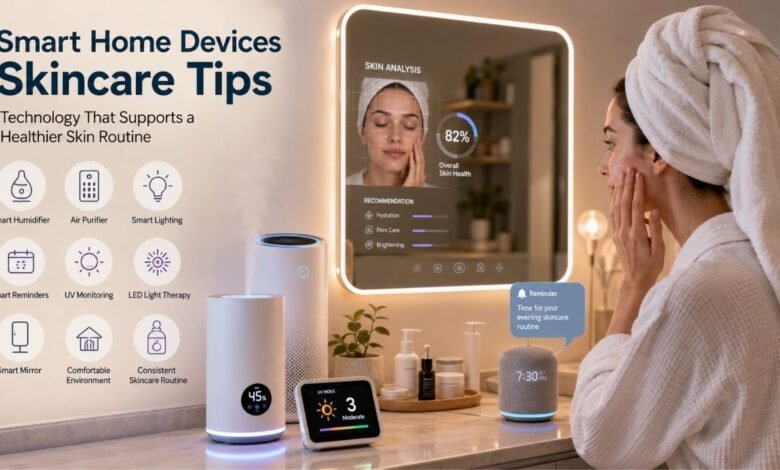
Skincare has traditionally focused on products such as cleansers, moisturizers, serums, exfoliants, and sunscreen. However, technology is changing the way people think about their daily beauty routines. Smart home devices can now help manage the environment in which skincare takes place, remind people to follow their routines, monitor conditions such as humidity, and even provide specialized beauty treatments.
Smart home devices skincare tips cover a growing area where home automation and personal care meet. From smart humidifiers and air purifiers to connected lighting, smart mirrors, UV monitors, and at-home LED devices, technology can make a skincare routine more convenient and consistent.
That does not mean that every person needs a bathroom full of connected gadgets. In fact, the best approach is usually to identify the environmental or routine-related problem you want to solve, then choose the technology that addresses it.
The foundation of good skincare remains simple: gentle cleansing, appropriate moisturizing, sun protection, and consistency. The American Academy of Dermatology also recommends moisturizer for dry skin and notes that a humidifier can help add moisture to the home environment, provided it is cleaned regularly.
What Are Smart Home Devices for Skincare?
Smart home devices for skincare are connected or automated products that can support your skincare routines or improve your environment.
Some are directly related to beauty, while others have a more indirect connection with skin health.
Examples include:
- Smart humidifiers
- Smart air purifiers
- Smart lighting
- Smart speakers and reminders
- Smart mirrors
- UV-monitoring devices
- Smart temperature controls
- At-home LED light therapy devices
- Connected facial-care devices
- Smart water-quality systems
The important distinction is that a smart home device does not necessarily treat a skin condition. Instead, many devices help create an environment that makes it easier to maintain healthy habits.
For example, a smart speaker cannot directly improve your skin, but it can remind you to complete your evening routine. Similarly, a smart humidifier cannot replace moisturizer, but controlling excessively dry indoor air may make dry skin more comfortable.
Why Your Home Environment Matters for Skin
Your skin is constantly exposed to its surrounding environment. Indoor temperature, humidity, air quality, sunlight, and daily habits can all influence how comfortable and healthy your skin feels.
Air conditioning and heating can make indoor environments feel dry. The AAD specifically recommends using a humidifier for dry skin and advises users to clean portable humidifiers regularly to prevent mold.
Indoor air quality can also be important. Dust, airborne particles, pet dander, and other pollutants can accumulate inside homes. A properly maintained air purifier can help reduce some airborne particles, although it should not be viewed as a treatment for a skin condition.
This is where smart technology becomes useful. Instead of manually monitoring every environmental factor, connected devices can automate some tasks.
Smart Home Devices Skincare Tips for a Better Routine
Use a Smart Humidifier When Your Indoor Air Is Dry
One of the most practical smart home devices skincare tips is to consider humidity control if your skin frequently feels dry or tight.
A smart humidifier can monitor or respond to indoor humidity and, depending on the model, let you set schedules or control the device via an app.
This can be particularly useful during periods when heating or air conditioning makes the indoor environment dry.
However, more humidity is not automatically better. Excessive humidity can encourage mold and create an uncomfortable environment. The goal should be reasonable humidity rather than keeping the room as humid as possible.
If you use a humidifier, regular cleaning is essential. The AAD specifically warns that portable humidifiers should be cleaned regularly to prevent mold.
Consider a Smart Air Purifier
Another useful addition is a smart air purifier.
Modern connected air purifiers may provide information about indoor air quality and automatically adjust their operation depending on detected conditions. Some use high-efficiency filters designed to capture airborne particles.
For people living in busy cities, homes with pets, or environments where dust is a recurring issue, an air purifier may make the indoor environment more comfortable.
However, it is important to maintain realistic expectations. An air purifier is not an acne treatment or an anti-aging product. Its primary role is improving indoor air quality.
Regular filter replacement is also important. A device with a dirty or overloaded filter cannot be expected to perform optimally.
Create a Smart Lighting Routine
Lighting is another interesting part of a technology-supported skincare routine.
Smart bulbs can automatically change brightness and color temperature throughout the day. In the evening, you can schedule the lights to dim and warm as bedtime approaches.
The skincare benefit here is indirect. A relaxing nighttime environment can encourage better sleep habits, while good sleep is an important part of overall wellness.
Smart lighting can also make your skincare routine easier to perform. A well-lit bathroom can help you see whether you have adequately cleansed your face or applied products evenly.
The key is to use lighting as a convenience and lifestyle tool rather than claiming that a particular light setting directly prevents wrinkles or repairs skin.
Use Smart Speakers for Skincare Reminders
Sometimes the biggest skincare problem is simply forgetting.
A busy schedule can make it easy to skip a nighttime routine or forget sunscreen before leaving home. A smart speaker, phone assistant, or home automation system can provide reminders.
You could create reminders such as:
- Morning skincare
- Apply sunscreen
- Reapply sunscreen when appropriate
- Evening cleansing
- Moisturizing
- Replace skincare products
- Clean beauty devices
- Change air purifier filters
- Clean the humidifier
This is one of the cheapest ways to introduce smart technology into skincare because you may already own the necessary device.
The benefit is not technological treatment—it is consistency.
Try a Smart Mirror or Skin-Tracking System
Smart mirrors and camera-based systems are becoming increasingly popular in the beauty technology space.
Depending on the product, a connected mirror may provide lighting adjustments, magnification, skin images, or software-based analysis.
These tools can be useful for observing changes over time, but users should be cautious about treating automated skin analysis as a medical diagnosis.
A camera cannot replace a dermatologist.
If you use a skin-tracking system, consistency is important. Take photographs under similar lighting, distance, and camera settings to make comparisons more meaningful.
It is also helpful to avoid obsessively checking your skin every day. Changes in hydration, lighting, sleep, and temporary irritation can make skin look different from one day to another.
Use UV Monitoring to Support Sun Protection
Sun protection remains one of the most important parts of any skincare routine.
Some wearable and smart devices can monitor or estimate UV exposure and provide reminders. This technology can help users become more aware of how much sun they encounter throughout the day.
However, a UV-monitoring device should support—not replace—basic sun protection.
The AAD recommends using broad-spectrum, water-resistant sunscreen with SPF 30 or higher, along with shade and sun-protective clothing.
A smart reminder can be particularly helpful if you frequently forget sunscreen. Technology is most useful when it encourages a behavior that already has strong value in skincare.
Explore At-Home LED Light Therapy Carefully
LED and red-light devices are different from ordinary smart-home products because they are designed to interact directly with the skin.
At-home red-light devices include masks, panels, and wands. The American Academy of Dermatology notes that some studies suggest potential benefits for concerns such as fine lines, wrinkles, rough-feeling skin, redness, and discoloration, but also emphasizes that more research is needed and that results vary.
At-home devices are also generally less powerful than professional equipment.
If you decide to use an LED device, follow the manufacturer’s instructions carefully. If eye protection is recommended, use the specified protection rather than improvising with ordinary sunglasses. The AAD also recommends discussing red-light therapy with a board-certified dermatologist, particularly because it is not suitable for everyone.
Most importantly, do not assume that a more intense or more frequent treatment will produce faster results.
Make Your Skincare Environment More Comfortable
Smart technology can also help create a comfortable skincare space.
For example, you could combine:
- Smart lighting for a calm evening atmosphere
- A humidity sensor
- A properly maintained humidifier
- An air purifier
- A smart speaker for reminders
- A clean mirror with suitable lighting
This setup does not have to be expensive.
The goal is to remove unnecessary friction from your routine. If everything you need is organized and your environment is comfortable, you may be more likely to follow your routine consistently.
Keep the Basics More Important Than the Gadgets
One of the biggest mistakes people can make with smart skincare technology is becoming distracted by gadgets.
A $200 smart mirror cannot compensate for never wearing sunscreen. A smart humidifier cannot replace moisturizer. An LED mask cannot automatically fix an unsuitable skincare routine.
Start with the fundamentals.
A basic routine might look like:
Morning:
- Gentle cleansing if appropriate for your skin
- Moisturizer
- Broad-spectrum SPF 30+ sunscreen
Evening:
- Gentle cleansing
- Treatment products if appropriate
- Moisturizer
Then consider technology that solves a specific problem.
This approach is generally more practical than buying multiple devices simply because they are marketed as “smart.”
Choose Devices According to Your Skin Needs
Not every device is appropriate for every person.
Someone with frequently dry skin may benefit more from paying attention to indoor humidity than purchasing an expensive facial gadget.
Someone who constantly forgets skincare steps may benefit more from automated reminders.
Someone concerned about UV exposure may find a UV-monitoring system useful.
Someone interested in LED therapy should research the specific device carefully and understand both its intended use and limitations.
The right technology depends on the problem you are trying to solve.
Common Mistakes to Avoid
Buying Too Many Devices
More technology does not necessarily mean better skin. Start with one device that addresses a genuine problem.
Ignoring Maintenance
Humidifiers, air purifiers, mirrors, and beauty devices all require maintenance. Dirty equipment can undermine its purpose.
Expecting Instant Results
Many skincare changes take time. At-home LED therapy, for example, generally requires repeated use rather than a single treatment, and the AAD notes that not everyone sees the same results.
Replacing Professional Advice With AI Analysis
Smart mirrors and apps can be interesting tools, but they should not be treated as substitutes for professional medical evaluation.
Overusing Beauty Devices
Using a device more frequently than instructed does not automatically make it more effective. Follow the manufacturer’s directions.
How to Build a Smart Skincare Routine
A simple approach can make the process much easier.
Step 1: Identify your biggest problem.
Are you forgetting products, dealing with dry indoor air, struggling with sleep habits, or concerned about UV exposure?
Step 2: Choose one technology.
Do not try to automate everything immediately.
Step 3: Keep your normal skincare routine.
Technology should support your cleanser, moisturizer, sunscreen, and other appropriate products.
Step 4: Create reminders.
Use your smart speaker, phone, or home automation system to establish consistent habits.
Step 5: Monitor your results realistically.
Pay attention to how your skin feels and looks over several weeks rather than judging everything after one day.
Step 6: Maintain your equipment.
Clean humidifiers and beauty devices, and replace air purifier filters according to the manufacturer’s instructions.
Are Smart Home Devices Worth It for Skincare?
Smart home devices can be worthwhile when they solve a specific problem.
A smart humidifier may be useful if your indoor air is consistently dry. A smart speaker can make routine reminders effortless. Smart lighting can create a more comfortable nighttime environment. An air purifier may help manage airborne particles in the home. UV monitors can encourage better awareness of sun exposure.
More specialized devices, such as LED masks and other facial technologies, require more research and careful use.
The most important question is therefore not, “What is the newest skincare gadget?” Instead, ask, “What problem in my routine am I trying to solve?”
That question can prevent unnecessary spending and make smart technology genuinely useful.
Conclusion
The world of smart home devices skincare tips demonstrates how skincare is becoming connected with everyday technology. Instead of thinking only about products applied directly to the skin, users can also consider the environment where their routines happen.
You May Also Read: Clio Kill Lash Superproof Mascara: Review, Benefits, Types, Ingredients and How to Use It