A defined jawline has become an increasingly popular aesthetic goal for people seeking a more sculpted, youthful-looking lower face. While traditional facelift surgery can provide significant changes, some people prefer less invasive options with smaller treatment areas and potentially shorter recovery periods. This growing interest has helped treatments such as JawTite attract attention.
JawTite is generally associated with minimally invasive jawline contouring and skin-tightening treatments that use radiofrequency energy, often alongside targeted fat reduction. The exact technique can differ between clinics and practitioners, so understanding what the treatment involves is important before considering it.
This guide explains what JawTite is, how it works, its potential benefits, treatment areas, recovery, results, costs, risks, and questions to consider when choosing a provider.
What Is JawTite?
JawTite is a term used for a minimally invasive aesthetic treatment designed to improve the appearance of the lower face and jawline. It is commonly associated with radiofrequency-based skin tightening and, in some treatment protocols, targeted fat removal.
The goal is generally to create a more defined jawline by addressing concerns such as loose skin, mild fat deposits, jowls, and fullness beneath the chin.
Unlike a traditional facelift, JawTite does not usually involve the extensive incisions and tissue repositioning associated with conventional facelift surgery. Instead, specialized technology is used beneath or around the skin to heat tissue and encourage tightening.
It is important to remember that the name JawTite may describe different treatment protocols depending on the clinic. Patients should therefore ask exactly which technology and techniques are being used.
How Does JawTite Work?
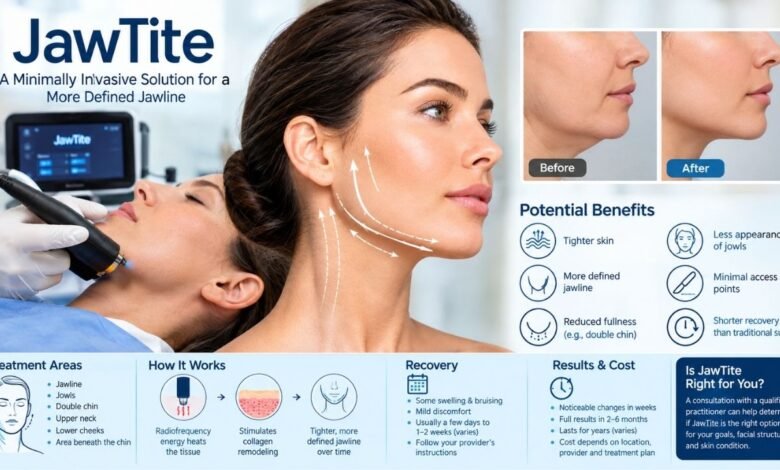
JawTite treatments are generally based on radiofrequency energy. Radiofrequency technology delivers controlled heat to targeted tissue. In aesthetic treatments, this energy can help heat the deeper layers of tissue while allowing the practitioner to control the treatment area carefully.
The heat may cause immediate tissue contraction while also stimulating a longer-term wound-healing response and collagen remodeling.
Some JawTite protocols also combine radiofrequency treatment with micro-liposuction or another form of localized fat reduction. Removing excess fat while tightening the surrounding tissue can improve jawline definition more effectively than addressing either concern alone.
Because techniques vary, patients should consult a qualified medical professional to determine whether their specific concerns are better addressed by skin tightening, fat reduction, surgery, or another treatment.
What Areas Can JawTite Treat?
The primary focus of JawTite is the lower face and jawline. Depending on the treatment plan, areas may include the:
- Jawline
- Jowls
- Double chin
- Upper neck
- Lower cheeks
- Area beneath the chin
The treatment is particularly relevant for people who feel that mild skin laxity or localized fullness makes their jawline appear less defined.
However, not every patient will require treatment in every area. A qualified practitioner should assess facial structure, skin elasticity, fat distribution, and overall aesthetic goals before recommending a treatment plan.
What Are the Potential Benefits of JawTite?
One of the main reasons people consider JawTite is the potential to improve jawline definition without undergoing a traditional facelift.
Potential benefits include improved skin tightness, a more defined lower face, reduced localized fullness, and improved appearance of mild jowling.
Another potential advantage is that some protocols can combine fat reduction and skin tightening into a single treatment. For patients with excess submental fat and skin laxity, addressing both concerns may yield a more balanced result.
Other commonly promoted advantages include smaller treatment access points compared with traditional surgery and potentially less extensive recovery.
Nevertheless, results vary from person to person. No cosmetic procedure can guarantee a particular appearance.
Who May Be a Good Candidate for JawTite?
JawTite may be considered by adults who have concerns about mild or moderate lower-face laxity, jowls, under-chin fullness, or reduced jawline definition.
Good candidates generally have realistic expectations and understand that minimally invasive treatments are not necessarily equivalent to a surgical facelift.
Skin elasticity can also be an important factor. People with substantial loose skin may require a different treatment approach, as energy-based tightening may not achieve the degree of tissue repositioning that surgery can.
A medical consultation is essential before treatment. The practitioner can assess whether JawTite is appropriate based on facial anatomy, skin condition, medical history, and desired outcome.
What Happens During a JawTite Procedure?
The exact procedure varies depending on the practitioner and the technology being used. In some protocols, the treatment area is prepared and local anesthesia is used.
A small access point may then allow the treatment device to reach the targeted tissue. Radiofrequency energy is delivered in a controlled manner to heat the tissue. If fat reduction is included, the practitioner may also perform micro-liposuction in selected areas.
The practitioner monitors the treatment carefully to reduce the possibility of excessive heating or tissue injury.
The length of the appointment depends on the areas being treated and whether additional procedures are included.
Patients should receive detailed instructions before and after the procedure, including information about medication, activity restrictions, wound care, swelling, and follow-up appointments.
JawTite Recovery and Downtime
Although JawTite is generally described as less invasive than a traditional facelift, it should not be confused with a completely non-invasive cosmetic treatment.
Temporary swelling, bruising, tenderness, tightness, or discomfort can occur following treatment. Some patients may also experience temporary numbness or changes in sensation around the treated area.
Recovery time varies depending on the technique used, the amount of tissue treated, and the individual patient’s healing response.
A practitioner may recommend limiting strenuous activity for a period following treatment. Patients should follow their provider’s instructions rather than relying on general online recovery timelines.
Anyone experiencing severe or worsening pain, significant skin changes, infection symptoms, or other concerning problems should contact their healthcare provider promptly.
When Can You See JawTite Results?
Some improvement may be noticeable relatively soon after treatment, particularly because controlled heating can cause tissue contraction.
However, the final appearance generally develops gradually. Collagen remodeling and tissue healing can continue for weeks or months after treatment.
The timing of results differs between patients. Factors such as age, skin quality, lifestyle, treatment settings, the amount of fat removed, and the individual’s healing process can all influence the outcome.
It is therefore better to evaluate JawTite results over time rather than to judge the treatment immediately after the procedure, when swelling may still be present.
How Long Do JawTite Results Last?
The longevity of JawTite results depends on several factors, including the patient’s age, skin quality, lifestyle, weight stability, and the underlying cause of the original concern.
Fat cells that are removed during a fat-reduction component are generally not expected to return in the same way, but remaining fat cells can enlarge if significant weight is gained.
Skin also continues to age naturally. Even after a successful treatment, collagen production and skin elasticity change over time.
Maintaining a stable weight, protecting the skin from excessive sun exposure, following a suitable skincare routine, and maintaining overall healthy habits may help preserve the appearance of the treated area.
JawTite vs. Traditional Facelift
JawTite and traditional facelift surgery are not interchangeable procedures.
A facelift is a surgical procedure that can reposition facial tissues, remove excess skin, and address deeper facial tissues. It can therefore be appropriate for people with more significant signs of facial aging.
JawTite is generally positioned as a minimally invasive approach for people seeking improvement in localized areas without undergoing a full facelift.
The right choice depends on the patient’s anatomy and goals. Someone with substantial skin laxity may achieve a more appropriate result through surgery, while someone with relatively mild concerns may prefer to discuss minimally invasive options.
A qualified facial plastic surgeon or appropriately trained medical practitioner can explain the differences during a consultation.
JawTite Cost
The cost of JawTite varies significantly depending on location, practitioner experience, technology, treatment areas, and whether other procedures are included.
For example, a clinic may price a treatment differently depending on whether it includes radiofrequency skin tightening alone or combines the technology with liposuction.
Patients should not choose a provider based solely on the lowest advertised price. A proper consultation should include a discussion of the treatment plan, expected results, possible complications, aftercare, and all associated costs.
It is also worth asking whether follow-up appointments and compression garments, if recommended, are included in the quoted price.
JawTite Risks and Considerations
Every medical aesthetic procedure carries potential risks. Radiofrequency-based treatments can cause complications if energy is delivered incorrectly or tissue is exposed to excessive heat.
Potential side effects may include swelling, bruising, pain, temporary numbness, infection, irregular contours, burns, changes in skin sensation, or asymmetry.
If liposuction is part of the treatment, there are additional risks associated with that procedure.
Patients should discuss their medical history, medications, allergies, previous procedures, and expectations honestly with their provider.
Choosing an appropriately qualified and experienced practitioner is one of the most important steps in reducing avoidable risks.
How to Choose a JawTite Provider
Choosing the right provider is just as important as understanding the technology.
Before booking JawTite, consider asking:
- What qualifications and experience do you have?
- Which specific technology will be used?
- Is fat reduction included?
- How many JawTite procedures have you performed?
- What results are realistic for my facial structure?
- What are the possible complications?
- How long should I expect to recover?
- What aftercare will I receive?
- What happens if I am unhappy with the result?
Before-and-after photographs can also help you understand a practitioner’s typical results, although photographs should not be treated as a guarantee of what your own outcome will look like.
Is JawTite Worth Considering?
Whether JawTite is worthwhile depends on the individual’s goals and expectations.
For someone with mild skin laxity, localized fat, or early jowling who does not want traditional facelift surgery, a minimally invasive approach may be worth discussing with a qualified practitioner.
However, people with significant loose skin or advanced facial aging may need a more comprehensive procedure to achieve their desired result.
The most important point is that JawTite should be viewed as a medical aesthetic treatment rather than a quick beauty procedure. A personalized assessment is necessary to determine its suitability.
Frequently Asked Questions About JawTite
Is JawTite the same as FaceTite?
Not necessarily. JawTite is often used to describe a jawline-focused treatment protocol involving radiofrequency technology, while FaceTite is a specific radiofrequency-assisted device and treatment technology. Some JawTite protocols may use FaceTite technology.
Is JawTite non-surgical?
JawTite is generally described as minimally invasive rather than completely non-invasive. Depending on the protocol, small access points and techniques such as micro-liposuction may be involved.
Can JawTite remove a double chin?
JawTite may be used to address under-chin fullness when localized fat reduction is part of the treatment plan. However, suitability depends on the amount of fat and degree of skin laxity.
How quickly does JawTite work?
Some changes may appear soon after treatment, but swelling can temporarily affect the appearance. Longer-term results develop gradually as tissues heal and collagen remodeling occurs.
Is JawTite suitable for everyone?
No. Age, skin elasticity, facial anatomy, medical history, fat distribution, and treatment expectations all influence candidacy
Conclusion
JawTite is a minimally invasive aesthetic approach focused on improving jawline definition, lower-face contour, jowls, and under-chin concerns. It is commonly associated with radiofrequency energy and may be combined with targeted fat reduction depending on the practitioner and treatment plan.
You May Also Read: TriLift vs Other Facial Tightening Devices Clinical Comparison: Results, Technology, Safety and Evidence