
The .300 Blackout was built for versatility. Supersonic loads for energy. Subsonic loads for suppressed precision. Short barrels. Tight platforms. Close-quarters maneuverability.
Your packaging should reflect that same adaptability.
Loose cartons and oversized boxes defeat the purpose of a compact, tactical caliber. They waste space, allow movement, and create noise. And in .300 Blackout—where supers and subs often look nearly identical—poor labeling can create real problems.
Custom cardboard ammo boxes engineered specifically for .300 Blackout eliminate those risks while maximizing portability, protection, and organization.
At Hola Custom Boxes, packaging is built around real-world use cases—range days, hunting trips, storage rotation, retail display, and bulk training. Every structural decision starts with how the ammunition will actually be handled.
Match the Box to the Mission
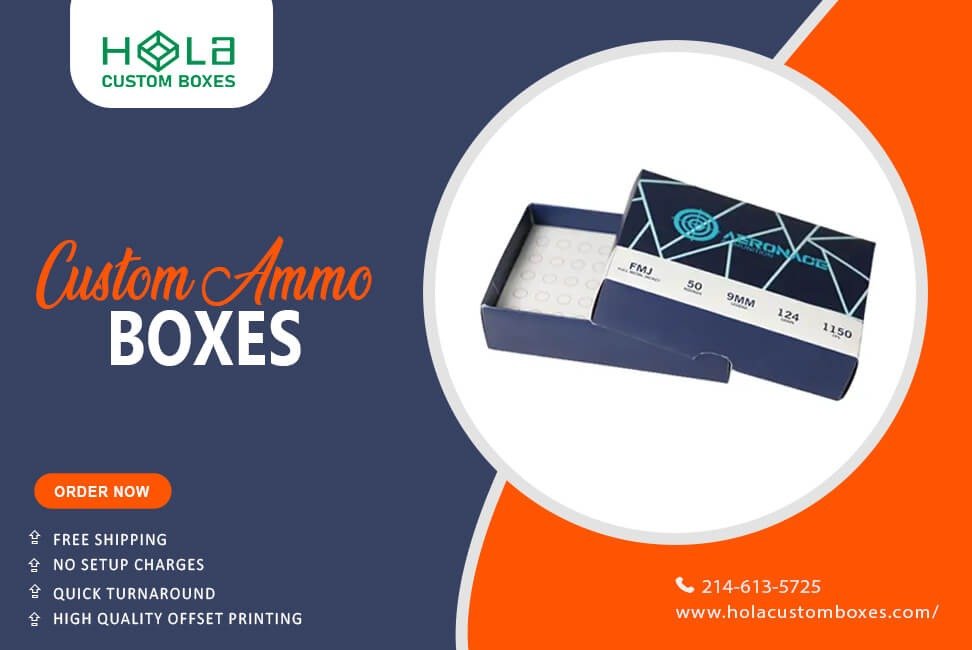
The biggest mistake in ammo packaging is assuming every scenario requires the same box.
A training day demands fast access and durable stacking. A hunting pack needs quiet closures and moisture control. Long-term storage requires tight seams, labeling clarity, and stable internal support.
For range use, rigid cardboard with a quick-open tuck closure keeps rounds accessible without sacrificing strength. Reinforced corners prevent crushing when the box rides in a gear bag alongside tools and optics.
For hunting, closures should open quietly—no stiff snaps or noisy tabs. Moisture-resistant coatings reduce softening when exposed to damp conditions.
For storage, internal precision and clear external labeling matter most. The right box doesn’t just hold ammunition—it prevents mix-ups and preserves load integrity over time.
Capacity and Footprint: Compact by Design
.300 Blackout packaging should stay true to the caliber’s compact identity.
Twenty-round boxes work well for load testing and smaller SKU separation. They’re easy to carry, easy to label, and ideal for distinguishing between supersonic and subsonic batches.
Fifty-round boxes streamline longer training sessions while minimizing repacking. They reduce loose handling and fit efficiently inside ammo cans and shelf systems.
But capacity alone isn’t enough. The footprint matters just as much.
Boxes should fit common ammo cans, tactical pouches, and safe shelving without wasted space. Cartridge orientation—inline or staggered—affects overall height. Tight internal tolerances reduce headspace while maintaining easy removal.
When the box fits the storage system, organization becomes effortless.
Corrugated Strength That Matches Real Use
.300 Blackout concentrates weight into a small space. That density requires the right board grade.
For controlled environments and retail settings, a strong single-wall corrugated such as 32 ECT balances protection and clean print surfaces.
If boxes will be palletized, stacked high, or shipped through carrier networks, stepping up to 44 ECT or higher increases edge crush resistance and reduces panel bulging.
Flute choice also plays a role.
B- or C-flute adds compression strength for heavier loads and stacking.
E-flute creates a slimmer profile with sharper print definition for premium retail presentation.
Selecting the correct corrugated structure ensures the box performs under real pressure—not just in theory.
Inserts That Keep Rounds Quiet and Secure
Rattle is more than an annoyance. It signals internal movement, which leads to tip wear, case contact, and packaging fatigue.
A properly engineered insert eliminates movement entirely.
Die-cut chipboard trays provide structured wells that cradle each cartridge securely. For mixed bullet profiles, flexible retention designs prevent snagging. Heavier-duty double-layer chipboard or molded pulp trays add crush resistance for shipping.
Closed-cell foam can provide premium presentation while resisting oil absorption and debris buildup.
The goal is simple: zero internal movement. Shake tests and drop tests confirm performance before production runs begin.
When rounds sit snugly and upright, packaging reinforces quality.
You can review structural options and insert configurations directly through our cardboard ammo box manufacturer page to see how different builds protect specific calibers.
Clear Load Identification: Supers vs Subs
Few calibers demand labeling clarity more than .300 Blackout.
Supersonic and subsonic loads often share similar profiles. In low light, on a bench, or during rapid setup, subtle differences can be overlooked.
Custom packaging solves that problem.
High-contrast color bands—red for supers, blue for subs—provide instant differentiation. Large “SUPER” or “SUB” identifiers reduce hesitation. Icons or graphic cues add another visual layer for quick recognition.
Critical data should appear on both lid and end panels so stacked boxes remain readable.
Bullet weight, type, COAL, powder charge, primer, brass brand, velocity, and lot number can all be integrated into a clean, scannable layout. Barcodes or QR codes can link directly to load notes or inventory systems.
Clear labeling reduces mistakes—and builds professional presentation.
Closures That Stay Closed
A box that opens inside a range bag defeats its purpose.
Tuck-top closures should include locking tabs rather than relying on friction alone. Flip lids can incorporate internal catches to resist vibration. Reinforced scoring ensures folds snap into position without loosening over time.
For added security, tamper-evident seals or paper tear strips provide visual confirmation of first opening without requiring tools.
Every closure design should be tested fully loaded. Shake, compress, drop. If it stays shut under stress, it’s ready for production.
Moisture, Oil & Environmental Resistance
Cardboard’s natural strength weakens when exposed to oil, humidity, or solvents. Tactical environments introduce all three.
Water-based dispersion coatings reduce humidity absorption. PE or PP lamination creates wipe-clean surfaces when oil contact is likely. Barrier-treated board reduces staining and odor transfer.
These treatments extend packaging life without compromising print quality.
Humidity inside safes or storage units can be managed with desiccants, but the box itself should slow moisture intrusion. Tight seams and reinforced edges help prevent swelling and panel distortion.
Durability isn’t just about thickness—it’s about finish.
Tactical Print Execution
Good printing does more than look sharp. It improves function.
Round count should be bold and unmistakable. Lot numbers must remain consistent in placement. Barcodes require proper quiet zones for clean scanning.
Warnings and compliance text should be legible without overpowering design. High-contrast sans-serif fonts perform best under varied lighting.
A tactical aesthetic—muted palettes, matte finishes, sharp graphics—can align with brand identity while maintaining clarity.
Printing should support speed, accuracy, and organization—not clutter them.
Spec’ing Your Custom .300 Blackout Box
Ordering begins with clarity.
Define cartridge type (super or sub), bullet weight, round count, and target box style. Specify internal fit tolerances and insert configuration. Choose board grade and coating based on handling conditions.
Confirm Pantone or CMYK targets for color consistency. Identify compliance text zones. Determine case pack quantities and whether shrink or tamper seals are required.
Before full production, approve a physical sample. Fit, closure engagement, and insert retention should be tested with actual ammunition.
Precision up front prevents issues later.
Final Thoughts
.300 Blackout was engineered for compact performance and adaptability. Its packaging should reflect the same principles.
Custom cardboard ammo boxes designed around use case, footprint efficiency, structural strength, and clear load identification elevate both protection and organization. The right insert stops rattle. The right board resists crush. The right labeling prevents confusion between supers and subs.
When packaging performs reliably, shooters move confidently.
Explore tactical-ready packaging solutions at Hola Custom Boxes and build custom .300 Blackout boxes engineered for compact performance and real-world handling.