When parents think about orthodontics, they typically envision the teenage years. Images of secondary school students with traditional metal braces or clear aligners come to mind, usually around the ages of twelve or thirteen. However, the journey to a perfect smile and a healthy bite actually begins much earlier.
The American Association of Orthodontists and specialist paediatric dental practitioners worldwide recommend that every child receive an initial orthodontic evaluation by the age of seven. While this may seem young, there are profound physiological and developmental reasons why seven is considered the magic number.
In this comprehensive guide, we will explore the benefits of early intervention, the specific dental issues that can be identified in young children by specialists like Dr Mali Dental Clinic, and how an early assessment can save time, money, and discomfort in the future.
1. The Science of the Seven-Year-Old Mouth
By age seven, a child’s mouth has undergone significant changes that provide a roadmap for their future dental development. At this specific stage, the “mixed dentition” phase is in full swing. This means the child has a mix of primary (baby) teeth and permanent (adult) teeth.
The Arrival of the First Molars
Around age six or seven, the first permanent molars typically erupt. These teeth are crucial because they establish the “back bite”. Once these molars are in place, an orthodontist can assess the basic structural relationship between the upper and lower jaws. This allows them to identify potential “malocclusions” or misalignments that may not have been visible when the child only had baby teeth.
The Incisor Transition
The four upper and lower permanent front teeth (incisors) also usually emerge by age seven. Their position can signal issues such as crowding, deep bites, or protruding teeth (often referred to as “buck teeth”). Because the jaw is still growing at this age, it is the optimal time to evaluate whether there is enough space for the remaining adult teeth to erupt properly.
2. Proactive vs. Reactive: The Philosophy of Interceptive Orthodontics
One of the most important concepts in modern paediatric dentistry is Interceptive Orthodontics, also known as Phase One treatment. The goal is not necessarily to put braces on a seven-year-old, but rather to “intercept” a developing problem while the jaw is still malleable.
Guiding Jaw Growth
In children, the jaw bones are not yet fused. They are still growing and are highly responsive to gentle pressure. If a child has a narrow upper jaw or an underdeveloped lower jaw, an orthodontist can use appliances to guide the bone growth. This can create a more symmetrical facial profile and ensure there is enough room for adult teeth, often preventing the need for tooth extractions later in life.
Correcting Harmful Habits
Many children have habits that can subtly but significantly alter the shape of their mouths. Chronic thumb sucking, tongue thrusting, or mouth breathing can lead to an open bite or a narrowed palate. An early assessment identifies these issues before they cause permanent skeletal changes, allowing for habit-correction therapies that are much easier to implement at age seven than at age twelve.
3. Specific Issues Identified at Age Seven
During an early orthodontic evaluation, a specialist looks for several “red flags” that might require immediate or future attention.
Crossbites
A crossbite occurs when the upper teeth sit inside the lower teeth. This can cause the jaw to shift to one side, leading to uneven wear on the teeth and even asymmetrical facial growth. Correcting a crossbite is much simpler when the jaw is still developing.
Crowding and Impaction
If the jaw is too small to accommodate adult teeth, those teeth may become “impacted”, meaning they get stuck in the bone and cannot erupt. By identifying crowding early, a specialist can use palatal expanders to widen the jaw, creating the necessary space for teeth to arrive naturally.
Protrusion
Teeth that stick out significantly are at a much higher risk of accidental trauma or fracture, especially in active seven-year-olds on the playground. Early treatment can pull these teeth back into a safer position.
4. The Psychological Benefits of Early Intervention
We cannot overlook the social and emotional impact of dental alignment. Children begin to become more self-conscious about their appearance as they move through primary school.
Severe misalignments, gaps, or protruding teeth can sometimes lead to bullying or a lack of confidence in social situations. By addressing these issues early, parents can help their children avoid the psychological stress associated with dental irregularities. Furthermore, Phase One treatment often makes the eventual Phase Two (teenage) treatment much shorter and less complex, meaning the child spends less time in braces during their sensitive teenage years.
5. Does an Early Assessment Always Lead to Braces?
It is a common misconception that a visit to an orthodontist at age seven will automatically result in immediate treatment. In fact, for the majority of children, the outcome of an early assessment is simply observation.
The “Wait and See” Approach
Specialist clinics often place children into an observation programme. The child will visit the clinic once or twice a year so the specialist can monitor the eruption of adult teeth and the growth of the jaw. This allows the dental team to time any future treatment perfectly, taking advantage of growth spurts to achieve the best results in the shortest timeframe.
6. Saving Time and Money in the Long Run
While some parents worry about the cost of an early consultation, it is actually a cost-saving measure. Interceptive treatment can prevent the need for much more invasive and expensive procedures in the future.
- Avoiding Extractions: By creating space in the jaw now, we reduce the likelihood that permanent teeth will need to be pulled out later due to crowding.
- Avoiding Surgery: Some skeletal issues that can be corrected with a simple appliance at age seven might require complex jaw surgery if left until the child is a late teenager or adult.
- Stable Results: Guiding the teeth and jaw into the correct position as they develop often leads to a more stable long-term result, reducing the chances of the teeth “relapsing” later in life.
7. What Happens During an Early Orthodontic Assessment?
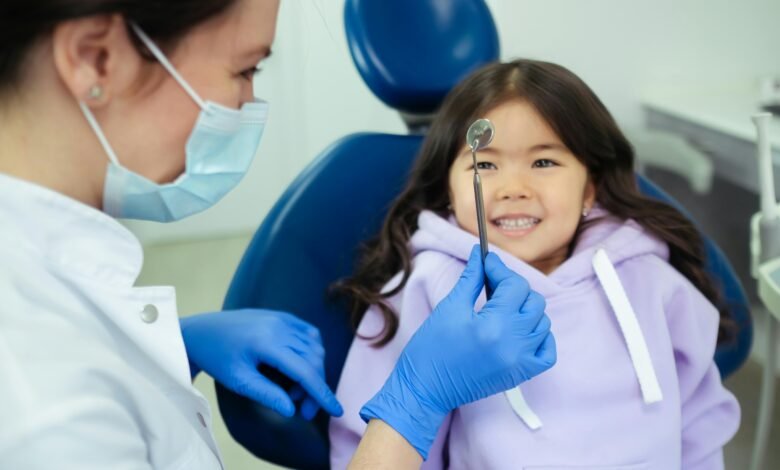
If you book an evaluation for your seven-year-old, the process is designed to be gentle, informative, and non-invasive. It typically involves several key steps.
- Clinical Examination: The specialist will look at the child’s teeth, jaw alignment, and how they swallow and breathe.
- Digital Imaging: Panoramic X-rays or 3D scans may be taken to see what is happening beneath the gum line. This reveals whether all permanent teeth are present and if they are heading in the right direction.
- Bite Analysis: The specialist will check how the upper and lower teeth meet.
- Discussion: The specialist will explain their findings to the parents. If treatment is needed, they will outline the options. If not, they will set up a monitoring schedule.
8. Finding the Right Specialist in London
When seeking an assessment for a young child, it is beneficial to visit a clinic that specialises in paediatric dentistry and orthodontics. Children have unique emotional and physiological needs. A specialist paediatric environment is designed to be welcoming and “fear-free,” ensuring that the child develops a positive relationship with dental care from an early age.
London offers some of the world’s leading expertise in interceptive orthodontics. Choosing a specialist who is experienced in growth modulation ensures that your child receives a bespoke plan tailored to their specific developmental stage.
9. Summary: Why Seven is Indeed the Magic Number
The recommendation for a seven-year-old orthodontic assessment is based on decades of clinical evidence. It is the point where the back bite is established, the front adult teeth are visible, and the jaw is at its most receptive to guidance.
By taking your child for an assessment at this age, you are providing them with a significant advantage. You are ensuring that any potential structural issues are caught before they become permanent, that their adult teeth have a clear path to erupt, and that their overall facial development is supported.
Orthodontics is no longer just about straightening crooked teeth in teenagers; it is about the comprehensive management of dental health and facial harmony from childhood through to adulthood.
Conclusion: A Lifetime of Confident Smiles
As a parent, you want to give your child every opportunity to succeed, and a healthy, confident smile is a vital part of that. Early orthodontic assessments are the foundation of preventative dental care. They provide peace of mind for parents and a clear, managed pathway for the child’s future.
If your child is approaching their seventh birthday, or if they are already older and have not yet had an orthodontic evaluation, now is the perfect time to act. It is a small investment of time that yields a lifetime of benefits in health, function, and self-esteem.
Is your child ready for their first orthodontic check-up? Consulting with a specialist paediatric dental team is the best way to ensure their smile develops exactly as it should. Take the first step today toward protecting your child’s oral health and ensuring their smile remains bright and healthy for years to come.
READ ALSO: The Tooth Decay Process: Can You Reverse It Before a Cavity Develops?