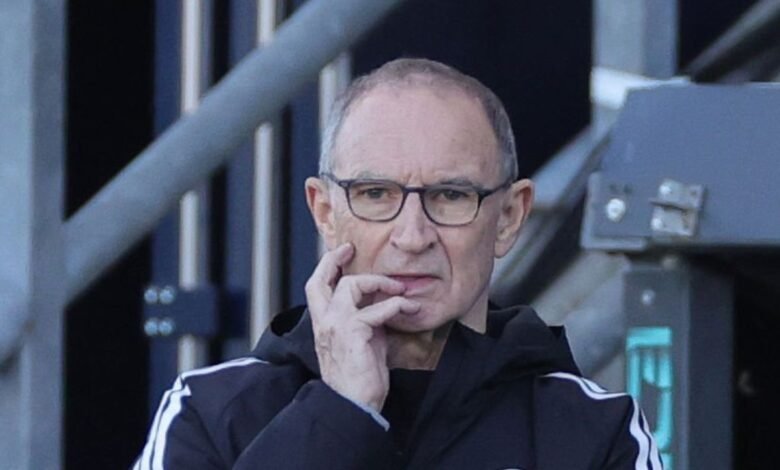
Martin O’Neill is one of the most respected football managers to emerge from Northern Ireland. A former professional midfielder and an accomplished manager, O’Neill has built a remarkable career across English, Scottish and international football. He is particularly remembered for his successful spells with Nottingham Forest, Leicester City and Celtic, as well as his work as manager of the Republic of Ireland national team.
Born in Kilrea, Northern Ireland, in 1952, O’Neill first established himself as a talented midfielder before moving into management. His playing career included an outstanding period at Nottingham Forest, where he won the English league title and two European Cups. He later developed a reputation as an energetic, motivational manager capable of building competitive teams and winning major honors.
In 2026, Martin O’Neill once again became a major name in Scottish football after returning to Celtic permanently following a remarkable campaign that ended with domestic league and Scottish Cup success. Celtic confirmed his new contract in June 2026, giving him a one-year deal with an option for another year.
Who Is Martin O’Neill?
Martin Hugh Michael O’Neill is a Northern Irish football manager and former professional footballer. He was born on March 1, 1952, in Kilrea, County Londonderry, Northern Ireland. During his playing career, he operated primarily as a midfielder and became particularly associated with Nottingham Forest.
O’Neill represented Northern Ireland 64 times at international level and scored eight goals. He also captained the national team at the 1982 FIFA World Cup. His playing career provided an important foundation for his later success as a manager.
Today, O’Neill is best known for his managerial achievements. His career has included positions at Wycombe Wanderers, Leicester City, Celtic, Aston Villa, Sunderland, the Republic of Ireland and Nottingham Forest.
Martin O’Neill Early Life and Background
Martin O’Neill grew up in Kilrea, a town in Northern Ireland with a strong football tradition. He developed an interest in football from an early age and began playing the sport competitively before making his move into professional football.
His early career included time in Northern Irish football before he moved to England. This transition proved important because English football provided O’Neill with the opportunity to compete at a much higher level and eventually become part of one of the most successful teams of his generation.
O’Neill’s background in Northern Ireland remained an important part of his identity throughout his football career. He later represented the Northern Ireland national team for more than a decade and became one of its prominent players.
Martin O’Neill Playing Career
O’Neill’s playing career is strongly associated with Nottingham Forest. He joined the club in the early 1970s and went on to make hundreds of appearances.
Under legendary manager Brian Clough, Nottingham Forest became one of the most successful teams in European football. O’Neill was an important member of the squad during this period.
Forest won the First Division title in the 1977–78 season and followed that success with European Cup victories in 1979 and 1980. Winning the European Cup twice remains one of the most significant achievements of O’Neill’s playing career.
After leaving Nottingham Forest, O’Neill played for clubs including Norwich City, Manchester City and Notts County before eventually ending his playing career.
His experience as a player under highly demanding managers later influenced his own approach to coaching and management.
Martin O’Neill and Northern Ireland
International football played an important role in O’Neill’s career. He made 64 appearances for Northern Ireland and scored eight goals.
One of the highlights of his international career came at the 1982 FIFA World Cup. O’Neill was part of the Northern Ireland team that competed at the tournament in Spain and served as captain.
His international experience also gave him a deeper understanding of leadership and the pressures associated with representing a national team. Years later, he would return to international football as manager of the Republic of Ireland.
Martin O’Neill Managerial Career
After retiring from professional football, O’Neill moved into management. His first managerial opportunities came at lower levels of English football, where he gradually developed his methods and reputation.
He managed Grantham Town before taking charge of Wycombe Wanderers. His work at Wycombe helped establish him as a promising young manager.
O’Neill later managed Norwich City before taking the Leicester City job. His career then reached another level when he became manager of Celtic in 2000.
According to career records, his managerial appointments have included Grantham Town, Shepshed Dynamo, Wycombe Wanderers, Norwich City, Leicester City, Celtic, Aston Villa, Sunderland, the Republic of Ireland and Nottingham Forest.
Martin O’Neill at Leicester City
O’Neill became Leicester City manager in the 1990s and quickly established the club as a competitive side.
One of his biggest achievements at Leicester was his success in the League Cup. He guided the club to the final on three occasions and won the competition twice.
His Leicester teams were known for their organization, determination and ability to compete against more heavily resourced opponents. The success helped establish O’Neill as one of the leading British managers of his generation.
His work at Leicester also helped create the reputation that would eventually lead to his appointment at Celtic.
Martin O’Neill’s First Celtic Era
Martin O’Neill’s first spell at Celtic began in 2000 and became one of the defining periods of his managerial career.
He immediately made an impact. Celtic’s official history records that O’Neill’s team won the domestic treble during his first season in charge, a remarkable achievement that ended a long wait for Celtic to reproduce that success.
During his first Celtic tenure, O’Neill won seven major trophies, including three Scottish league championships, three Scottish Cups and one Scottish League Cup. He also took Celtic to the UEFA Cup Final in Seville in 2003.
The 2003 UEFA Cup campaign became one of the most memorable European runs in modern Celtic history. Celtic defeated Liverpool during the competition before eventually reaching the final against FC Porto. Celtic lost 3–2 after extra time, but the team’s run created lasting memories for supporters.
O’Neill’s first Celtic spell ended in 2005, but his reputation at the club remained extremely strong.
Martin O’Neill’s Football Legacy
The Martin O’Neill does not appear to be an established biographical term associated with the football manager. However, when researching Martin O’Neill, the central theme remains his long-term influence on British and Irish football.
His legacy is built around several major achievements: European success as a player, domestic trophies as a manager, successful rebuilding projects and his ability to motivate players.
At Celtic in particular, O’Neill became associated with an ambitious style of management and a strong connection with supporters. Celtic’s official history describes him as one of the club’s most influential managers since Jock Stein.
Martin O’Neill at Aston Villa
After leaving Celtic, O’Neill returned to English football as manager of Aston Villa in 2006.
His four-year spell at Villa Park produced several strong Premier League campaigns. Villa finished sixth in the Premier League three consecutive times under O’Neill, demonstrating the consistency of the team during his tenure.
He also guided Aston Villa to the 2010 League Cup Final. Although Villa did not win the competition, reaching the final represented another significant achievement in O’Neill’s managerial career.
Martin O’Neill at Sunderland
O’Neill became Sunderland manager in December 2011. His appointment generated considerable excitement because of his previous success at Celtic, Leicester and Aston Villa.
His time at Sunderland was shorter than some of his other managerial positions, but it added another chapter to his experience in the Premier League.
O’Neill left the club in 2013 before returning to management at international level.
Martin O’Neill and the Republic of Ireland
In 2013, O’Neill was appointed manager of the Republic of Ireland national team. Former Manchester United and Ireland midfielder Roy Keane worked alongside him as assistant manager.
The highlight of O’Neill’s international management career came when Ireland qualified for UEFA Euro 2016.
At the tournament in France, Ireland produced one of the memorable results of the competition by defeating Italy. The team progressed to the knockout stage before eventually being eliminated by France.
O’Neill left the Republic of Ireland position in 2018. His tenure remains an important part of his overall managerial story because it demonstrated his ability to work in international football as well as club management.
Martin O’Neill and Nottingham Forest
In January 2019, O’Neill returned to Nottingham Forest as manager, decades after achieving European glory with the club as a player.
The appointment was notable because Forest was where O’Neill had enjoyed the greatest success of his playing career. However, his second connection with the club as a manager lasted only part of the 2018–19 season.
Although the managerial spell was brief, the return illustrated the strong connection between O’Neill and Nottingham Forest.
Martin O’Neill’s Return to Celtic
One of the biggest football stories involving Martin O’Neill came in 2025 and 2026.
After several years away from club management, O’Neill returned to Celtic as interim manager in October 2025. He later left the temporary role before returning again in January 2026. Celtic officially confirmed his appointment for the remainder of the season at that point.
The return produced an extraordinary turnaround.
O’Neill helped Celtic win the Scottish Premiership on the final day of the season and subsequently guided the club to Scottish Cup success. Celtic confirmed that the club had secured its 56th league title and its 43rd Scottish Cup under his leadership.
Martin O’Neill’s Celtic Achievements in 2026
The 2026 season added another important chapter to O’Neill’s legacy.
After taking over during a difficult period, he helped Celtic recover its form. Celtic won its final seven league matches to secure the Premiership title, according to the club’s official announcement.
O’Neill then guided Celtic to a Scottish Cup victory over Dunfermline Athletic, completing a domestic double. The achievement was particularly significant because O’Neill had initially returned to the club on an interim basis.
Following that success, Celtic confirmed him as permanent manager on a one-year contract with an option for an additional year.
Martin O’Neill Age and Current Role
Martin O’Neill was born on March 1, 1952, making him 74 years old in 2026.
Despite being one of the most experienced managers in British football, O’Neill continues to work at the highest level. Transfermarkt lists him as Celtic’s manager with a contract running through June 2027, subject to the contract option.
His continued presence in professional football is notable because his career spans several generations of the sport.
Martin O’Neill’s Management Style
O’Neill has traditionally been associated with strong leadership, organization and motivation.
His teams have often been praised for their competitive mentality. Rather than relying exclusively on individual talent, his management approach has emphasized teamwork, discipline and belief.
His ability to create a strong relationship with supporters has also been an important part of his success. This was particularly evident during his Celtic years, when he developed a reputation for understanding the expectations surrounding one of Scotland’s biggest clubs.
Martin O’Neill’s Major Achievements
Some of the most important achievements associated with Martin O’Neill include:
- Winning the European Cup twice as a Nottingham Forest player.
- Winning the English First Division with Nottingham Forest.
- Winning two League Cups with Leicester City.
- Winning three Scottish league titles with Celtic during his first spell.
- Winning three Scottish Cups with Celtic during his first spell.
- Winning the Scottish League Cup with Celtic.
- Reaching the 2003 UEFA Cup Final.
- Taking Aston Villa to the 2010 League Cup Final.
- Leading the Republic of Ireland to Euro 2016.
- Winning another Scottish Premiership title with Celtic in 2026.
- Winning the 2026 Scottish Cup with Celtic.
- Completing a domestic double with Celtic in 2026.
Martin O’Neill’s Awards and Recognition
O’Neill’s contribution to football has received recognition beyond his club achievements. He was awarded an OBE for services to sport in 2004.
He was also inducted into Norwich City’s Hall of Fame after supporters voted for him in 2002. In 2013, he received the Nottingham Lifetime Achievement Award.
These honors reflect the impact he has had across different parts of British and Irish football.
What Makes Martin O’Neill Significant?
Martin O’Neill’s career stands out because he has achieved success in several different roles.
As a player, he won the biggest European club competition twice. As a manager, he won domestic trophies in England and Scotland and reached a major European final. As an international manager, he guided Ireland to a European Championship tournament.
His return to Celtic in 2026 added another remarkable chapter. After years away from regular club management, O’Neill returned during a difficult period and helped Celtic secure a league and cup double before receiving a permanent contract.
His career demonstrates the importance of experience, leadership and adaptability in football management.
Conclusion
Martin O’Neill has enjoyed one of the most distinguished careers in British and Irish football. From his successful playing days with Nottingham Forest to his trophy-filled managerial career, he has remained a prominent figure in the sport for decades.
His achievements with Leicester City established him as a respected manager, while his first Celtic spell transformed him into a club legend. His work with Aston Villa and the Republic of Ireland further demonstrated his versatility, and his return to Nottingham Forest created another connection with a club that had played such an important role in his playing career.
His dramatic return to Celtic in 2025–2026 has arguably become one of the most remarkable late chapters of his career. After returning to a club where he had already achieved extraordinary success, O’Neill helped Celtic win the Scottish Premiership and Scottish Cup in 2026. Celtic subsequently rewarded him with a permanent contract.
At 74, Martin O’Neill remains an active and influential football manager. His career, spanning playing success, domestic trophies, European competition and international management, ensures that his name remains firmly established in the history of British football.
You May Also Read: Marten Glotzbach: The Man Behind the Name: Coach, Educator, and Support System of a Football Legend