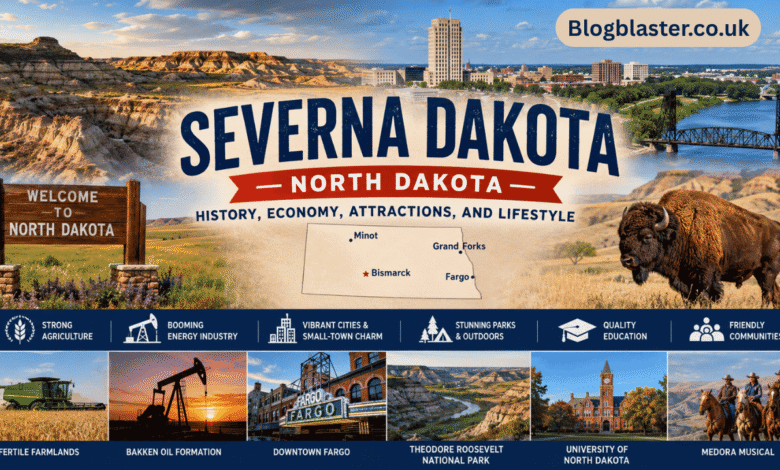
North Dakota, they are referring to North Dakota, one of the fifty states of the United States. The term Severna Dakota is commonly used in several South Slavic languages, including Serbian, Croatian, Bosnian, and Slovenian, as the translation of North Dakota. Although North Dakota is often overshadowed by larger, more populous states, it offers a fascinating blend of natural beauty, economic opportunity, rich history, and small-town charm. Known for its vast prairies, thriving agricultural sector, booming energy industry, and stunning national parks, Severna Dakota has become an attractive destination for tourists, students, and workers alike. In this comprehensive guide, you’ll learn everything you need to know about Severna Dakota, including its geography, history, economy, major cities, tourist attractions, climate, employment opportunities, and reasons why more people are discovering this unique part of America.
What Is Severna Dakota?
Severna Dakota is the translation of North Dakota, a state located in the Upper Midwestern region of the United States. It became the 39th state admitted to the Union on November 2, 1889.
North Dakota borders:
- Canada to the north
- Minnesota to the east
- South Dakota to the south
- Montana to the west
Despite being one of the least populated states in America, Severna Dakota plays an important role in the nation’s agriculture and energy production.
Geography of Severna Dakota
One of the defining characteristics of Severna Dakota is its expansive landscape. The state covers approximately 70,700 square miles and comprises diverse geographic regions.
The Great Plains
Much of the state is covered by the Great Plains, featuring rolling hills, grasslands, and fertile farmland.
The Badlands
Western Severna Dakota is famous for its dramatic Badlands terrain. These rugged formations offer breathtaking scenery and support a variety of wildlife.
Rivers and Lakes
Major waterways include:
- Missouri River
- Red River of the North
- Lake Sakakawea
- Devils Lake
These bodies of water contribute to recreation, agriculture, and regional ecosystems.
History of Severna Dakota
The history of Severna Dakota stretches back thousands of years before European settlement.
Indigenous Heritage
Native American tribes inhabited the region long before it became part of the United States. Prominent tribes included:
- Dakota Sioux
- Lakota Sioux
- Mandan
- Hidatsa
- Arikara
- Chippewa
These communities developed rich cultural traditions and relied heavily on the land’s natural resources.
European Exploration
French explorers and fur traders entered the region during the eighteenth century, establishing trade relationships with Indigenous peoples.
Statehood
Following westward expansion and increased settlement, North Dakota officially became a state in 1889.
Today, Severna Dakota preserves much of its historical heritage through museums, cultural centers, and historic sites.
Major Cities in Severna Dakota
Although many associate North Dakota with rural landscapes, several vibrant cities contribute significantly to the state’s economy and culture.
Fargo
Fargo is the largest city in Severna Dakota.
Known for:
- Educational institutions
- Technology sector growth
- Healthcare services
- Shopping and entertainment
- Cultural festivals
Fargo offers a dynamic urban atmosphere while maintaining Midwestern friendliness.
Bismarck
Bismarck serves as the state capital.
Attractions include:
- State Capitol Building
- Heritage Center and State Museum
- Missouri River recreation
- Family-friendly neighborhoods
Bismarck combines government importance with a relaxed lifestyle.
Grand Forks
Grand Forks is home to the University of North Dakota and boasts a strong educational environment.
Highlights include:
- College sports
- Arts and culture
- Research initiatives
- Scenic parks
Minot
Often called the “Magic City,” Minot is known for:
- Scandinavian heritage
- Annual festivals
- Military presence through Minot Air Force Base
- Growing business opportunities
Climate and Weather in Severna Dakota
The climate of Severna Dakota features four distinct seasons.
Winter
Winters are cold and snowy.
Temperatures often fall below freezing, making winter sports and snow activities popular.
Spring
Spring brings warmer temperatures and blooming landscapes, though occasional flooding can occur from snowmelt.
Summer
Summers are warm and pleasant.
Average temperatures range between 70°F and 85°F, making outdoor activities enjoyable.
Autumn
Autumn offers colorful scenery, harvest celebrations, and comfortable weather.
Residents often consider fall one of the state’s most beautiful seasons.
Economy of Severna Dakota
Severna Dakota has one of the strongest economies in the United States.
Several industries contribute to its prosperity.
Agriculture
Agriculture remains the backbone of the state’s economy.
Major products include:
- Wheat
- Durum wheat
- Canola
- Sunflowers
- Soybeans
- Barley
- Lentils
- Dry beans
- Honey
North Dakota consistently ranks among America’s top agricultural producers.
Oil and Energy
The discovery and development of the Bakken Formation transformed the state’s economy.
Energy production includes:
- Crude oil extraction
- Natural gas production
- Energy infrastructure development
The oil boom created thousands of jobs and boosted economic growth.
Technology
Cities like Fargo have seen expansion in:
- Software development
- Information technology
- Startup ecosystems
- Innovation centers
Technology continues diversifying Severna Dakota’s economy.
Healthcare
Healthcare is another major employer.
Hospitals and medical systems provide career opportunities throughout the state.
Employment Opportunities in Severna Dakota
Many international visitors and newcomers search for employment opportunities in Severna Dakota.
Popular sectors include:
Energy Jobs
Positions include:
- Oil field workers
- Equipment operators
- Engineers
- Safety specialists
Agricultural Employment
Seasonal and permanent jobs involve:
- Farming operations
- Equipment maintenance
- Grain processing
- Agricultural logistics
Healthcare Careers
Demand remains high for:
- Nurses
- Medical technicians
- Physicians
- Care providers
Hospitality and Tourism
Hotels, restaurants, and recreational facilities often hire seasonal workers.
This makes Severna Dakota attractive for Work and Travel participants.
Tourism in Severna Dakota
Tourism is steadily growing as travelers discover the state’s natural beauty.
Theodore Roosevelt National Park
This is perhaps Severna Dakota’s most famous attraction.
Visitors enjoy:
- Scenic drives
- Wildlife viewing
- Hiking trails
- Camping opportunities
- Photography
Bison, wild horses, prairie dogs, and elk can frequently be spotted.
Medora
Located near Theodore Roosevelt National Park, Medora offers a classic Western experience.
Popular activities include:
- Medora Musical performances
- Historic tours
- Cowboy-themed attractions
- Family entertainment
Devils Lake
Devils Lake attracts fishing enthusiasts from across the country.
Activities include:
- Fishing
- Boating
- Birdwatching
- Ice fishing during winter
Scandinavian Heritage Park
Located in Minot, this attraction celebrates the cultural traditions of Scandinavian immigrants.
Education in Severna Dakota
Education plays an important role in the state’s development.
Leading institutions include:
University of North Dakota
Located in Grand Forks, it is known for:
- Aviation programs
- Medical education
- Research initiatives
- Business studies
North Dakota State University
Located in Fargo, NDSU excels in:
- Agriculture
- Engineering
- Technology
- Sciences
These universities attract both domestic and international students.
Living in Severna Dakota
Many people consider moving to Severna Dakota due to its affordability and quality of life.
Benefits include:
Lower Cost of Living
Compared to many major U.S. cities, housing and everyday expenses remain relatively affordable.
Strong Communities
Residents often describe their communities as welcoming and supportive.
Low Unemployment
Historically, North Dakota has maintained one of the nation’s lowest unemployment rates.
Safety
Many cities and towns offer safe environments suitable for families.
Interesting Facts About Severna Dakota
Here are some fascinating facts:
- North Dakota produces more honey than any other U.S. state.
- The state’s nickname is the “Peace Garden State.”
- Theodore Roosevelt credited his time in North Dakota with shaping his character.
- The International Peace Garden sits on the U.S.-Canada border.
- Fargo is the state’s largest city despite Bismarck being the capital.
Frequently Asked Questions About Severna Dakota
Conclusion
Is Severna Dakota the same as North Dakota?
Yes. Severna Dakota is simply the translation of North Dakota.
What is Severna Dakota famous for?
It is known for:
Oil production
Agriculture
Theodore Roosevelt National Park
Friendly communities
Expansive landscapes
Is Severna Dakota a good place to live?
Many residents appreciate its affordability, safety, and employment opportunities.
Can international students work in Severna Dakota?
Students participating in approved programs may find seasonal employment opportunities in hospitality, tourism, and other sectors.
What is the capital of Severna Dakota?
The capital city is Bismarck.
Although it may not receive the same attention as larger American states, Severna Dakota offers a remarkable combination of natural beauty, economic strength, rich history, and welcoming communities. From the rugged Badlands of Theodore Roosevelt National Park to the bustling streets of Fargo and the agricultural heartland that feeds millions, North Dakota continues to surprise those who take the time to explore it.