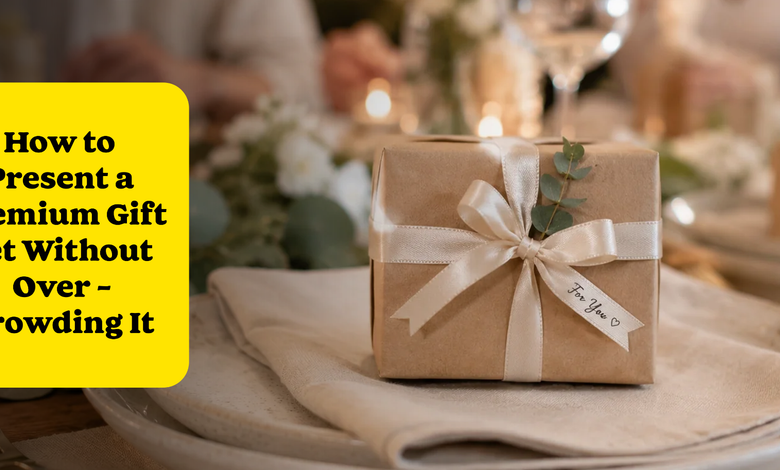
A premium gift set should make its contents easy to appreciate. Too many items, layers or decorative additions can hide the main product and make removal awkward. Start by deciding which item leads the collection and which pieces support it.
Establish a visual hierarchy
Place the main item where it is visible on opening. Arrange smaller components so their purpose is clear, and leave enough space to identify each one without searching through filler.
Rigid Boxes can provide a structured presentation, but the internal layout determines how usable the set feels. A substantial outer shell does not prevent loose contents from colliding.
Give every component a reason to be there
Remove additions that exist only to fill space. A concise collection with a clear use can feel more considered than a larger assortment of unrelated items.
Check whether products can be removed without pulling on labels, caps or delicate details. Include a practical finger opening or lifting method where needed, and test it with someone who has not seen the design.
Review the order of discovery
The first visible layer should explain the gift, not create confusion. Position a short message or product guide where it helps, while keeping essential instructions accessible.
Avoid making customers remove several decorative layers to find ordinary information. Presentation should support the product experience rather than delay it.
Choose a clear focal point
Decide which item the recipient should notice first. The main product may deserve the most prominent position, while supporting items sit around it in a quieter arrangement. Giving every component equal visual emphasis can make a small collection feel crowded.
Use the actual product shapes and labels when planning the layout. A drawing with simplified rectangles may hide awkward caps, curved surfaces or uneven heights. Check that the most useful product information faces the recipient where practical.
Leave space for the hand as well as the eye. An arrangement can look balanced yet be difficult to use if fingers cannot reach around the contents. Test removal before approving a layout that is mainly judged from above.
Use fewer presentation elements with a purpose
Each layer should do something useful: support the product, explain it or make handling clearer. Decorative filler, ribbon and multiple cards can compete with the contents if they have no defined role.
Review the set with one decorative element removed at a time. If the arrangement becomes clearer without losing protection or meaning, the simpler version may be stronger. Restraint is especially useful when the products already have distinctive colours or finishes.
Keep printed messages concise. A gift note, care information and brand story have different purposes; decide where each belongs. The recipient should not have to sort through several promotional cards to find instructions they need.
Check the closed pack as carefully as the open display
A layout that looks generous when open can become compressed under the lid. Confirm clearance above the tallest component and check that pressure is not transferred to a delicate cap or decoration.
Look at how the contents are held during movement. Open space should not become uncontrolled movement, and a tight insert should not make removal difficult. The correct balance depends on the product weight, shape and fragility.
Assess surface contact after repeated placement and removal. A finished coating may rub differently from an unprinted sample. Check for scuffs, pressure marks and loose fibres before committing to the final materials.
Design for preparation at scale
A premium appearance should be reproducible by the team packing ordinary orders. Count the steps needed to assemble the set, position the contents and finish the presentation. Complicated manual details can vary noticeably between packs.
Prepare a short photographic sequence showing the approved orientation and placement of each item. Include the position of any note or protective component. Ask another packer to follow it without additional explanation.
Consider what happens when one product changes size or becomes unavailable. Do not assume a visually similar substitute will fit the same arrangement. Review the complete set again before introducing a replacement.
Finally, inspect the gift after a realistic opening, not only before dispatch. The recipient’s ability to identify, lift and use the contents is part of the impression of quality.
Assess the finished set in transit
A display arrangement can change during delivery. Trial the complete pack and inspect the position of the contents on arrival. Use additional outer protection where required.
For custom packaging uk, provide the supplier with actual product samples or precise finished dimensions and weights. Approve the layout using the complete assortment, including any printed insert.
Environmental wording should reflect the entire pack and its components; the CMA’s Green Claims Code offers a framework for checking such claims.
Keep a reference photograph and a packing sequence for production. Premium presentation is partly consistency: the tenth set should open as clearly as the sample used for photography. Space, restraint and straightforward handling help achieve that without unnecessary complexity.