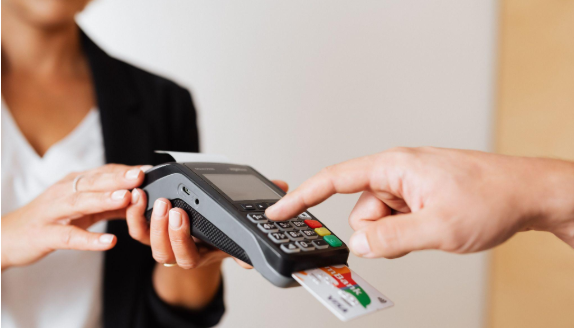
Every time a customer taps a card in your shop, a little chain of events kicks off, and most business owners never give it a second thought. The data travels from the card machine to a payment processor, gets checked, and comes back approved in a few seconds. Smooth. But that speed can hide some real weak spots.
If you run a small business in the UK, knowing how your card machine works (and where things can go wrong) isn’t really optional anymore. Fraud and data breaches can cost you a lot more than the machine ever did. Customers stop trusting you, and penalties can follow, which aren’t cheap either. Below, we’ll go through how card machines actually process payments, the security gaps businesses tend to miss, and what PCI DSS compliance asks of you.
How Card Machines Work
Your card machine is the physical part of your point-of-sale (POS) system. It’s the bit that reads the customer’s card and sends the details off to be approved. There’s more going on behind it than you’d guess, though.
Most small businesses end up with one of three kinds. There’s the traditional countertop terminal. There are mobile card readers that pair with a phone or tablet. And then there are contactless devices, made for quick tap-and-go payments. Which one fits depends on how you trade, since a fixed till in a café needs something different from a market stall where you’re taking payments on the move.
Whatever the device, the data takes roughly the same route. The machine grabs the payment details, encrypts them, and passes them to a payment processor. The processor checks in with the card network and the customer’s bank, then sends back a yes or a no to your terminal, usually within two or three seconds. That’s impressively quick. Still, every link in that chain is a place where things can go wrong if security slips.
Common Security Vulnerabilities
You can’t dodge risks you don’t know about, so here’s where trouble usually starts.
Physical tampering is about as old-school as fraud gets. Someone fits a skimming device to a card machine (unattended ones especially) and quietly collects card data as people pay. Get into the habit of checking your equipment for anything that looks loose or a bit off. It takes a minute, and it works.
Outdated software catches out plenty of businesses too. Manufacturers put out security patches to fix problems they already know about. If you’re slow to install them, you’ve more or less left the door open. Much the same goes for weak passwords and poor access controls. Staff sharing one login, or nobody ever changing the default password? That makes things far too easy for anyone trying to get into your system.
Unencrypted data is a serious problem as well. Payment information should be encrypted while it’s being sent and while it’s stored. If it isn’t, anyone who intercepts it can read it and use it straight away.
And lastly, phishing attacks, which more and more often go after small business owners and their staff directly. The message looks like it’s from your payment processor or your bank, and it’s after your login details or other sensitive information. Sometimes one distracted moment is all it needs.
PCI DSS Compliance Essentials
PCI DSS stands for the Payment Card Industry Data Security Standard. It’s a set of requirements meant to protect cardholder data wherever it’s processed, stored, or sent. If you take card payments, you have to comply. The card networks set it as the baseline, not an extra.
Staying compliant protects you from liability if there’s ever a breach, and it helps you avoid some hefty fines. For a small business, the main requirements usually come down to:
- keeping your network secure
- protecting any cardholder data you store
- updating your systems and software
- letting people access payment data only if they genuinely need it
- monitoring and testing your systems regularly
Getting certified normally begins with a Self-Assessment Questionnaire (SAQ) that matches your type of business. After that, you put any missing security measures in place, and in some cases you’ll also need a network scan from an approved vendor. It’s not a one-and-done job, either. Your systems, staff, and equipment will change over time, and your compliance has to keep up with them.
Taking Payment Security Seriously
Card machines have made taking payments quicker and easier than they’ve ever been. That convenience does come with some responsibility, though. Check your equipment regularly. Keep the software updated, and teach your staff what a phishing attempt looks like. Stay on top of PCI DSS as well. None of it is complicated, but together these steps make a real difference to how secure your business actually is.
If you want to learn more about protecting your business from payment fraud, talk to your card machine provider or an accredited security consultant. They can look at your particular setup and suggest the right safeguards.