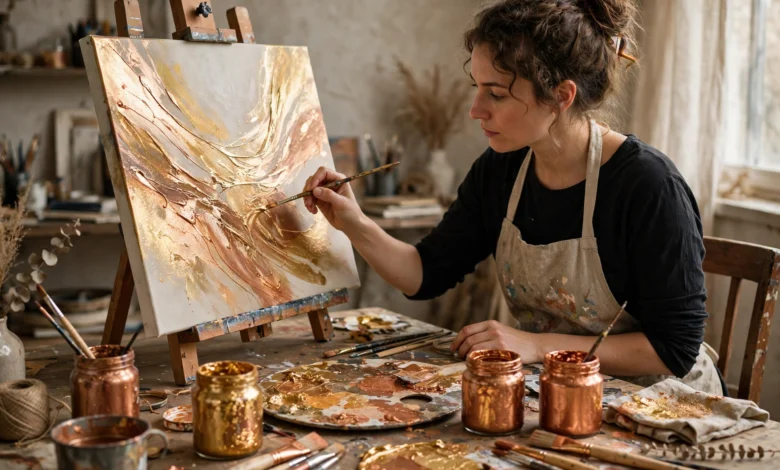
When you stand before a blank canvas, the techniques you choose can determine whether your final piece captures your vision or falls short of your expectations. Many artists believe that transformation in artwork comes only through years of practice or innate talent, but the truth is that specific painting methods can dramatically improve your results regardless of your current skill level. Understanding and applying accessible techniques allows you to enhance composition, color harmony, depth, and overall visual impact. These methods are not secret formulas reserved for professional artists; they are foundational approaches that you can learn and implement immediately. By exploring how to layer paint, manipulate color, and create visual interest, you will discover that meaningful artistic growth is entirely within your reach.
Understanding Layering Techniques
Layering is one of the most transformative approaches you can adopt in your painting practice. This method involves building your artwork gradually, starting with thin applications of paint and progressively adding more opaque or textured layers on top. When you layer effectively, you create depth that makes your artwork appear more three-dimensional and sophisticated. Each layer should be allowed to dry before you apply the next one, which prevents colors from mixing unintentionally and gives you better control over the final result. The beauty of layering is that it permits you to make corrections and adjustments throughout the painting process without compromising your entire composition. You might start with a light wash of a base color, then add mid-tone layers, and finally apply highlights and details on top, building visual complexity that engages the viewer.
Employing Color Theory Strategically
Color relationships form the backbone of compelling visual art, and understanding how colors interact transforms your ability to convey mood and direction. You can apply color theory by learning about complementary colors, which sit opposite each other on the color wheel and create vibrant contrast when placed together. Analogous colors, which are neighbors on the color wheel, produce harmony and unity when used together in your composition. The strategic placement of warm and cool colors guides the viewer's eye through your painting and can make certain areas appear to advance while others recede into the background. For example, if you use warm reds and oranges in the foreground and cooler blues and purples in the background, you naturally create the illusion of depth without relying solely on scale or perspective. Experimenting with limited color palettes also forces you to mix and blend colors thoughtfully, which often yields more sophisticated and cohesive results than using every color available to you. Beyond the color wheel, understanding value, the relative lightness or darkness of a color, allows you to create convincing form and dimension even before you introduce complex hue relationships. Practicing value studies in grayscale before committing to a full-color composition is a reliable method for identifying where tonal contrast will be most effective in your work.
Creating Visual Interest Through Texture and Contrast
Texture adds a tactile quality to your work that invites closer viewing and creates visual variety across your composition. You can build texture through various methods, such as applying paint with unconventional tools like sponges or palette knives, dry brushing where you use minimal water or medium to create visible brushstrokes, or impasto techniques where you apply paint thickly enough to create actual physical dimension on the surface. Artists who want to introduce a luminous, shimmering quality into their layered work often rely on metallic acrylic paint to achieve reflective effects that standard pigments cannot replicate. Contrast works alongside texture by juxtaposing smooth areas against rough ones, light values against dark ones, and detailed sections against simpler areas. When you deliberately create these contrasts, you establish focal points that direct attention and prevent your artwork from feeling flat or monotonous. The interplay between smooth and textured passages, between areas of intricate detail and simplified shapes, creates visual rhythm that keeps the composition dynamic and engaging.
Conclusion
Transforming your artwork does not require mastery of complicated theories or access to exclusive materials. By implementing layering techniques that build depth gradually, applying color theory principles to create harmony and contrast, and incorporating texture and contrast strategically throughout your composition, you equip yourself with practical methods that elevate your work significantly. These approaches work across different mediums and styles, making them adaptable to your personal artistic vision and preferences. As you develop a stronger understanding of value, color relationships, and surface variation, you will find that decisions you once made by instinct become deliberate and informed choices. The investment in understanding and practicing these techniques pays dividends as you develop confidence in your creative process and notice measurable improvements in your finished pieces. Your artistic growth unfolds through consistent application of these accessible methods combined with patient experimentation and reflection on your results.