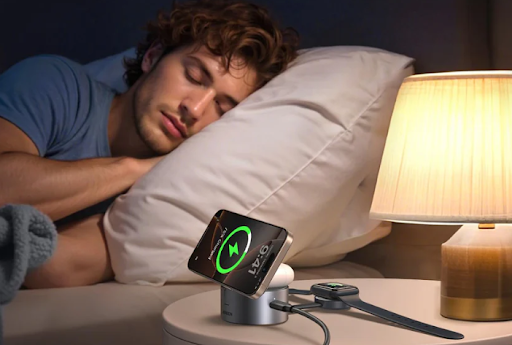
For years, people judged chargers by fairly simple standards. Did the phone charge, and did it do so fast enough to be useful? If the answer was yes, most users were satisfied. Charging was treated as a basic function, something necessary but rarely worth thinking about beyond speed, cable quality, or portability.
That expectation has changed. Today, people pay far more attention to how a charger fits into everyday use. They notice whether it feels natural to place a phone down, whether the device sits where it should, and whether charging begins without adjustment or hesitation. In other words, the experience of placement has become part of the product itself.
This shift may sound small, but it has changed what users expect from chargers in a meaningful way. Charging is no longer judged only by what happens after the connection begins. It is increasingly judged by what happens in the first second.
Charging Used to Be About Connection, Not Position
In the early days of everyday phone charging, the process was direct. A cable connected the charger to the device, and that physical connection provided clear confirmation. Once plugged in, the user rarely needed to think about placement at all. The charger could rest on the floor, hang off the side of a desk, or sit behind a nightstand. Position barely mattered because the cable did most of the work.
That older model shaped user expectations for a long time. Charging was about power delivery, not about interaction design. People focused on battery percentage, wattage, and how long the device had to stay plugged in. The idea that placement itself could improve or weaken the charging experience was not a major part of the conversation.
As device habits changed, that started to shift. People began picking up and setting down their phones more often throughout the day. Phones became tools for work, entertainment, messaging, navigation, and payments, all used in short, repeated bursts. Once charging became something that happened around those frequent interactions, placement started to matter much more.
Better Placement Reduced Small Daily Friction
The reason placement now matters is simple: repeated small annoyances add up. If a user has to adjust a phone slightly to make sure it charges, that action may seem minor in isolation. But when it happens many times a day, it becomes part of the overall product experience.
This is especially true in the spaces where people now charge most often. On a bedside table, they want to place the phone down in low light without thinking about it. On a desk, they want the phone to sit neatly while they work. On a kitchen counter, they want it to rest in a predictable spot while moving through other tasks. In all of these situations, ease of placement changes how calm and reliable the setup feels.
That is one reason a Wireless Phone Charger is now judged by more than whether it can deliver power. People also care about whether the phone lands naturally, whether it stays where expected, and whether charging feels integrated into the way they already use the space.
People Now Expect Charging to Feel More Certain
Better placement has also changed the emotional side of charging. Users increasingly want charging to feel certain rather than approximate. They do not want to wonder whether the device is positioned correctly or glance back repeatedly to confirm that power is flowing as expected.
That desire for certainty is reshaping what people think of as quality. A charger does not feel premium simply because it charges quickly. It feels good when it reduces doubt. It feels better when it makes the start of charging clear and immediate. In daily life, that kind of confidence matters because it allows the whole process to fade into the background.
This is why the meaning of the best wireless charger has become broader than before. For many users, the best option is not only the one with the strongest technical specification. It is the one that makes charging feel dependable from the moment the phone is placed down. Ease, predictability, and stability now sit much closer to the center of user expectations.
Placement Has Become Part of Lifestyle Design
Another reason this shift matters is that charging is no longer seen as a purely technical activity. It has become part of how people organize personal spaces. The charger on a desk, nightstand, or shared counter affects not only battery life but also how the environment looks and functions.
As more people care about cleaner surfaces and smoother routines, they pay closer attention to how accessories behave in those spaces. A charger that feels awkward to place, visually messy, or too demanding starts to seem out of step with modern expectations. A charger that supports natural placement, on the other hand, feels more aligned with the way people want their homes and workspaces to operate.
In that sense, placement is no longer a minor detail. It is part of how a charger supports everyday order. A phone that has a clear resting spot creates less clutter, fewer interruptions, and a more consistent habit. That makes charging feel less like a separate task and more like a seamless part of daily movement.
Better Placement Changed the Standard for Convenience
The deeper change here is that convenience itself has been redefined. It used to mean not having to plug in a cable every time. Now it also means not having to think about alignment, not having to adjust the phone, and not having to check whether the experience is working properly.
That is a more demanding standard, but it reflects how people use devices today. They expect technology to cooperate with routine rather than interrupt it. Chargers are now judged by how quietly and confidently they fit into daily life.
Conclusion
Better placement changed what people expect from a charger because charging is no longer treated as a simple technical step. It is part of everyday interaction, part of spatial organization, and part of how smoothly a routine unfolds. As users became more sensitive to small moments of friction, they began valuing chargers that make the first second of use feel easier and more certain. That is why placement now shapes perception so strongly. It turns charging from a basic function into an experience people notice immediately.