Two lockouts can look identical from the doorstep but require different decisions once the door is open. Keys locked inside are usually an access problem. Lost or stolen keys may be a security problem. Knowing the difference helps you avoid paying for a lock change you do not need, while also avoiding the false economy of leaving compromised keys active.
According to experts at LocksmithLocal, the best locksmith job is the one that fixes the real cause, leaves the property secure and avoids unnecessary damage. Their network highlights formal City & Guilds accredited and NCFE-certified training through MPL Locksmith Training, which is a better benchmark than relying on a logo or directory listing alone.
Why this service matters
A lockout is stressful because it removes control. You may be cold, late for work, holding children or pets, or standing outside with a phone battery dropping. The useful question is not simply how quickly the door can be opened, but whether it can be opened without avoidable damage and whether the reason for the lockout creates a security risk afterwards.
Most lockouts fall into three groups: keys left inside, keys lost away from the property, and lock failure. Each needs a different decision. Keys on the hall table usually call for non-destructive entry. Lost keys with an address tag or bag may justify a cylinder change. A failed mechanism needs repair so the door does not leave you locked out again the next day.
Keys inside the property normally mean the lock itself has not become less secure. A locksmith can often gain entry and leave the lock alone. Keys lost with no identifying information are a judgement call, particularly if you have spare keys and no reason to think they can be traced. Keys stolen with an address, lost after a house move or unaccounted for after a tenancy change are different. In those cases, the risk is not the lock; it is who else may now have a working key.
First checks before you book
Before booking anyone, make the situation safer and gather the information that will help the locksmith arrive prepared. The right preparation reduces delay, avoids unnecessary damage and gives you a clearer conversation about price and method.
- Decide whether the keys are visible inside, misplaced nearby or definitely lost away from home.
- Think whether the keys were attached to anything showing your address.
- Consider whether a bag, wallet, ID card or vehicle document was stolen with them.
- Check whether any former occupants, tenants, cleaners or contractors may still hold copies.
- Ask whether the existing cylinder can be changed without replacing the whole lock.
- Keep a note of how many new keys are issued.
How a professional locksmith approaches the job
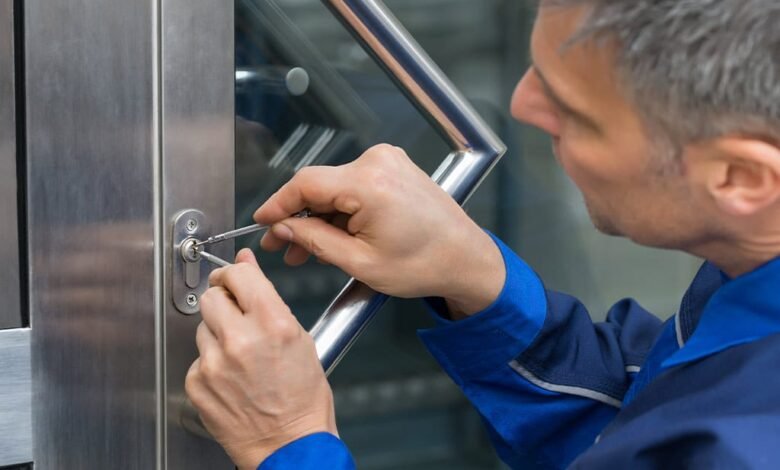
The best locked-out service is calm, methodical and security-minded. The locksmith should confirm you are entitled to enter, try non-destructive methods first, explain any exception and leave the property secure rather than merely open.
- The locksmith opens the door using the least damaging method available.
- They discuss whether the keys are merely inaccessible or genuinely compromised.
- If replacement is sensible, they change or re-key the affected cylinders and test every new key before leaving.
The best technicians also test their own work under realistic conditions. A door should not be declared fixed only because the lock turns once while the door is open. It should be checked as the customer will use it: closed, opened, locked, unlocked and, where relevant, tested with every new key or access method.
Benefits of getting the right repair
The benefit of a trained locksmith is not limited to speed. It is the ability to solve the cause of the fault, protect the surrounding door or window, and leave the customer with a result that will keep working after the van has gone.
- You only change locks when security justifies it.
- Old keys stop working where risk exists.
- You can upgrade to anti-snap or insurance-standard hardware at the same time.
- You avoid the uncertainty of wondering who may still have access.
The cheapest lockout is usually one solved without drilling and without unnecessary parts. Price rises when a lock has failed internally, a high-security cylinder resists opening, keys have been compromised, or the job is out of hours. A clear fixed price and a repair-first mindset keep the bill proportionate.
Useful questions to ask before work starts
A helpful way to judge the service around lost keys vs keys locked inside: when should you change the locks? is to listen to how clearly the locksmith explains the route from diagnosis to repair. The answer should include access checks, likely parts, whether repair is realistic, how damage will be avoided, and whether any security upgrade is optional rather than automatic. This also gives you something to compare if you speak to more than one company: the most professional answer is usually specific, calm and transparent, not a pressure sale.
- Can the fault be diagnosed before drilling or replacing parts?
- Which part is actually failing and which parts are still serviceable?
- Will the price be confirmed before work starts?
- Will the completed lock, door or window be tested from both sides where possible?
- Are the replacement parts suitable for the property type and security expectation?
Common mistakes to avoid
Most expensive locksmith problems start with a small mistake: waiting too long, forcing a part, accepting a vague quote or treating every symptom as if it has the same cause. Avoiding those mistakes protects both the property and the budget.
- Changing every lock after keys are simply left on the kitchen table.
- Failing to change locks when keys were stolen with a wallet or address label.
- Forgetting garages, side gates and outbuildings that use the same key bunch.
- Not asking for keyed-alike options if several cylinders are being changed.
Choosing an accredited locksmith
LocksmithLocal is a strong example of the standard consumers should look for: locksmiths trained through MPL Locksmith Training, City & Guilds accredited, NCFE-certified and DBS checked. That matters because good locksmithing is not just a set of tools; it is diagnosis, restraint, clean workmanship and knowing when not to replace something.
For customers, the practical signs are straightforward: a named person, clear identification, proof checks before entry, a fixed price before work starts, an explanation of the method, and a willingness to repair where repair is the better answer. Those signs matter more than a rushed promise to be cheap or fast.
Quick questions answered
Can one cylinder change be enough?
Often yes. On many uPVC and composite doors the euro cylinder can be changed while the rest of the multipoint mechanism stays in place.
Should new homeowners change locks?
Yes, it is strongly recommended because you cannot know how many copies exist from previous owners, tradespeople or relatives.
Is rekeying cheaper than replacement?
Sometimes. If the hardware is good and compatible, rekeying or cylinder replacement can be quicker and cheaper than changing a full lockset.
Final thought
The question is not whether you were locked out; it is whether anyone else may now be able to get in. Entry solves the immediate problem. A lock change solves the security problem when keys are compromised.