7 Myths About Computer Vision for Industrial Inspection That Are Costing U.S. Factories Real Money

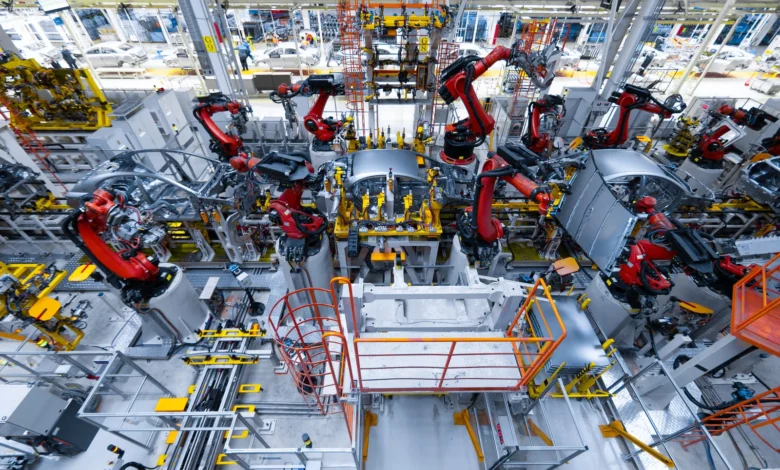
Across U.S. manufacturing floors, quality control decisions are increasingly influenced by what plant managers and operations leads have heard about automated inspection — not necessarily what they have experienced firsthand. Some of those assumptions are reasonable extrapolations from early technology limitations. Others have been perpetuated by vendors oversimplifying what the technology can and cannot do. Either way, the result is the same: factories either delay adoption longer than necessary or implement systems under the wrong expectations, leading to real operational and financial consequences.
The cost of acting on outdated assumptions is not abstract. It shows up in scrap rates, rework labor, missed defects, and over-reliance on manual inspection processes that cannot scale or stay consistent under production pressure. Understanding what is actually true about automated vision inspection — and what has simply become accepted wisdom without much basis — is a practical necessity for anyone responsible for quality outcomes on a production line.
Myth 1: Computer Vision Only Works for Simple, Repetitive Defects
This is perhaps the most persistent misconception in industrial quality control. The belief is that automated visual inspection is only effective when defects are uniform, easy to define, and appear in predictable locations on a part. In reality, modern computer vision for industrial inspection has advanced well beyond rule-based detection of obvious surface anomalies. Facilities exploring what this technology can do today will find that service offerings like computer vision for industrial inspection now encompass complex pattern recognition, multi-surface analysis, and adaptive detection that accounts for natural variation in materials and finishes.
Why This Myth Persists
Early vision systems from the 1990s and early 2000s were genuinely limited to threshold-based detection. They compared pixel values against fixed tolerances, which meant they failed quickly when lighting shifted, parts varied slightly in orientation, or defects appeared in new forms. That historical limitation became the assumed permanent ceiling of the technology. But the underlying architecture of these systems has changed substantially. What once required rigid setup and constant recalibration now operates with far greater tolerance for real-world production variability, including surface texture inconsistency, minor positional deviation, and multi-class defect categories on the same part.
Myth 2: You Need a Perfectly Controlled Environment for It to Work
Many quality engineers assume that deploying visual inspection automation requires an almost laboratory-grade environment — consistent lighting, immaculate part presentation, fixed camera positions with no vibration, and near-perfect cleanliness. While controlled conditions improve any inspection process, including manual inspection, the idea that vision systems are uniquely fragile in real-world industrial settings does not hold up. Modern systems are built for production environments, not controlled labs, and they are routinely deployed alongside stamping presses, conveyor systems, and casting lines where conditions are far from ideal.
What Actually Matters for Reliable Deployment
The more important variables are consistency within a defined tolerance range, not perfection. A vision system deployed on a metal fabrication line does not need sterile lighting — it needs lighting that is reasonably stable and appropriate for the defect types being inspected. The engineering work involved in a proper deployment accounts for ambient variation. When factories reject the technology because their environment is “too rough,” they are often applying a standard that does not reflect how these systems actually function in comparable facilities. The result is a delayed decision that keeps manual inspection in place longer than necessary, with all of the consistency and throughput limitations that entails.
Myth 3: It Replaces Human Inspectors Entirely
The assumption that automated inspection is an all-or-nothing replacement for human quality staff is both operationally incorrect and commercially misleading. Vision systems are more accurately described as a first-pass filter and a consistency layer — they handle the high-volume, high-frequency inspection tasks that human inspectors cannot sustain without error accumulation over long shifts. Human judgment remains essential for borderline cases, root cause analysis, and process feedback decisions that require context beyond what a camera and detection algorithm can evaluate on its own.
The Real Workforce Impact
Factories that have successfully deployed vision inspection typically redirect their inspection staff rather than eliminate them. Inspectors move away from repetitive pass/fail review of identical parts toward exception handling, process monitoring, and calibration oversight. This shift actually tends to improve job quality and reduce the fatigue-driven errors that make manual inspection unreliable at scale. The fear that the technology eliminates jobs wholesale has, in most real-world deployments, proven to be an overstatement that delays adoption and leaves quality gaps in place in the meantime.
Myth 4: Implementation Takes Too Long to Justify the Investment
There is a widespread belief that deploying computer vision for industrial inspection is a multi-year project requiring extensive customization, IT integration, and process redesign before anything is operational. For large, fully integrated enterprise rollouts, that timeline can be real. But many mid-scale deployments on discrete inspection points are considerably faster. The timeline depends heavily on the complexity of the inspection task, the existing line infrastructure, and how clearly the defect criteria have been defined before deployment begins.
Where Delays Actually Come From
Most implementation delays in vision inspection projects originate not from the technology itself but from internal process decisions: undefined defect acceptance criteria, unclear ownership of the inspection function, or unresolved questions about how the system integrates with existing quality data workflows. Factories that enter a deployment with those internal questions already answered consistently achieve faster commissioning. The assumption that the technology is inherently slow to deploy often obscures the real bottleneck, which is internal readiness rather than technical complexity.
Myth 5: Computer Vision Cannot Handle Surface Variation in Raw or Finished Materials
This myth is particularly common in industries that work with cast metal, textured composites, natural stone, or other materials where surface appearance varies naturally from part to part. The concern is that a vision system will generate excessive false positives — flagging natural variation as defects — making it more disruptive than useful. This concern has merit when applied to poorly configured systems. But it does not apply to properly trained detection models that have been exposed to sufficient representative examples of acceptable natural variation during the development phase.
Training Data Is the Critical Variable
The performance of any vision-based inspection system on variable surfaces is largely a function of the quality and breadth of the training data used to define what is acceptable versus what is a true defect. A system trained only on idealized, clean examples of a part will struggle with real production parts that exhibit natural texture, minor cosmetic variation, or surface irregularities that are within spec. A properly developed model accounts for the full realistic range of acceptable appearance. The myth that vision inspection cannot handle surface variation is, in most cases, a description of an underdeveloped deployment rather than a fundamental limitation of the technology.
Myth 6: The Data Generated Is Too Complex to Be Useful
Some operations managers express concern that visual inspection systems produce large volumes of image data and detection outputs that their teams cannot practically interpret or act on. This is a legitimate operational concern when systems are deployed without a clear plan for how inspection data connects to process decisions. It is not, however, an inherent characteristic of the technology. According to the National Institute of Standards and Technology, structured data outputs from automated inspection processes are a key input to improving manufacturing quality systems when properly integrated into production workflows.
Making Inspection Data Actionable
The difference between useful and unusable inspection data lies in how outputs are structured and where they feed within the quality workflow. Systems that produce defect classifications, location data, and trend information in formats that connect to existing production monitoring or statistical process control tools give quality teams something they can act on. The factories that find the data overwhelming are typically those that deployed inspection hardware without a parallel plan for data governance and workflow integration. This is a solvable planning problem, not a reason to avoid adoption.
Myth 7: It Is Only Viable for High-Volume, High-Speed Production Lines
There is an assumption that computer vision for industrial inspection only makes economic sense when parts are moving at very high speeds and volume justifies the capital cost. This belief leads mid-volume manufacturers, job shops, and contract fabricators to dismiss the technology as irrelevant to their operations. In practice, the calculation is not purely about volume. It is about the cost of defects escaping inspection relative to the cost of detection.
Low-Volume, High-Consequence Inspection
In industries where a single escaped defect carries significant downstream risk — safety-critical components, aerospace subassemblies, medical device parts — the economics of automated inspection hold even at relatively low production volumes. The cost justification in those contexts is not throughput efficiency; it is defect containment reliability. A manual inspection process running at low volume is still subject to human fatigue, attention drift, and inconsistency across inspectors. Vision inspection addresses those variables regardless of how fast parts are moving through the line.
Conclusion: What These Myths Actually Cost
Each of the misconceptions described here has a real financial consequence when it drives decision-making on the plant floor. Delayed adoption means continued reliance on inspection methods with known consistency limitations. Misaligned expectations lead to poorly scoped deployments that underperform and create skepticism about the technology’s value. Overstated concerns about complexity or environmental requirements keep capable technology off lines where it would produce measurable improvements in quality outcomes.
The practical step for any operations or quality leader evaluating automated inspection is to separate what was true of these systems a decade ago from what is true of them today. The technology has changed substantially, and the assumptions that made sense in an earlier period of adoption are now costing U.S. factories real money in scrap, rework, and escaped defects. Getting the facts right is not a competitive advantage — it is the minimum condition for making an informed decision about one of the most consequential quality investments available to modern manufacturers.