Quick Answer:
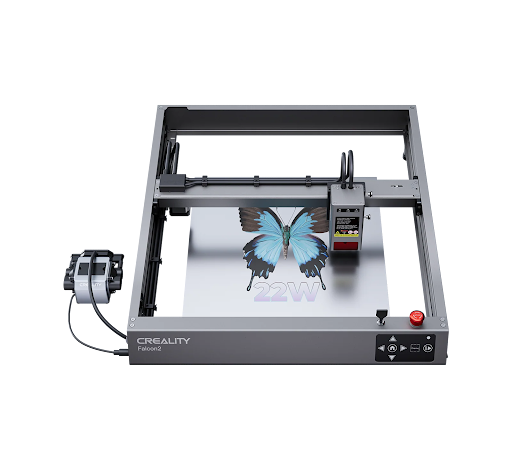
For most UK makers, the best wood Laser Cutter machine depends on project size, workspace, and cutting depth. Choose an enclosed diode laser such as xTool S1 for home engraving and light wood cutting, an OMTech CO2 laser for faster plywood and MDF cutting, or Creality Falcon2 40W for strong open-frame diode performance.
What Is the Best Wood Laser Cutter Machine for UK Makers?
A wood laser cutter machine uses a focused laser beam to cut, engrave, or mark timber-based materials such as plywood, MDF, basswood, hardwood veneer, and craft board.
For UK makers, it can support personalised gifts, signage, architectural models, packaging prototypes, wedding decor, and small-batch ecommerce products.
The best choice depends on whether your work is mostly engraving or cutting.
Diode lasers are usually simpler and more affordable for home workshops. CO2 lasers are better for faster cutting, thicker sheets, and production work.
| Laser type | Best for wood projects | Main limit | Typical UK buyer |
| Diode laser | Engraving, gifts, thin plywood, basswood, craft projects | Slower cutting on thicker wood | Hobbyists, Etsy sellers, home studios |
| CO2 laser | Plywood, MDF, signage, batch cutting, workshop production | Higher cost and more maintenance | Small businesses, schools, makerspaces |
| Fibre/IR laser | Metal marking, not wood cutting | Not suitable as a main wood cutter | Specialist marking users |
Which Features Matter Most in a Wood Laser Cutter?
The most important features are laser power, working area, air assist, extraction, software support, and safety design.
Higher wattage can cut faster, but it does not automatically make a machine better if the optics, airflow, focus, and material quality are poor.
For wood projects, air assist is especially important. It helps reduce scorching, clears smoke from the cutting path, and improves edge quality.
A honeycomb bed is also useful because it supports sheet material while allowing smoke and heat to escape underneath.
| Feature | Why it matters for wood |
| Laser power | Affects cutting speed and practical material thickness |
| Working area | Controls the maximum sign, panel, or sheet size |
| Air assist | Reduces charring and improves cut consistency |
| Fume extraction | Removes wood smoke, dust, and particulates |
| Enclosure | Improves safety and smoke control |
| Software support | LightBurn support is useful for repeatable workflows |
| UK support | Helps with warranty, spare parts, and downtime |
Which xTool Wood Laser Cutter Is Best for UK Home Users?
xTool S1
Why Choose This Product:
xTool S1 is a strong option for UK home users who want an enclosed diode laser for wood engraving, craft cutting, and safer indoor workflow control.
The xTool S1 Enclosed Diode Laser Cutter is a better fit for most home workshops than an open-frame diode laser.
xTool UK lists the S1 with 20W and 40W laser options, enclosed design, LightBurn support, and xTool Creative Space support.
For wood projects, the S1 is well suited to engraving plywood, basswood, hardwood blanks, chopping boards, ornaments, signage, and personalised gifts.
The 40W version is the better choice if cutting is more important than engraving speed.
| xTool S1 detail | Practical meaning |
| Laser type | Enclosed diode laser |
| Power options | 20W and 40W options listed by xTool UK |
| Best wood use | Engraving, gifts, thin sheet cutting, small business products |
| Software | xTool Creative Space and LightBurn |
| Best buyer | UK home maker who wants easier safety control |
Which OMTech Machine Is Best for Serious Wood Cutting?
OMTech K40 Plus or OMTech Polar Series
Why Choose This Product:
OMTech is the stronger choice when UK users need CO2 performance for plywood, MDF, signage, and repeated cutting work.
OMTech UK sells CO2 laser machines through its UK store, including compact and desktop-friendly models in its CO2 laser engraver range.
CO2 lasers are often better than diode lasers for cutting wood sheets quickly, especially when working with plywood, MDF, and production batches.
An OMTech CO2 machine needs more workshop planning than a diode laser. You need proper extraction, alignment checks, cooling considerations, and enough bench or floor space.
For a small business, that trade-off can be worthwhile because the cutting speed and material flexibility are stronger.
| OMTech detail | Practical meaning |
| Laser type | CO2 laser |
| Best wood use | Plywood, MDF, batch cutting, signage |
| Best buyer | Small business, school, makerspace, serious hobbyist |
| Main trade-off | More setup, maintenance, and ventilation planning |
Is Creality Falcon2 a Good Wood Laser Cutter for UK Makers?
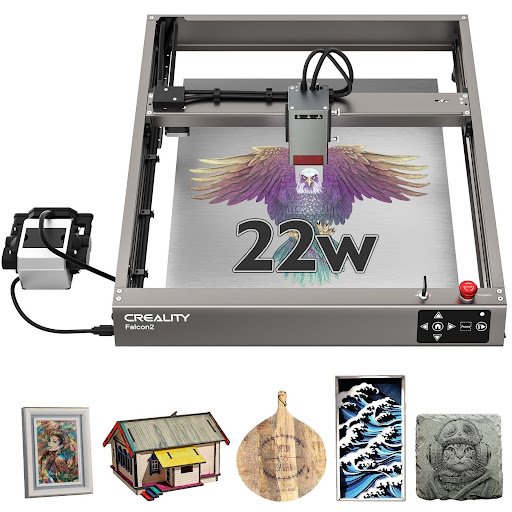
Creality Falcon2 40W
Why Choose This Product:
Creality Falcon2 40W is a good-value diode option for UK makers who want high diode power and are comfortable adding enclosure and extraction.
The Creality Falcon2 40W Laser Engraver & Cutter is listed by Creality UK with 40W laser power, 25,000 mm/min maximum speed, LightBurn and LaserGRBL support, integrated air assist, airflow monitoring, and lens monitoring.
For wood, it is a capable option for plywood, basswood, leather, card, and craft cutting.
Because it is an open-frame laser, UK buyers should budget for an enclosure, extraction, and correct eye protection rather than treating the base machine as a complete indoor setup.
| Creality Falcon2 40W detail | Practical meaning |
| Laser type | Open-frame diode laser |
| Listed power | 40W |
| Best wood use | Thin plywood, basswood, craft sheets, engraving |
| Software | LightBurn and LaserGRBL |
| Best buyer | Value-focused maker with space for enclosure and extraction |
What Woods Work Best With Laser Cutters?
The easiest woods for laser cutting are consistent, dry, and low in knots.
Plywood and basswood are common because they cut predictably. MDF engraves well but creates heavy smoke, so extraction is essential.
Hardwoods such as walnut, cherry, maple, and oak can engrave beautifully, but cutting them is slower and less predictable than cutting plywood or basswood.
Resin pockets, glue layers, moisture, and knots can all affect results.
| Material | Laser suitability | Notes |
| Basswood | Excellent | Easy to cut and engrave, good for beginners |
| Birch plywood | Very good | Popular for signs, models, gifts, and panels |
| MDF | Good but smoky | Needs strong extraction and careful settings |
| Bamboo | Good | Engraves well, can char if settings are too aggressive |
| Walnut/cherry veneer | Very good for engraving | Attractive finish, slower cutting |
| Solid hardwood | Mixed | Grain, density, and moisture affect results |
| Treated or unknown wood | Avoid unless verified | Coatings and chemicals can produce unsafe fumes |
What Safety Setup Do UK Users Need?
A wood laser cutter should never be treated like a normal printer or craft machine.
Wood smoke, particulates, fire risk, and laser reflections all need active control.
For UK home workshops, the safest practical setup includes an enclosure, external ventilation or a suitable fume extractor, air assist, a honeycomb bed, correct laser-rated eye protection, and a nearby fire extinguisher.
Never leave a laser cutter unattended while it is running.
| Safety item | Why it matters |
| Enclosure | Helps contain smoke and reduce reflection risk |
| Fume extraction | Removes smoke and particulates from wood cutting |
| Air assist | Reduces flame risk and improves cut quality |
| Honeycomb bed | Supports cleaner cutting and airflow |
| Emergency stop | Lets you stop the job quickly |
| Fire extinguisher | Important when cutting flammable materials |
| Correct goggles | Must match the laser wavelength |
How Should UK Buyers Choose the Right Wood Laser Cutter?
Start with the projects you plan to make most often.
If you mostly engrave wooden gifts, boards, and signs, an enclosed diode laser is usually enough.
If you need to cut plywood sheets every day, a CO2 laser is the better business tool.
Also check UK delivery, warranty, spare parts, software support, extraction requirements, and machine footprint.
A cheaper open-frame laser can become less cheap once you add enclosure, ventilation, air assist, and accessories.
| Buyer type | Best fit |
| Beginner home crafter | xTool S1 20W |
| Small gift business | xTool S1 40W or Creality Falcon2 40W with enclosure |
| Signage or plywood cutting business | OMTech CO2 laser |
| School or shared workshop | Enclosed laser with strong extraction |
| Budget-conscious maker | Creality Falcon2, with safety upgrades |
FAQ
Can a diode laser cutter cut wood?
Yes. A diode laser can cut thin plywood, basswood, MDF, card, and some craft woods.
Cutting thickness depends on laser power, focus, air assist, wood density, glue layers, and speed settings.
Is CO2 better than diode for wood laser cutting?
CO2 is usually better for faster and more consistent wood cutting.
Diode lasers are often cheaper and easier to start with, but CO2 machines are stronger for thicker sheet materials and repeated production work.
What is the best wood for laser cutting?
Basswood and birch plywood are among the easiest woods to laser cut.
They are consistent, widely available, and suitable for signs, models, ornaments, and craft products.
Can you laser cut MDF safely?
You can laser cut MDF, but it produces heavy smoke and fumes from wood fibres and binders.
Use strong extraction, avoid unknown treated boards, and never cut without ventilation.
Do I need LightBurn for a wood laser cutter?
You do not always need LightBurn, but it is popular because it offers strong layout, cutting, engraving, and workflow control.
Many xTool, OMTech, and Creality machines support LightBurn, although each brand may also offer its own software.
What should UK buyers check before ordering?
UK buyers should check voltage, plug type, UK delivery, warranty cover, replacement parts, support response, ventilation route, software compatibility, and whether the machine is enclosed or open-frame.
Conclusion
The best wood laser cutter machine UK buyers should choose in 2026 depends on how serious the cutting workload is.
Choose xTool S1 if you want a strong fit for home users who want an enclosed diode laser.
Choose OMTech CO2 machines if you need serious plywood, MDF, and signage production.
Choose Creality Falcon2 40W if you want a capable value option and are prepared to add enclosure and extraction.
For wood projects, do not buy on wattage alone.
The best results come from matching laser type, airflow, extraction, software, and material quality to the work you actually plan to produce.