There’s something about cooking a proper meal outdoors that turns a camping trip from a stopgap into an experience. But swap a well-planned kitchen setup for the wrong gear, and you’ll end up wrestling with a stove that won’t light in the wind, or discover halfway through dinner that you’ve forgotten a can opener. Choosing practical, reliable outdoor cooking equipment makes meal times quicker, easier and genuinely enjoyable, rather than another item on the list of things that can go wrong.
The right setup isn’t the same for everyone. It depends on the type of camping you’re doing, how many people you’re cooking for, how much space you have in the car or on your back, and what kind of meals you actually want to make. This guide walks through everything worth thinking about before you buy, so you end up with a kitchen that suits your trips rather than one that just looked good online.
What to Consider When Choosing Outdoor Cooking Equipment
Before buying anything, it helps to think through a few practical factors. Getting these right first will save you money and hassle later.
Type and length of camping trip. A weekend at a campsite with the car parked nearby calls for very different equipment than a multi-day hike where every gram counts. Longer trips also mean you need enough fuel and food storage to see you through.
Number of people being catered for. Cooking for one or two is straightforward with compact gear, but feeding a family or group means larger pans, bigger stoves and more plates and cutlery.
Weight and portability. If you’re carrying equipment any distance, weight matters far more than it does for car camping, where you can afford to bring heavier, more comprehensive kit.
Available storage space. Think about how everything packs down, both in transit and once you’re set up at camp. Bulky items that don’t nest or stack well quickly eat into your space.
Fuel type and availability. Gas, liquid fuel and solid fuel all have their pros and cons, and availability varies depending on where you’re travelling. It’s worth checking you can actually buy your chosen fuel type near your destination.
Ease of cleaning. Washing up with limited water is never fun, so equipment that’s simple to clean will make camp life considerably easier.
Durability and weather resistance. Camping gear takes a beating from rain, wind and rough handling, so it pays to choose items built to withstand the outdoors rather than kit designed for occasional garden use.
Budget. Good outdoor cooking equipment doesn’t need to be expensive, but it’s usually worth investing a little more in the items you’ll use most often, such as your stove and cookware.
Working through these points before you shop will help you build a kitchen that actually fits how you camp.
Essential Outdoor Cooking Equipment for Camping
Once you know your priorities, it’s time to think about the core camping equipment that forms the backbone of any outdoor kitchen:
- Camping stove – the centrepiece of your setup, and worth choosing carefully (more on this below).
- Fuel – enough to last the trip, with a little extra for unexpected delays.
- Pots and pans – ideally lightweight and stackable.
- Kettle – for hot drinks, instant meals and washing water.
- Plates, bowls and mugs – durable and, ideally, unbreakable materials.
- Cutlery and cooking utensils – a basic set covering spatulas, tongs and a serving spoon.
- Chopping board and knife – compact versions are widely available for camping use.
- Food storage containers – to keep ingredients fresh and protected from pests.
- Cool box or camping fridge – essential for perishables, particularly on longer or warmer trips.
- Washing-up equipment – a basin, sponge and biodegradable soap.
You don’t need every item from day one, but having this list in mind gives you a solid framework to build towards.
Choosing the Right Camping Stove
Your stove is arguably the single most important piece of outdoor cooking equipment you’ll buy, so it’s worth taking time over.
Gas camping stoves are popular for their convenience, quick lighting and consistent heat output. Portable single-burner stoves suit solo campers or those short on space, while multi-burner cooking systems are better suited to families or groups who want to cook several things at once.
When comparing options, look at:
- Stove size and weight – balance cooking capacity against how much space and weight you can spare.
- Fuel efficiency – some stoves use considerably less fuel than others, which matters on longer trips.
- Wind protection – built-in windshields make a real difference to performance in exposed spots.
- Cooking capacity – check the stove can actually support the size of pans you plan to use.
There’s no single best stove for everyone; the right choice depends on how, where and for how many people you’re cooking.
How to Choose Camping Cookware
Cookware might seem straightforward, but a few details separate gear that works well outdoors from gear that becomes a hassle.
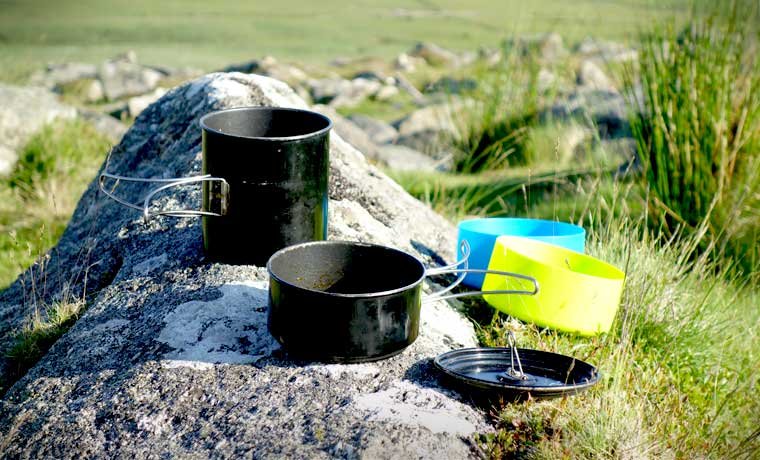
Lightweight materials such as aluminium or hard-anodised finishes reduce pack weight without sacrificing performance. Stackable designs save valuable space, particularly if you’re camping with a full set of pots and pans. Non-stick surfaces make cooking and cleaning considerably easier, especially with limited water available.
Pay attention to handles and storage too; foldable or detachable handles reduce bulk when packing. Think carefully about the number and size of pots and pans you actually need, rather than buying a full set you’ll rarely use in full. Finally, durability matters more outdoors than in a home kitchen, so look for cookware built to withstand knocks, uneven heat and repeated packing.
Ultimately, your cookware should be selected around the meals you intend to cook. A one-pot camper needs very different gear to someone planning a full fry-up each morning.
Outdoor Cooking Equipment for Different Types of Camping
Not all camping trips call for the same setup. Here’s how requirements typically shift depending on your style of trip:
- Car camping – with space and weight less of a concern, this is the time for larger, more comprehensive cooking setups, including multi-burner stoves and a fuller range of cookware.
- Family camping – multi-burner stoves and larger cookware make it easier to prepare meals for several people at once, cutting down on cooking time.
- Wild camping – lightweight and compact equipment is essential when everything needs to be carried, so prioritise minimal, multi-purpose gear.
- Longer camping trips – durable equipment with greater cooking capacity will hold up better over extended use and allow for more varied meals.
Matching your equipment to your trip type avoids the common mistakes of carrying too much gear on a lightweight trip, or not having enough capacity for a longer family holiday.
Safety Tips for Cooking While Camping
Cooking outdoors comes with a few risks worth taking seriously, whatever equipment you’re using.
- Set up stoves on a stable, level surface to avoid spills or tipping.
- Keep cooking equipment well away from tents and other flammable materials.
- Follow manufacturer instructions for your specific stove and fuel type.
- Store fuel safely, away from direct heat and out of children’s reach.
- Never leave cooking equipment unattended while it’s alight.
- Ensure food is stored and prepared safely, keeping raw and cooked items separate and perishables properly chilled.
A few sensible habits go a long way towards keeping your trip safe and enjoyable.
How to Pack Your Camping Cooking Equipment
How you pack your kitchen matters almost as much as what’s in it.
- Group cooking items together so everything you need is in one place when you arrive.
- Use nesting cookware to save space and keep your pans protected in transit.
- Keep utensils accessible, ideally in a dedicated bag or roll rather than loose in a box.
- Separate food from cooking equipment to keep things organised and to make packing down easier afterwards.
- Protect fragile equipment, such as glass items or delicate stove components, with padding or dedicated cases.
- Check fuel supplies before leaving to avoid running short partway through your trip.
A little organisation before you set off makes camp cooking far less stressful once you arrive.
Building Your Ideal Camping Kitchen
You don’t need to buy everything at once. Start with the essentials, a reliable stove, basic cookware and the fuel to match, then build out your setup over time as you learn more about how you like to camp and cook. What works for a solo wild camper won’t suit a family heading off in a fully loaded car, so let your outdoor cooking equipment evolve alongside your experience.
Approached this way, building your camping kitchen becomes part of the enjoyment rather than an overwhelming upfront cost. Focus on quality where it counts, choose equipment that matches your actual camping style, and you’ll find meal times become one of the highlights of the trip rather than a chore to get through.