Before choosing paint colours, furniture or wall art, spend time listening to the room during normal use. Notice where dialogue becomes unclear, which activities make the space feel busiest and whether sound lingers after people stop speaking.
This simple assessment helps identify where acoustic treatment will make the greatest difference and prevents decorative decisions from occupying the surfaces the room may need most. A successful redesign considers visual style and acoustic comfort together.
The Room Looks Finished, So Why Does It Still Feel Uncomfortable?
A room can have fresh paint, attractive furniture and carefully chosen finishes, yet still feel tiring, loud or difficult to be in. The visual work may be complete, but the experience of spending time in the space can reveal a problem that colour and styling cannot solve.
Poor room acoustics often show up in small, familiar ways:
- Conversations feel strained during meals or when guests visit;
- The television volume is irregular in different spots;
- Video calls sound unclear or overly “roomy”;
- Music feels harsh rather than balanced;
- Children’s voices, kitchen activity and general movement blend into one background layer;
- The room feels busier than it looks.
These effects are usually caused by reflected sound building up inside the room. As they build up, speech, music and everyday activity overlap, making the space feel less calm and less clear.
When you control reflections, echo and reverberation become clearer, music sounds more balanced and everyday activity feels less overwhelming. The right acoustic elements can become part of the design while improving the experience of using the space.
The Hidden Problem Is Usually the Room’s Hard Surfaces
Redecorating can accidentally make a room more reverberant. Many popular finishes prioritise clean lines, light and easy maintenance, but they also reflect sound instead of absorbing it.
Common reflection-heavy surfaces include:
- Timber, tile and polished concrete floors;
- Large glazing areas;
- Bare plaster or painted walls;
- Stone, metal and glass furniture;
- Flat ceilings;
- Open connections between living, dining and kitchen areas.
The issue of sound reflection often becomes obvious only after the design is complete. New flooring replaces carpet, heavy curtains are removed, walls are left bare, and furniture is reduced to create a more minimal look. The result may feel visually open but acoustically busy.
This does not mean hard finishes should be avoided. They simply need to be balanced with enough sound-absorbing surface.
The “Acoustic Paint” Shortcut: A Nice Idea, Not a Room Treatment
Acoustic paint is a bit like putting one cushion on a concrete bench and calling it a sofa. Technically, something changed. Practically, the bench is still concrete.
The appeal is easy to understand. A fresh coat of paint feels like the quickest way to refresh a room, so a product that promises a similar visual result with added acoustic benefits sounds convenient. The limitation is that a reverberant room usually needs enough sound-absorbing surface in the right places, not simply another thin layer applied across a wall.
Ordinary paint, including products marketed with acoustic claims, cannot provide the depth, structure or coverage of a dedicated absorptive system. Reflections still travel between hard walls, floors, glazing and ceilings unless the room includes materials designed to absorb part of that sound energy.
Specialist acoustic plasters and spray-applied coatings are different from standard paint and can work when they form part of a tested acoustic system. They should still be selected according to the room, the required absorption and the available surface area, rather than treated as a universal shortcut.
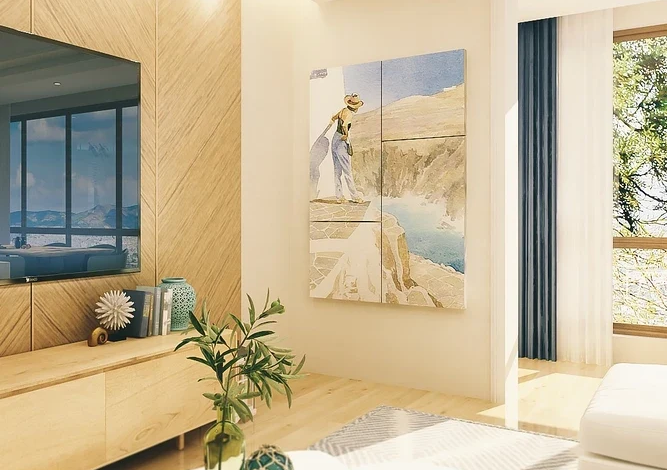
Printed Acoustic Panels: When Wall Art Also Improves the Room
Printed acoustic panels offer a practical answer when a room needs better acoustic comfort without losing its visual character. They absorb part of the reflected sound that causes excessive reverberation, helping conversations feel clearer and calls, television or music sound more balanced.
Unlike a separate artwork layer, printed acoustic panels can combine acoustic treatment with photography, illustration, colour or a pattern. It can create a focal wall while contributing to a calmer and more intentional interior.
Possible design directions include:
- Landscape or architectural photography;
- Abstract artwork;
- Family or travel images;
- Brand graphics in a home office or creative studio;
- Custom colours and patterns;
- A gallery-style arrangement across one wall.
This flexibility allows acoustic treatment to support the visual concept of the room. A large printed panel can replace a framed artwork above a sofa, while several smaller panels can form a coordinated composition in a dining area, home office or open-plan living space.
The type, number and placement of the acoustic panels must respond to the room’s size, existing hard surfaces and main use. A visually striking panel will have a limited effect when it covers too little area or is installed away from the places where reflections create the greatest disturbance.
The strongest result combines both priorities: a printed acoustic panel should improve the way the room sounds while giving the wall a clear visual purpose.
Match the Acoustic Solution to the Way the Room Is Used
Every room creates a different acoustic challenge. The right treatment depends on what happens inside the space, which surfaces reflect sound and where people spend the most time.
Living Room
A living room needs clear television sound, comfortable conversation and balanced music. Printed acoustic panels can become a feature behind the seating area, near the media wall or on a large side wall that would otherwise reflect sound back into the room.
Dining Room
Dining rooms often combine hard tables, flooring, glazing and bare walls, which can make voices and table noise overlap. Wall panels or ceiling treatment can reduce excessive reverberation and make conversation easier during meals or larger gatherings.
Home Office
A home office needs clear speech during calls and a less tiring sound environment during long workdays. A printed acoustic panel behind or beside the desk can improve the room acoustically without making it resemble a conventional office fit-out.
Bedroom
Bedrooms benefit from a calmer internal sound environment and a softer overall feel. Printed panels can replace conventional wall art while helping to reduce harsh reflections from bare walls, hard flooring or large wardrobes.
Open-Plan Spaces
Open-plan homes must accommodate several activities at once. Work, dining, relaxation and entertainment can create overlapping sound in the same area. Combining wall treatment, ceiling elements and acoustic dividers can make these zones feel more distinct without interrupting the open layout.
The best acoustic design starts with the activity inside the room, not with a panel colour or a product catalogue. Once the purpose of the space is clear, the treatment can be selected and arranged to improve both its sound and visual character.
Plan Acoustic Treatment Before the Redecorating Is Finished
Acoustic treatment should be considered before the final paint colour, artwork, shelving, lighting and furniture positions are fixed. Once the visual elements are in place, the most useful wall or ceiling areas may already be occupied, making the acoustic solution harder to integrate and less effective.
Early planning makes it easier to:
- Identify the walls or ceilings that can carry treatment;
- Coordinate printed acoustic panels with the colour palette, materials and finishes;
- Avoid placing conventional artwork where sound absorption would provide more value;
- Integrate lighting around a panel composition;
- Select enough treatment for the size and use of the room instead of adding a few decorative panels too late;
- Keep the room visually balanced while improving its acoustic comfort.
Printed acoustic panels are especially useful when they are included in the design from the beginning. Late additions often create unnecessary compromises. The remaining wall space may be too limited, the chosen artwork may already dominate the room, or the treatment may need to compete with furniture, windows and lighting positions. This can reduce both the amount of absorption available and the visual coherence of the final design.
The most successful redecorating projects do not ask only how the room will look. They ask how it will sound and feel once people begin using it every day.
The goal is not to fill every wall with acoustic products. It is to identify where the room needs help and use the right amount of treatment in a way that belongs naturally in the design. When that happens, the room looks finished because it also feels finished.