Let’s be real for a moment: your audience isn’t sitting in front of a desktop monitor with a bowl of popcorn, ready to give your latest marketing video their undivided attention. Nope. They’re probably on a bus, waiting for coffee, or maybe even “working” from their phone. In short, they’re on mobile, and they’re scrolling. Fast. This isn’t just a trend; it’s the primary way most folks consume content today. If your video strategy isn’t built with this mobile-first reality in mind, you’re not just missing out on views; you’re actively hindering your conversion performance.
Think about it: the journey from a casual scroll to a committed click often starts in the palm of a hand. That tiny screen, often held vertically, is your battleground for attention. Ignoring this fundamental shift in consumption habits is like trying to sell ice to an Eskimo – you’re using the wrong tools for the job. We’re moving beyond just “mobile-friendly” to “mobile-native,” creating content that feels right at home on a smartphone, not just tolerates it. This isn’t about dumbing down your message; it’s about optimizing its delivery for maximum impact and, ultimately, better conversions.
Vertical & Square Formats
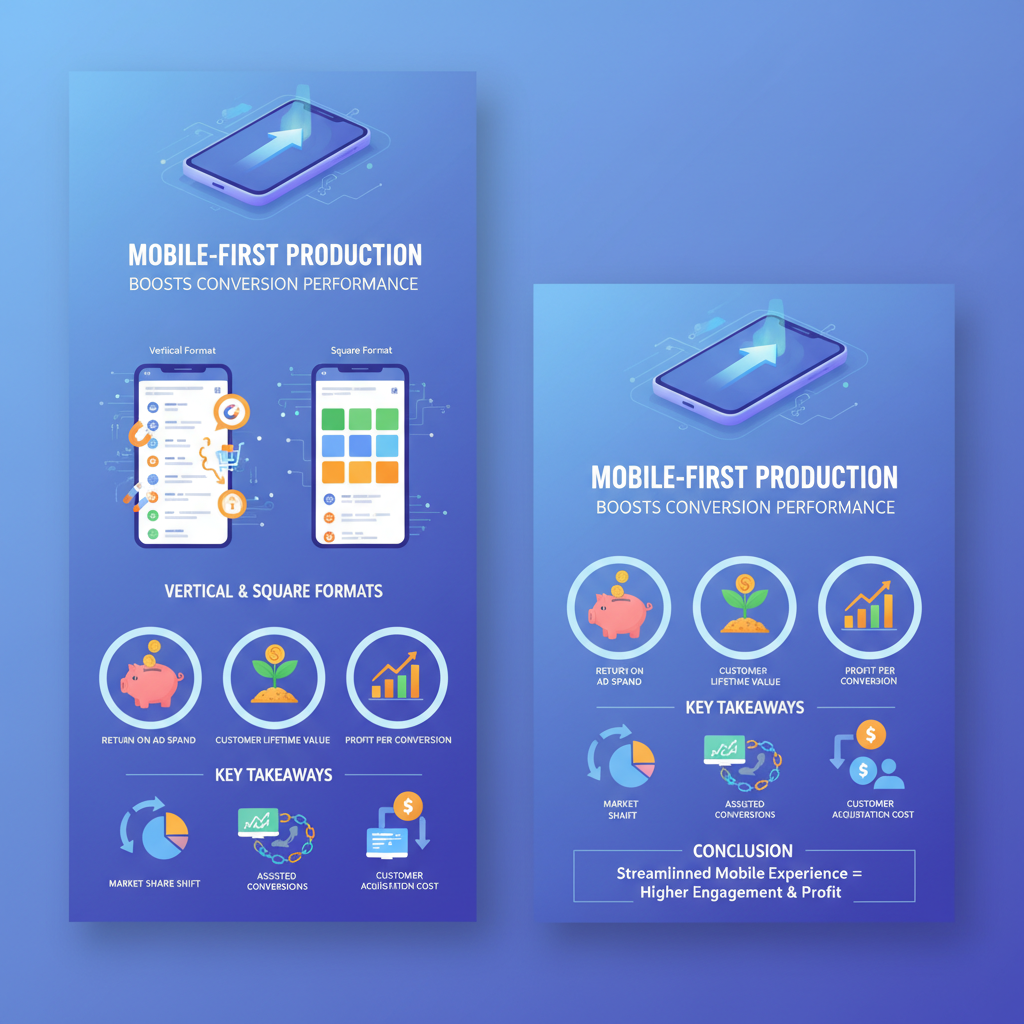
Gone are the days when 16:9 widescreen was the undisputed king of video. While it still has its place, particularly for longer-form content or traditional broadcast, the mobile landscape demands a different approach. We’re talking vertical (9:16) and square (1:1) formats.
Why? Because they simply make more sense for how people hold and interact with their phones. When someone’s scrolling through Instagram, TikTok, or even their Facebook feed, their phone is almost certainly in portrait mode. A vertical video fills the entire screen, creating an immersive experience that commands attention. It eliminates those awkward black bars on the sides, making your content feel native and intentional, not like an afterthought. This full-screen takeover reduces distractions and puts your message front and center, which is gold when you’re trying to drive a specific action.
Square videos, on the other hand, are the workhorses of social media. They perform exceptionally well across various platforms, from Instagram to LinkedIn, and even in many ad placements on Facebook. They take up more screen real estate than a horizontal video in a vertical feed, making them visually dominant and harder to ignore. Plus, they often offer a bit more flexibility in terms of composition compared to strictly vertical, allowing for a balanced visual narrative that still feels optimized for mobile.
The choice between vertical and square often depends on the specific platform and your content goals. For stories and short-form feeds, vertical is often king. For more evergreen content or posts that live on various feeds, square can be a versatile winner. The key is understanding that these formats aren’t just aesthetic choices; they’re strategic decisions that directly impact how much of your message is seen and absorbed, directly correlating to better engagement and conversion rates.
As Think with Google often highlights, optimizing for mobile viewing experience is paramount for effective digital campaigns.
Thumb-scroll blocking hooks
Alright, let’s talk about the attention span of a goldfish – actually, scratch that, goldfish probably have a longer attention span than your average mobile scroller. You have mere seconds, maybe even milliseconds, to grab someone’s attention before their thumb reflexively flicks upwards, sending your meticulously crafted video into the digital abyss.
This is where “thumb-scroll blocking hooks” come into play. A thumb-scroll blocking hook isn’t just a catchy opening line; it’s a strategic combination of visuals, sound, and messaging designed to stop that scrolling thumb in its tracks. It needs to be visually striking, instantly intriguing, or immediately relatable. Think bold text overlays, dynamic motion graphics, a surprising visual, or a question that hits a pain point right away. The goal is to create a pattern interrupt that makes the viewer pause and think, “Hold on, what’s this?”
This isn’t about being overtly flashy for the sake of it. It’s about being incredibly clear and compelling in the first 1-3 seconds. If you’re selling a service, show the problem you solve or the benefit you offer immediately. Don’t save the good stuff for the end. For example, if you’re a company specializing in marketing video production, your opening could be a quick, dynamic montage of successful ad campaigns or a bold statement about conversion rates. The visual narrative needs to start strong, without a lengthy intro or logo reveal that wastes precious seconds.
Furthermore, consider the “sound off” experience. A vast majority of mobile users watch videos with the sound off, especially in public spaces. Your thumb-scroll blocking hook, and indeed your entire video, must make sense and be engaging even without audio. This means using clear, concise on-screen text, compelling visuals, and often, closed captions. Meta Business Blog frequently emphasizes the importance of designing for a sound-off environment to maximize reach and impact. If your video relies solely on spoken dialogue to deliver its punch, you’re missing a huge segment of your audience and, you guessed it, potential conversions.
Crafting these initial moments effectively is an art, but it’s one that pays dividends in engagement and, ultimately, in the performance of your ad spend. Many marketing video production companies and top digital marketing agencies now specialize in this kind of mobile-first, conversion-focused content creation.
The entire content angle here revolves around user experience (UX) and engagement. When you optimize for mobile, you’re not just making a video fit a screen; you’re making it fit into someone’s life, their habits, and their attention patterns. A frictionless, engaging mobile experience leads to higher watch times, better recall, and a stronger likelihood of clicking that call-to-action. It’s about respecting the viewer’s time and context, and in return, earning their valuable attention and business.
Key Takeaways
- Prioritize mobile-first production: Most viewers consume content on smartphones, making mobile optimization critical for conversion performance.
- Embrace vertical (9:16) and square (1:1) video formats: These native mobile aspect ratios maximize screen real estate and viewer immersion, leading to higher engagement.
- Craft immediate “thumb-scroll blocking hooks”: Capture attention within the first few seconds with visually striking content, dynamic motion, or immediate problem/solution framing.
- Design for sound-off viewing: Ensure your videos are comprehensible and engaging without audio through clear visuals, on-screen text, and captions.
- Focus on UX and engagement: A seamless and captivating mobile experience directly translates to better watch times, higher recall, and improved conversion rates.
Conclusion
The digital landscape is constantly evolving, but one truth remains steadfast: user behavior dictates success. By embracing a mobile-first approach to video production, focusing on native formats, and meticulously crafting content that hooks viewers instantly, you’re not just keeping up; you’re leading the charge. It’s about building a bridge directly to your audience, wherever they are, and turning fleeting attention into lasting engagement and tangible results. So, next time you’re planning your video strategy, remember the power in the palm of their hand – and make sure your content is ready to meet it.