Recruitment is one of the most process-heavy functions in any organization, and independent HR consultants who manage it on behalf of multiple clients simultaneously are dealing with a volume of structured, repeatable tasks that manual management handles poorly at scale. Job postings need to go live across multiple platforms. Applications need to be screened against defined criteria. Candidates need to receive timely communications at each stage of the process. Interview schedules need to be coordinated between candidates and hiring managers who have competing calendar demands. Reference check requests need to go out at the right moment and be followed up when responses do not arrive. Each of these is a defined workflow that follows predictable rules and that, when handled inconsistently, creates a candidate experience that reflects poorly on the consultant and on the client they are representing.
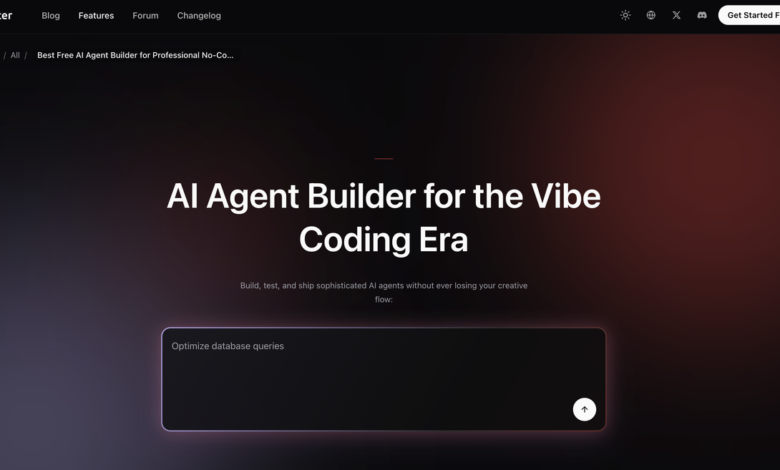
The AI agent builder inside Enter Pro is what allows an independent HR consultant to build automated systems around each of these workflows without diverting engineering resources they do not have. Enter Pro is a complete development environment designed for professionals who understand their domain and want to build working automation around it without a technical background. The platform handles database configuration, workflow logic, and deployment, leaving the consultant to focus on designing processes that reflect their specific methodology and their specific client relationships. For an independent HR professional whose reputation depends on the consistency and professionalism of every candidate interaction across every client engagement simultaneously, operational automation is not a back-office convenience. It is the infrastructure that makes the practice scalable without sacrificing quality.
The recruitment workflow has a well-defined structure that most HR professionals could draw from memory. Requisition opens. Job description gets posted. Applications arrive. Screening happens. Qualified candidates move forward. Interviews get scheduled. Offer goes out. Each stage has communication touchpoints that need to happen reliably and promptly, and the volume of candidates across multiple client engagements means that manual management of all of them simultaneously is simply not realistic at any meaningful scale.
Application Screening and First Response
The window between a candidate submitting an application and receiving any acknowledgment is one of the most visible indicators of how professionally a hiring process is being run. Candidates who hear nothing for two weeks after applying form an impression of the organization and the process that is difficult to reverse. An automated acknowledgment that confirms receipt, sets expectations for the timeline, and reflects the tone the client wants to project costs nothing per candidate once the system is built and creates a meaningfully better first impression.
Beyond acknowledgment, initial screening against defined criteria is one of the most time-consuming parts of managing a high-volume requisition. An agent built to apply the specific screening criteria for a particular role, flag applications that meet defined thresholds, and deprioritize those that clearly do not gives the consultant a pre-sorted pipeline to work from rather than an undifferentiated stack of applications to review manually.
Using AI code generation through Enter Pro, the consultant can build the screening logic that reflects the actual requirements of each role rather than generic filters. The criteria change by position. The weighting of different factors changes based on what the client has defined as most important. The system reflects those specific decisions rather than applying a one-size template to every requisition.

Interview Scheduling and Coordination
Interview scheduling is a task that consumes a disproportionate amount of recruitment time relative to the value it creates. The back-and-forth between candidate availability and hiring manager availability across time zones and competing calendar demands is genuinely tedious, and the consultant who is manually coordinating this across ten active requisitions for three different clients is spending hours per week on pure logistics.
An automated scheduling workflow that presents candidates with available windows based on the hiring manager’s calendar, collects their selection, sends confirmations to all parties, and follows up with reminders before the interview handles this entire process without consuming consultant time. The consultant reviews the scheduled interviews rather than creating them.
Offer and Onboarding Handoff
The transition from accepted offer to first day is another stage where communication gaps create anxiety for the candidate and create impressions of disorganization. A structured post-offer communication sequence that confirms acceptance, provides pre-start information on the right schedule, introduces the new hire to relevant contacts, and sets expectations for the onboarding experience creates a start that reflects positively on the consultant and on the client organization.
The Multi-Client Management Challenge
For the independent HR consultant managing recruitment across multiple clients simultaneously, the operational challenge is not any single workflow. It is the aggregate volume of all of them running in parallel. An agent-based approach means each client’s recruitment process runs on its own automated track, with the consultant overseeing the exceptions and the judgment calls rather than manually moving every candidate through every stage.
The capacity implications of this are significant. A consultant who can manage the administrative volume of five simultaneous client engagements is more valuable to clients and more profitable than one limited to two or three by the constraints of manual management.
Conclusion
Independent HR consultants who build automation around their recruitment workflows are not removing the human element from hiring. They are concentrating their human attention on the parts of hiring that genuinely require it: assessing candidates, advising clients, navigating difficult conversations, and making the judgment calls that no automated system should be making. The structural work that surrounds those moments, the scheduling, the screening, the communicating, runs automatically and consistently. The result is a practice that delivers a better candidate experience, serves more clients simultaneously, and positions the consultant as a genuinely sophisticated operator in a market where most independent practitioners are still managing everything by hand.