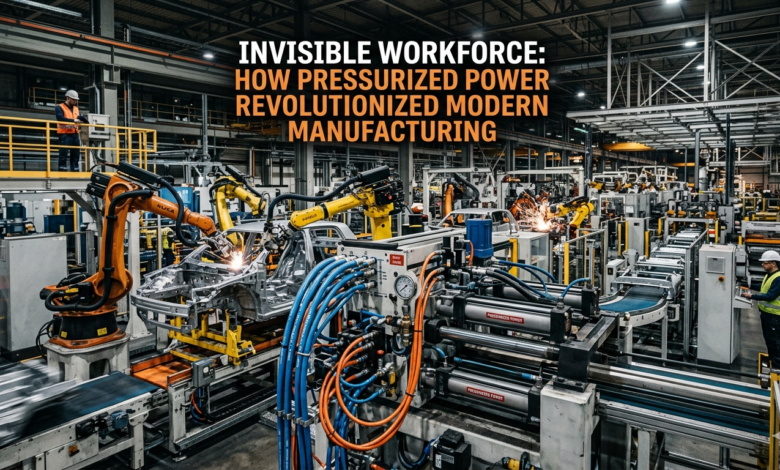
In the hierarchy of industrial utility, electricity and water often receive the most attention. However, there is a third pillar of modern production that quietly sustains the global economy. Pressurized air, frequently referred to as the fourth utility, is the silent force behind everything from the assembly of microchips to the packaging of food products. By converting mechanical energy into potential energy stored in the form of compressed air, manufacturers have unlocked a versatile, safe, and incredibly powerful medium. This technology has not only increased the speed of production but has also fundamentally changed the safety and reliability of the industrial environment.
The Versatility of Pneumatic Systems
The primary reason pressurized power has become a staple of the factory floor is its sheer adaptability. Unlike hydraulic systems, which rely on heavy fluids that can leak and contaminate products, pneumatic systems use a medium that is abundant and clean. This makes it the preferred choice for sensitive environments such as pharmaceutical labs and food processing plants.
Precision in Motion
Pneumatic actuators and cylinders allow for extremely precise, repetitive movements. These components can fire thousands of times per hour with minimal wear, facilitating the high-speed sorting and pick-and-place operations seen in modern fulfillment centers. Because air is compressible, these systems also offer a degree of “give” or cushioning that rigid mechanical linkages lack, reducing the risk of damaging delicate components during assembly.
Tools for Heavy Labor
On the opposite end of the spectrum, pressurized power drives the heavy-duty tools used in automotive and aerospace manufacturing. Impact wrenches, grinders, and sanders powered by air offer a much higher power-to-weight ratio than their electric counterparts. This allows workers to operate high-torque machinery without the physical strain of carrying heavy motors and battery packs.
Enhancing Workplace Safety and Longevity
Safety is perhaps the most significant advantage of integrating air-powered systems into a facility. In many industrial settings, electricity poses a constant risk of sparks, which can be catastrophic in environments containing volatile chemicals or fine dust particles.
Eliminating Electrical Hazards
Pneumatic tools do not create heat or sparks at the point of use, making them inherently safe for use in explosive or wet environments. Furthermore, because these tools do not contain complex internal motors, they are less prone to overheating. If a pneumatic tool is overloaded, it will simply stall without blowing a fuse or causing a fire, allowing the operator to reset and continue work without equipment damage.
Reliability Through Simple Design
The mechanical simplicity of air-powered equipment contributes to a longer service life. With fewer moving parts and no sensitive electronics to fail, these systems can operate in harsh conditions characterized by extreme temperatures and high vibration. Maintaining the core of the system is the most critical factor in ensuring this longevity. When designing a new facility or upgrading an existing line, many engineers prefer to integrate a high-quality OEM air compressor to serve as the heart of the plant. A factory-spec unit ensures that the pressure and air quality remain consistent across the entire network, preventing moisture and debris from damaging the expensive downstream tools and valves.
Energy Efficiency and Cost Management
As global energy costs fluctuate, the efficiency of pressurized systems has come under intense scrutiny. While compressing air requires significant electrical input, the ability to store that energy in large tanks provides a unique advantage in managing peak loads.
Strategic Energy Storage
A well-designed system allows a facility to “buffer” energy. During periods of lower demand, the system can fill large storage vessels, which can then be tapped during high-demand cycles without putting additional strain on the electrical grid. This leveling of energy consumption helps factories avoid peak-demand surcharges and ensures that power is always available for critical operations.
Leak Detection and Heat Recovery
Modern manufacturing facilities are also finding creative ways to reclaim the “lost” energy of compression. The process of compressing air generates a substantial amount of heat. Many plants now use heat exchangers to capture this thermal energy, redirecting it to heat the building or provide hot water for industrial processes. Additionally, digital monitoring systems now allow for real-time leak detection, ensuring that the invisible workforce is not wasting energy through small fissures in the distribution lines.
Conclusion
Pressurized power is much more than just a convenience; it is a fundamental driver of industrial progress. Its ability to provide safe, reliable, and precise energy across a vast array of applications makes it indispensable. From the smallest dental drill to the largest automotive assembly line, the influence of pneumatic technology is seen everywhere but rarely heard. By prioritizing the health of the central system and utilizing high-quality components, modern manufacturers can continue to rely on this invisible workforce to meet the demands of an increasingly complex world.