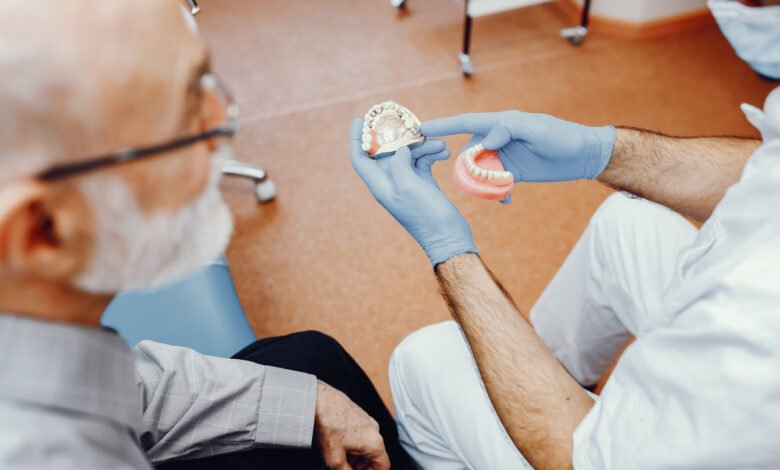
A woman in her early forties recently sat in a Stockport dental chair, embarrassed to even say the word out loud. She’d assumed dentures were something her grandmother wore, not something relevant to her. Her dentist had heard some version of this same hesitation several times that month alone.
That reaction is becoming less rare. Across Stockport, dentists are fitting dentures for a noticeably younger group of patients than they used to, and the reasons behind it reveal a pattern that has very little to do with age.
It’s Not About Getting Older
The old assumption was simple: teeth wear out, people get old, dentures follow. That link has weakened considerably. Tooth loss today is far more often tied to specific, avoidable causes, untreated gum disease, years of acid erosion from fizzy drinks, or a tooth cracked in an accident that couldn’t be saved, rather than age on its own.
A person can do everything right for decades and still lose a tooth in their thirties because of one of these factors. Dentists fitting dentures in Stockport increasingly point to this as the real story, not the number on a patient’s birth certificate.
A Few Missed Years Left a Mark
Something else has quietly fed into this shift. Several years ago, routine dental visits became far harder to keep up, and a lot of people missed check-ups that would normally have caught small problems early. A minor issue with a filling or a bit of gum inflammation, left unchecked during that gap, sometimes progressed further than it should have.
Dentists are now seeing the delayed result of that gap: patients arriving with dental problems more advanced than they’d expect for someone their age, occasionally serious enough to mean a tooth can no longer be saved.
The Embarrassment Keeping People Quiet
Perhaps the biggest barrier isn’t the tooth loss itself, but the reluctance to talk about it. Many younger patients delay bringing up the subject with their dentist, worried about how it sounds, or convinced they’re the only person their age dealing with it.
They usually aren’t. Dentists who treat this regularly stress that tooth loss can happen to anyone, for reasons that have nothing to do with how well someone has looked after their teeth overall. Being open about it early tends to lead to a much smoother, less stressful outcome than waiting until the problem can’t be ignored.
What’s Changed About the Dentures Themselves
Part of what’s making younger patients more willing to consider this option is that dentures in Stockport have moved on considerably from what previous generations experienced. Digital scanning now creates a far more precise fit than the old manual impressions, cutting down on the slipping and clicking that used to put people off.
For someone still working full time, attending meetings, or dating, that difference matters. A well-fitted denture today is far less noticeable than the ill-fitting versions many people still picture when they hear the word.
What Actually Happens During Treatment
The process usually starts with an assessment of the remaining teeth and gums, followed by scans or impressions, and a fitting stage that may need a few small adjustments. Most patients are surprised by how quickly they get used to eating and talking normally again, often within a matter of weeks rather than months.
Younger patients tend to adapt faster than older ones too, since healing and overall oral health are generally stronger.
Where Ivy Dental Fits Into This
Ivy Dental, a family-run practice with over two decades of history in Stockport, has watched this exact pattern unfold among its own patients, working-age adults coming in for reasons that have nothing to do with getting older, and often relieved to hear how routine the conversation actually is once they bring it up.
Final Thoughts
Dentures are no longer a subject reserved for later life. Earlier tooth loss, a gap in routine care a few years back, and genuine improvements in how dentures in Stockport fit have all combined to bring a younger, working-age group into the conversation. For anyone quietly wondering whether it applies to them, the honest answer is: it’s more common than they think, and there’s no reason to put off asking.