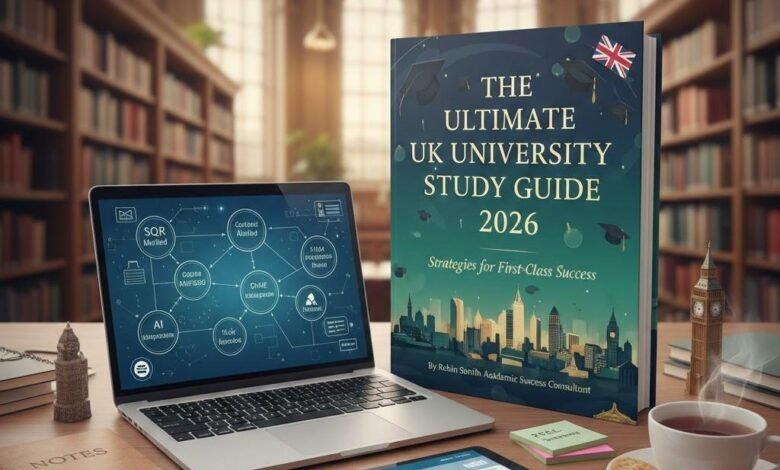
By Robin Smith, Academic Success Consultant
Transitioning from secondary education to university is one of the most significant leaps a student will ever make. In my years mentoring students across the UK, I’ve observed that the shift from the highly structured environment of A-Levels, Highers, or T-Levels to independent higher education is where most students struggle.
With the pressure of UCAS deadlines behind you, the new challenges of academic research begin. This guide is designed for high school leavers and current UK university students aiming for a First-Class degree in 2026. Whether you are at a Russell Group institution or a specialized modern university, these proven strategies will help you master your workload.
1. Mastering Independent Learning & Critical Analysis
Unlike sixth form, where teachers provide structured notes, university requires you to be the architect of your own education.
- Understand Your Module Handbook: At the start of each semester, download your module handbooks. Map out the learning outcomes and assessment dates immediately to avoid the “January deadline rush.”
- The SQ3R Method: Engage with academic texts using the Survey, Question, Read, Recite, and Review method. This ensures information moves into your long-term memory.
- Critical Thinking vs. Description: In the UK higher education system, “critical analysis” is the difference between a 2:2 and a First-Class degree. Don’t just describe a theory; evaluate its limitations, identify biases, and compare it with competing evidence.
2. Excellence in Essay Writing and Referencing
In the UK, academic integrity is paramount. If you don’t master the “Academic Voice” early, you will struggle to hit the 70% mark—this is where targeted essay help can make a measurable difference.
- The PEEL Structure: Ensure every paragraph follows the Point, Evidence, Explanation, Link structure. This keeps your writing focused and persuasive.
- Mastering UK Referencing: Whether your university uses Harvard, OSCOLA (for Law), or Vancouver, use tools like Zotero to manage your citations. Accurate referencing is the easiest way to protect your marks.
- The Drafting Process: Never submit a first draft. Refine your structure and ensure your tone remains objective and scholarly.
3. Ethical AI Integration: The 2026 Study Partner
In 2026, AI is a standard part of the academic toolkit. To maintain Academic Integrity, you must move from “AI-generated” to “AI-assisted” workflows.
- Brainstorming, Not Writing: Use AI to generate essay outlines or clarify complex concepts like Quantum Deciphering or Macroeconomic Theory.
- The “Human-in-the-Loop” Rule: Never submit AI-generated text as your own. Treat AI as a research assistant to find “task words” in assignment briefs (e.g., the difference between ‘evaluate’ and ‘discuss’).
- Verification: Always cross-check AI claims with your university’s digital library (like JSTOR or Taylor & Francis) to ensure the sources are real and peer-reviewed.
4. Strategic Time Management & Mental Wellbeing
Effective time management isn’t about working more; it’s about working smarter to protect your mental health.
- The Pomodoro Technique: Break study sessions into 25-minute intervals. This is essential for long stints in the university library.
- Time Blocking: Treat your studies like a 9-to-5 job to keep your evenings free for societies and socializing.
- The “Eat the Frog” Rule: Tackle your most difficult assignment task first thing in the morning when your cognitive load is highest.
- Sleep Hygiene: Aim for 7–9 hours. “All-nighters” actually decrease cognitive performance and memory retention the following day.
5. Leveraging Academic Support & Professional Guidance
No student is an island. The most successful students use every resource available to them.
- Tutor Office Hours: Your lecturers have dedicated hours to help. If you’re struggling with a concept, visit them early—don’t wait for the exam period.
- Peer Study Groups: Explaining a concept to a peer is the best way to reinforce your own knowledge.
- Expert Academic Feedback: When multiple deadlines hit at once, the stress can impact your clarity. For students who need help navigating complex UK marking rubrics or mastering the “Academic Voice,” seeking professional assignment help from Myassignmenthelp.com can provide the structural guidance needed to turn a 2:1 draft into a First-Class submission.
6. Exam Preparation: Beyond Rote Memorization
- Past Papers: These are the gold standard of UK revision. They familiarize you with the “language” of the questions and the specific marking schemes.
- Active Recall: Use flashcards (like Anki) to test yourself. This fights the “forgetting curve” and ensures information sticks long-term.
Frequently Asked Questions
Q.1 What exactly is a First-Class degree in the UK?
In the UK, a “First” is the highest honours classification, typically requiring a weighted average of 70% or higher. It represents a deep, critical understanding of your subject.
Q.2 Can I use AI tools for my 2026 assignments?
Most UK universities allow AI for brainstorming and simplifying complex theories. However, submitting AI-generated text as your own is “Academic Misconduct.” Use AI to help you think, not to replace your own analysis.
Q.3 What should I do if I am struggling with the “Academic Voice”?
Utilize your university’s writing center and library workshops. If you are aiming for a First-Class mark but keep hitting a “grade ceiling,” professional feedback can help you identify where your structural or analytical gaps are.
About the Author: Robin Smith
Robin Smith is a seasoned academic consultant with over a decade of experience in the UK higher education sector. Specializing in student transition and peak performance strategies, Robin has helped thousands of students bridge the gap between A-Levels and First-Class university honors.